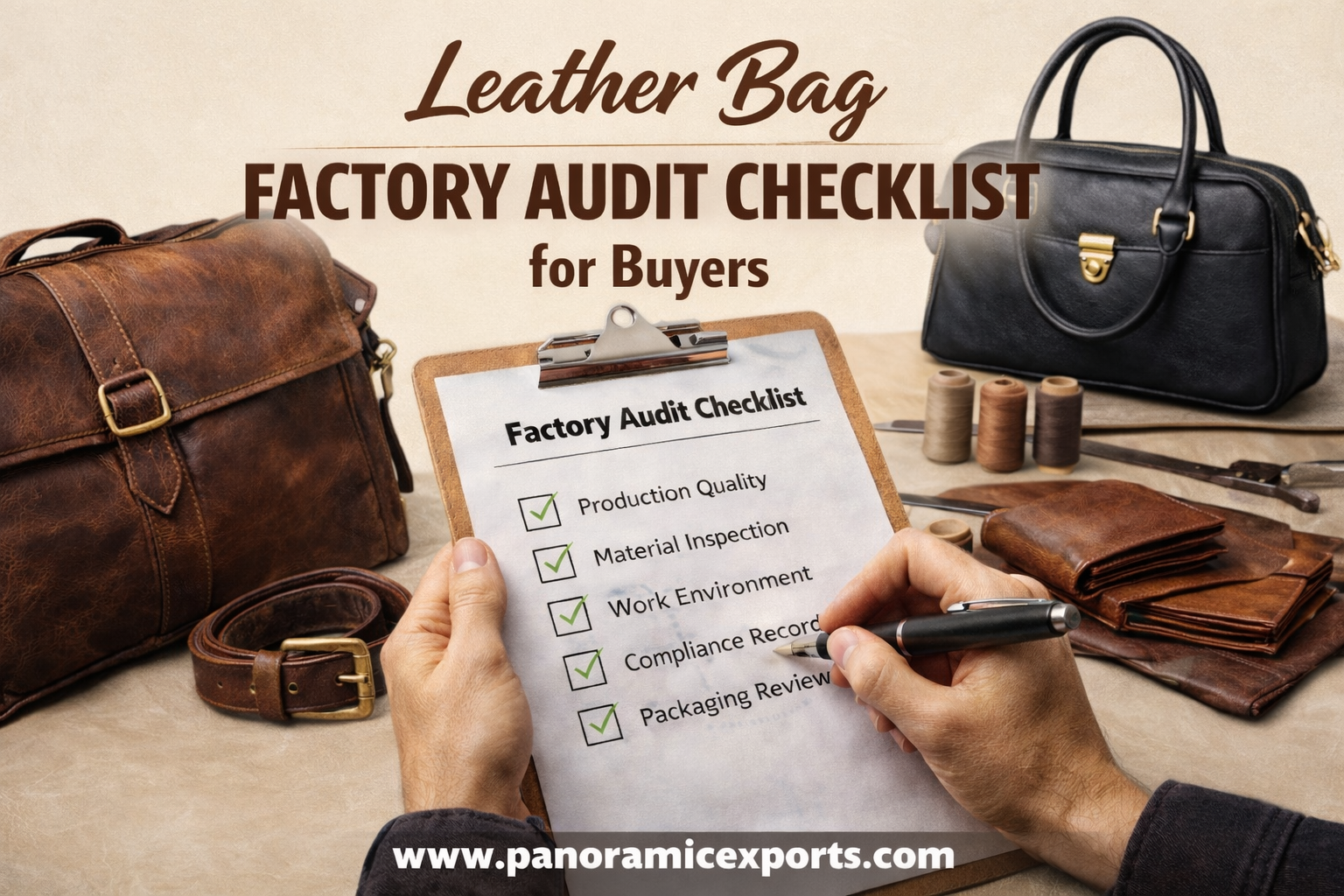
Leather Bag Factory Audit Checklist for Buyers
When one wants to source a product to an international leather bag factory, it does not only involve following a product catalog. To guarantee the brand reputation and the product lifespan, a strict leather bag factory audit checklist should be applied by professional buyers. This procedure will reduce the risks of low quality workmanship, unethical workforce and lack of chemical compliance. The highly competitive 2026 environment can only prove such a thorough approach to compliance in the leather factory to make sure that your production run was able to comply with global retail standards.
Strategic Significance of a Leather Bag Factory Audit Checklist
International sourcing presents an operation, financial and reputational risk to buyers. An elaborate leather bag factory audit checklist will make sure that the production partners meet quantifiable standards in quality, labor standards, exportation documents and technical competence.
Buyers can be exposed to:
-
Inconsistent craftsmanship
-
Sluggish manufacturing schedules
-
Regulatory non-compliance
-
Shipment rejections
-
Brand reputation damage
The use of a professional leather bag factory audit checklist can turn the process of supplier evaluation into a fact-based process, as opposed to an assumed one.
Main Elements: Factory Audit Checklist of a Leather Bag Company
An in-depth leather bag factory audit checklist would generally consider five of the pillars of operation which include the infrastructure, the production capacity, the quality control systems, the compliance of the leather factory and the accuracy of documentation.
1. Quality Management System (QMS) Assessment
The initial item of any leather bag factory audit checklist is consideration of internal quality controls at the factory. A factory which does not have a structured QMS is likely to have inconsistency in batches.
-
Incoming Material Inspection: Does the factory check on the raw hides in terms of thickness, moisture contents and grain consistency before it goes into production?
-
In-Line Inspections: Does it have departments of special inspection on critical assembly stations, e.g., stitching and hardware fixing?
-
Final Random Inspection (FRI): Does the plant do final inspection according to AQL (Acceptable Quality Level) criteria before packing?
2. Technical Facilities and Equipment
An exclusive leather bag factory should be equipped with the right industrial facilities to deal with heavy hides without spoiling the material.
-
Machine Inventory: Search in industrial walking-foot sewing machines, skiving machines and hydraulic clicker presses.
-
Needles Detection: To ensure that the bags exported to the global market, especially to the USA and UK, do not harbor any metal pieces of the needles, the factories should have needle detection measures in place.
-
Template Accuracy: Check to make sure the factory is cutting on a CAD/CAM or high quality steel die to cut patterns in a thousand units or more and have the dimensional consistency.
3. Leather Factory Compliance and Social Responsibility
Ethical sourcing has ceased to be a choice. Compliance in the international leather factories means that your products are not associated with any exploitative labor or pollution.
-
Labor Standards: Check to make sure the factory complies with local labor regulations, such as appropriate wages, controlled working hours and complete absence of child labor.
-
Certifications: You should search gold-standard certifications like SEDEX (SMETA) or BSCI. Such audits offer outsourced certification of the social and ethical status of the factory.
-
Safety Procedures: The audit must ensure that fire extinguishers, emergency exit signs and personal protective gear (PPE) against chemical or heavy machinery workers are available.
4. Environmental and Chemical Compliance
There are a lot of chemicals used in the process of tanning and finishing of leather that are highly controlled by the international legislation such as the REACH (EU) and the Prop 65 (USA).
-
Restricted Substances List (RSL): Does the factory have RSL? This makes the leather free of detrimental Chromium VI, lead and formaldehyde.
-
LWG Certification: Favors should be awarded to the factories that use tanneries that belong to Leather Working Group (LWG), which monitors the environmental impact and water consumption as well as waste disposal.
-
Waste Disposal: The leather bag factory audit checklist should involve inspection of the way the factory disposes the offcuts of leather and chemical wastes in the facility.
5. Storage and Packaging Standards
The bag might be made perfectly, though it is ruined due to poor storage. Leather is very much prone to moisture and molds.
-
Humidity Control: The warehouse will have climate control and active dehumidifiers to avoid the growth of fungi on the finished products.
-
Carton Quality: Check the corrugated boxes used are double walled to ensure that it will not be crushed when transported in the sea.
-
Silica Gel Usage: It is important to note that silica gel in high quality should be inserted into each bag to absorb some moisture that may be left during shipment.
Risk Identification Based on a Leather Bag Factory Audit Checklist
A good leather bag factory audit checklist includes red flags such as:
-
Over subcontracting without making disclosure
-
Absence of production tracking systems
-
Uncompleted compliance certificates
-
High worker turnover
Risk mapping enables the buyer to put in place corrective action plan prior to the establishment of long term partnerships.
Onsite vs Remote Leather Bag Factory Audit Checklist
| Audit Type | Description |
|---|---|
| On-Site audits | Physically inspecting of machine, production lines and labor. |
| Third- Party Audits | External audit by sourcing bodies or inspection agencies. |
| Virtual Audits | Video tours and online document review when traveling is not possible. |
The leather bag factory audit checklist should be standardized irrespective of the format so that the same assessment is done everywhere.
Audit Checklist Scoring Framework of a Leather Bag Factory
In the case of professional audits, weighted scoring systems are common.
Example scoring structure:
-
Infrastructure: 20%
-
Production Capability: 20%
-
Quality Systems: 25%
-
Leather Factory Compliance: 20%
-
Documentation Accuracy: 15%
The factories that score below certain set limits would need remedial measures prior to confirmation of orders.
Panoramic Exports: Leather, Your Certified Partner in Manufacturing
Panoramic Exports is one of the best manufacturing partners with regard to negotiating the challenges of international sourcing. The company focuses on luxury leather products and filling this gap between the artisan crafts and the demands of the modern global market.
1. Unparalleled Ethical Conformance
Panoramic Exports is a company that has a compliance-first ethos. All facilities used are SEDEX-certified and this means that your production is the highest social and ethical standards. This openness enables the world consumers to sell their products without fear that they were manufactured in unfair and unsafe working environments.
2. In-House Quality Assurance
As opposed to most manufacturers, Panoramic Exports uses a multi-stage leather bag factory audit checklist internally on each order. Their QC team conducts:
-
Pre-production Meetings: To agree on technical specifications and material hardware.
-
During-Production Inspections: These are used to identify and correct the mistakes on the assembly line.
-
Final Pre-Shipment Audits: This involves ensuring that all zippers, rivets and stitches are to the acceptable sample of the client.
Conclusion
A successful sourcing journey begins with a detailed leather bag factory audit checklist. By prioritizing leather factory compliance and technical excellence, buyers can build sustainable, long-term relationships with their suppliers. Partnering with established entities like Panoramic Exports ensures that these high standards are not just met, but exceeded, providing your brand with a significant edge in the international leather goods market.
FAQs
1. How often should I perform a factory audit?
A full audit should be conducted annually, with smaller “spot checks” or in-line inspections performed during every major production run.
2. What is the most critical part of leather factory compliance?
Social compliance (fair labor) and chemical safety (REACH/Prop 65) are the two most critical areas for avoiding legal and reputational risks.
3. Can a factory audit help reduce costs?
Yes. By identifying inefficiencies in the production line and reducing the rate of defective goods, a leather bag factory audit checklist directly improves your bottom line.
4. Do all leather factories need LWG certification?
While not mandatory, sourcing from LWG-certified partners is the best way to ensure environmental responsibility in the tanning process.
5. What happens if a factory fails an audit?
A Corrective Action Plan (CAP) is issued. The factory is given a specific timeframe to fix the issues before a follow-up audit is conducted to verify the improvements.