Blog

  • How to Make Beaded Bag Charms?

    How to Make Beaded Bag Charms?

    How to Make Beaded Bag Charms?

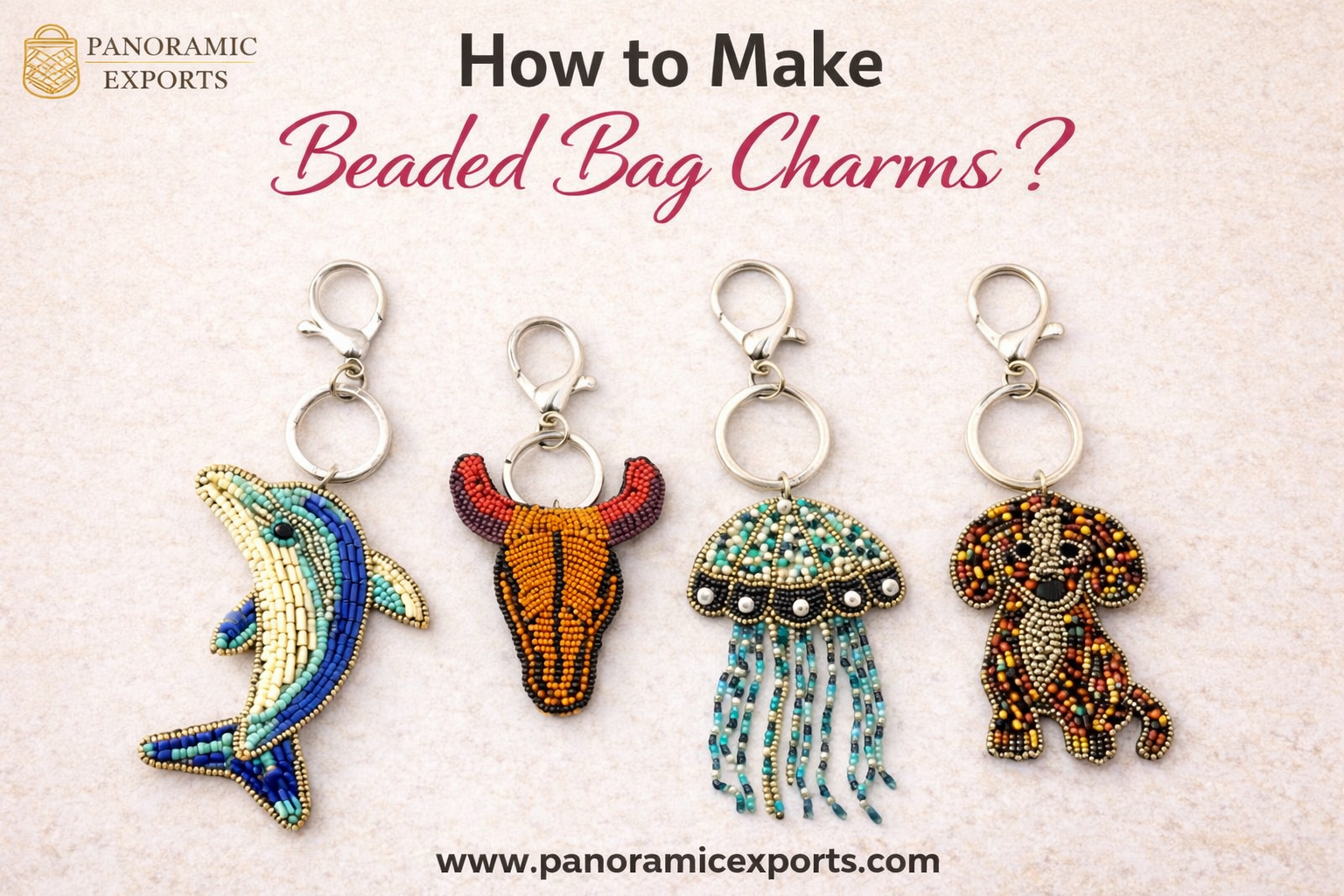
    In the high-stakes world of global fashion exports, a “trinket” is a liability. For a retail buyer in New York or Berlin, Beaded Bag Charms aren’t just accessories—they’re high-margin add-ons that have to survive rough handling, humidity and the legal minefield of international safety laws. If you want to know how to make these at a professional level, you have to look past the “craft” and focus on the engineering.

    At Panoramic Exports, we don’t do “hobby projects”. We do industrial-grade accessory manufacturing. Moving Beaded Bag Charms from an Indian workshop to a global storefront means solving the physics of the stringing material and the chemistry of the hardware plating. Here is the professional breakdown of how we build value into the “small stuff”.


    Step 1: The Foundation and Material Selection

    The most common failure point in beaded bag charms is the core string. If you want to know how to make a product that lasts, you start by throwing away the elastic. Hobbyist suppliers often use cheap monofilament that degrades under UV light and snaps under the slightest pressure.

    For professional global export, we use 49-strand stainless steel wire with a heavy nylon coating. It has the “drape” of silk but the break-strength of an industrial cable. In our workshop, we perform random “Pull Tests”. Every Beaded Bag Charms batch must withstand a 10lb pull without the crimps failing. This isn’t just a quality check; it’s an insurance policy against the “Choking Hazard” recalls that keep US and EU compliance officers awake at night. Exporters often reference accessory durability and small-parts safety guidance issued by the U.S. Consumer Product Safety Commission.

    Step 2: Professional Layout and Design Mix

    A cute bag charms design only works if it feels like a discovery, not a commodity. Plastic-heavy charms feel like toys. A multi-textured piece feels like jewelry. We leverage India’s massive artisanal network to find components that machines can’t replicate.

    When planning how to make the charm, we mix high-shine metallic spacers with “matte” finished Indian hardwoods and handmade glass. This “maximalist” approach to Beaded Bag charms is why our clients can command a premium price. We don’t just “find beads”; we curate a material story that makes a handbag charm feel like a bespoke find, not an afterthought.

    Step 3: The Assembly and Tensioning Process

    How you actually string the beads determines the “drape” of the final product. If the wire is too tight, the charm is stiff and looks cheap. If it’s too loose, the wire shows.

    1. Crimp Placement: We start by securing a high-grade copper crimp bead to the lobster clasp. We don’t just crush it; we use a “forming” tool that rounds the metal so it doesn’t snag the bag’s leather.

    2. The Stringing Sequence: We alternate bead weights. Putting a heavy glass bead next to a light wooden one creates a “rhythm” in the swing.

    3. The Double-Back: At the finish point, we thread the wire back through the last three beads. This “locking” mechanism is essential for Beaded Bag Charms that will be tugged on by customers daily.

    Step 4: Chemical Compliance and Plating

    If your custom bag charm shipment is seized at the border because the “gold” plating has high lead content, your whole season is dead. Many factories cut costs by using leaded alloys. We don’t.

    Every single part of our beaded bag charms is 100% lead and nickel-free.

    • Vacuum Plating: We use PVD (Physical Vapor Deposition) for all hardware. Unlike the “dipped” charms you see in discount bins, this won’t tarnish or flake off on a customer’s $2,000 leather tote.

    • Non-Toxic Hues: Whether it’s artisan glass or carved Indian wood, we verify that all dyes are non-bleeding and REACH compliant. This matters for purse charms that might touch skin or moisture.

    Step 5: Weight and Balance Engineering

    Most people think you just string beads and call it a day. But a professional manufacturer looks at the “Center of Gravity”. If a charm is too bottom-heavy, it swings violently and can scratch the bag’s hardware.

    We engineer the weight distribution so that the charm has a satisfying “clink” without becoming a wrecking ball. This involves calculating the density of each Bead—using heavier glass at the core and lighter wood or resin at the extremities. It’s this level of detail that separates a custom bag charm produced for a luxury brand from something bought at a flea market.

    Step 6: Industrial Sealing and Finishing

    In India’s humid climates, wooden beads can be a nightmare. At Panoramic Exports, we use a multi-step sealing process. Every wooden element in our Beaded Bag Charms is tumbled in a specialized sealant that prevents the wood from absorbing moisture and expanding.

    Similarly, for any leather elements integrated into the handbag charm, we use the same high-end edge paint used in luxury handbags. This ensures that the color doesn’t rub off on the customer’s clothes or the bag itself. We’re not just making purse charms; we’re making durable goods.

    Step 7: Packaging for Retail

    A beaded bag charms order can be ruined in the last mile by bad packaging. We provide “Retail-Ready” solutions so you don’t have to touch the product at your distribution center.

    • Anti-Tangle Mounting: We mount every bag charm on a rigid 350gsm backer card. This prevents the “bead-nesting” that happens in sea containers.

    • Anti-Tarnish Environment: Every master carton includes charcoal-based desiccant strips. This keeps the hardware on your purse charms bright even after 30 days in a humid shipping container.

    • SKU Precision: We handle all barcoding and price-tagging in-house. When the shipment hits your dock, the custom bag charm is ready for the floor immediately.


    Scaling Your Production with Panoramic Exports

    The “India Advantage” isn’t just about labor—it’s about a specialized ecosystem. At Panoramic Exports, we sit at the intersection of traditional Indian beadwork and 2026 global QC standards.

    Our Industrial Edge:

    • Prototyping Speed: We can take a mood board and turn it into a physical Beaded Bag Charms sample in 7 days.

    • Scalable Precision: We manage the MOQs that make sense for your brand, from a 500-unit boutique “drop” to a 20,000-unit national rollout.

    • Ethical Supply Chain: Every handbag charm is made in an audited, fair-wage environment. Transparency is our baseline.


    Conclusion

    In 2026, small accessories carry huge brand weight. Learning how to make professional Beaded Bag Charms is about realizing that every detail—from the wire to the packaging—is a chance to delight a customer. By focusing on durability engineering, chemical safety and retail-ready logistics, we make sure your custom bag charm is a profit driver, not a recall risk.

    At Panoramic Exports, we protect your reputation on the retail floor.


    FAQs

    1. How do you handle color-fastness in these charms?

    We use industrial-grade sealants on all wooden beads to ensure they don’t bleed onto expensive leather, a common fear for handbag charm buyers.

    2. Are the springs in the clasps tested for fatigue?

    Yes. Every batch of lobster clasps for our purse charms is cycle-tested. If the gate tension is mushy, we reject the lot.

    3. Can you provide third-party lab reports?

    Absolutely. We work with certified labs to provide lead and nickel-free documentation for all Beaded Bag Charms bound for the USA or Europe.

    4. What is the maximum weight you recommend?

    We engineer our designs to stay under 100 grams. Anything heavier can cause “handle sag” or put too much stress on a delicate bag’s stitching.

    5. Can we get custom metal branding?

    Yes, we can laser-etch or die-cast your logo onto a metal “signature” tag for every custom bag charm in your collection.
  • Leather Handbag Pricing: Cost Breakdown for Buyers

    Leather Handbag Pricing: Cost Breakdown for Buyers

    Leather Handbag Pricing: Cost Breakdown for Buyers

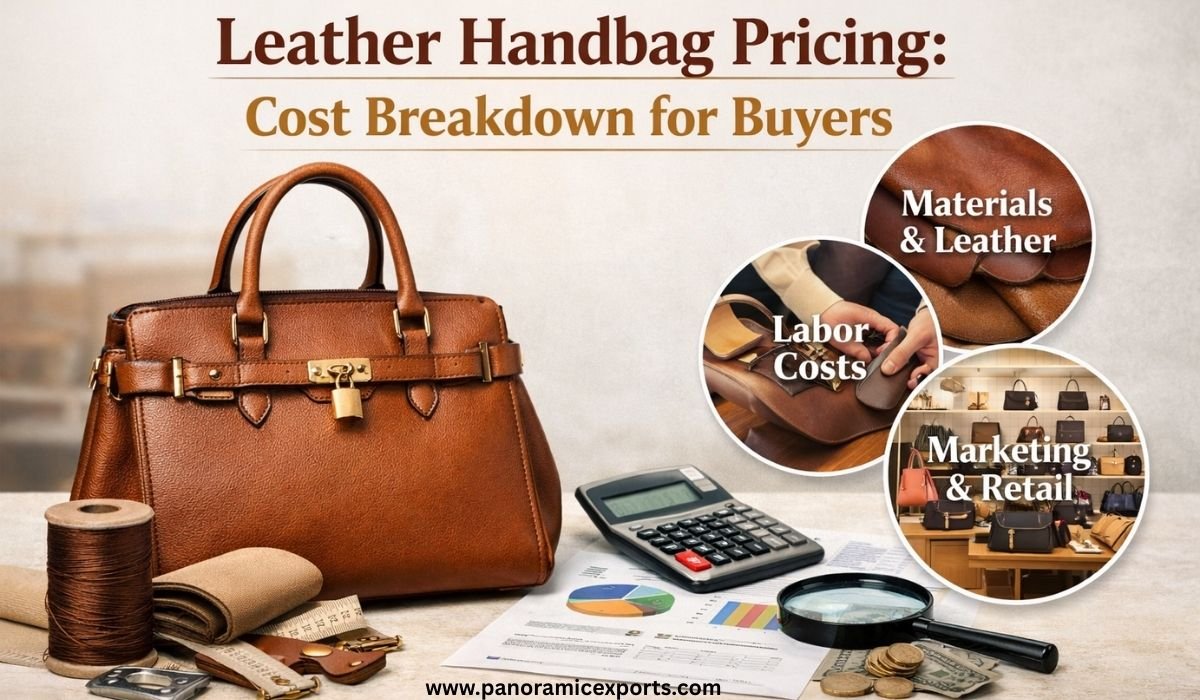
    If you have ever looked at two factory quotes and wondered why one bag is $25 and the other—which looks exactly the same—is $65, you aren’t alone. In the export business, a price isn’t just a random number someone pulled out of thin air; it is a carefully built formula. Understanding the Leather Handbag Pricing Factors is the only way a buyer can actually negotiate without accidentally killing the quality of their own product.

    At Panoramic Exports, we don’t believe in “black box” pricing. We think transparency is the only way to build a real partnership. When you see exactly where every dollar is going, you can make actual decisions about where to spend your budget and where to trim the fat. Here is the real, unpolished look at how we calculate the value of a high-end leather accessory.


    1. The Raw Material: It’s All About the Yield

    The biggest of all Leather Handbag Pricing Factors is the skin. But here is what most beginners miss: it isn’t just about the price per square foot. It’s about “Yield.”

    Leather is a natural product, not a roll of fabric. It has scars, bug bites and thin patches. If you want a “Grade A” bag with big, clean panels, the wastage is huge. We might have to buy 20 square feet of expensive leather just to get 10 square feet of “clean” cuttings for your bag.

    • Full-Grain vs. Top-Grain: This choice alone shifts the price by 30% instantly.

    • The Tanning Process: Chrome-free or Vegetable-tanned leathers cost more because they take longer and use pricier chemicals.

    • The Animal: Buffalo, Goat and Cow hides all have different price points based on how tough they are and how “luxurious” they feel to the touch.

    2. The Skeleton: What You Can’t See

    When buyers argue over leather handbag pricing factors, they usually ignore the stuff inside. A bag that keeps its shape for five years is built differently than a cheap one that collapses after two months.

    • Reinforcements: We use different grades of interlinings—things like salpa, non-woven stiffeners, or foam—to give the bag its “skeleton.”

    • Linings: A cheap polyester lining costs almost nothing, but a premium cotton twill or real suede lining changes the whole vibe—and the price.

    • Glues: We use high-quality, eco-friendly adhesives that don’t peel or smell when it gets humid. That’s a hidden but vital cost.

    3. Hardware: The Jewelry of the Bag

    Hardware is one of the most volatile Leather Handbag Pricing Factors. It isn’t just about the weight; it’s about the “Plating.”

    • Zinc vs. Brass: Solid brass hardware is expensive and heavy. Zinc alloy is the budget-friendly alternative.

    • The Finish: Is it a quick dip, or is it “Electrophoretic” plating that actually resists scratches and tarnishing?

    • The Zippers: Putting a YKK or Excella zipper on a bag can add $3 to $7 to the cost compared to a generic local brand. But it’s the difference between a bag that lasts and a bag that breaks in a week.

    4. Labor and the “Minute Cost”

    We don’t guess labor costs. We use the leather handbag pricing factors based on “Standard Allowed Minutes” (SAM). Every single movement—skiving the edges, painting the leather, stitching the gusset—is timed to the second.

    • Edge Painting: A “raw edge” is the cheapest. A “folded edge” is middle-of-the-road. A “hand-painted edge” that needs four coats of ink and sanding between each coat? That is a high-cost labor item.

    • Pattern Complexity: A bag with 50 different pattern pieces takes three times as long to stitch as a 5-piece tote. This complexity is a massive driver in Leather Handbag Pricing Factors.

    5. The Export Reality: Overhead and Logistics

    When we give you an FOB (Free On Board) price, we have to include the “Export Overhead.”

    • Compliance: If your country needs REACH or California Prop 65 testing, we have to factor in those lab fees.

    • Packaging: Does the bag go in a polybag, or a branded dust bag inside a rigid gift box? A high-end box can add $5 to the price before the bag even leaves the factory. Many international buyers also expect packaging and production quality systems aligned with global benchmarks such as those defined by the International Organization for Standardization (ISO).

    • Inland Freight: Moving goods from our workshop in Noida to the port (like Nhava Sheva) is a fixed piece of our leather handbag pricing factors.


    Why Panoramic Exports Gives You Better Value

    We aren’t trying to be the “cheapest” factory in India. We want to be the most “efficient.” There is a massive difference. At Panoramic Exports, we control the Leather Handbag Pricing Factors by keeping our supply chain tight.

    How We Handle Your Money:

    • Direct Sourcing: We buy hides directly from LWG-certified tanneries. No middleman, no extra markup.

    • In-House Finishing: We do our own edge-painting and hardware fitting. It keeps quality high and the leather handbag pricing factors honest.

    • Yield Transparency: We show our clients exactly how much leather we are using. If we can tweak a pattern to save you 10% on leather wastage, we’ll tell you.

    When you work with us, you are buying a transparent process. Every cent is visible.


    The “Hidden” Variable: Production Waste and Rejection Rates

    One thing that never shows up on a clean spreadsheet but absolutely dictates Leather Handbag Pricing Factors is the rejection rate. In a high-end export house, we don’t just stitch and ship. We inspect at every stage. If a craftsman spends four hours on a bag and then finds a natural vein pop in the leather on the final gusset, that bag is pulled.

    This “cost of quality” is built into your price. A cheaper factory will just stitch over the flaw and hope your QC team doesn’t catch it at the port. We factor in a buffer for material wastage and “seconds” because we’d rather eat the cost of a mistake here in Noida than have you deal with a return in London or New York. When you look at a leather handbag pricing factors, you have to ask yourself: am I paying for a 100% pass rate, or am I gambling on a 20% defect rate? In the long run, paying for the “perfection buffer” is the only way to scale a brand without losing your mind to customer complaints.


    Conclusion

    The “perfect” price is just a balance between what your customers will pay and the physical cost of the materials. By understanding these Leather Handbag Pricing Factors, you can choose where to go for luxury and where to save your margin. Whether it is a high-volume shopper or a tiny luxury clutch, the math doesn’t lie.

    Value isn’t the lowest price—it’s the best quality you can get for the money you spend. At Panoramic Exports, we help you find that balance every time.


    FAQ: Costing Clarity

    1. Why is white leather more expensive?

    White or pastel hides have to be nearly perfect because you can’t hide scars or marks as easily as you can with black leather.

    2. Do big orders change the Leather Handbag Pricing Factors?

    Yes. Large orders let us spread the cost of die-cutting and pattern-making over more units, which drops the per-piece price.

    3. How do Leather Handbag Pricing Factors work for custom designs?

    New designs need custom metal molds for hardware and cutting dies. These are usually one-time “start-up” costs.

    4. What is the single most expensive part of a bag?

    Usually, it’s a tie between the leather “Yield” and the total labor hours spent on hand-finishing the edges.

    5. Can I save money by sending my own hardware?

    Definitely. We have many clients who ship their branded hardware to us and we simply subtract that from the leather bag costing breakdown.

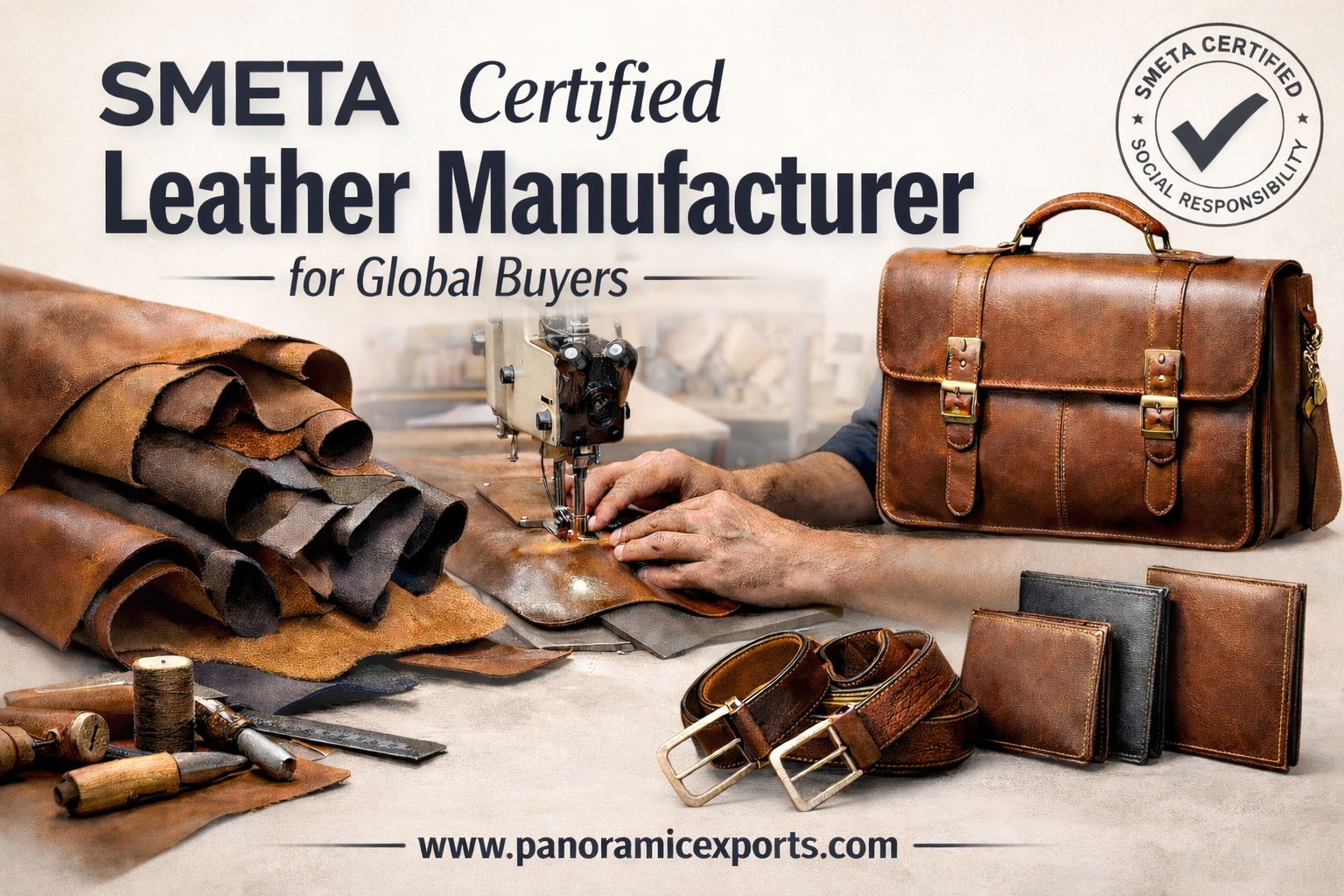
  • SMETA Certified Leather Manufacturer for Global Buyers

    SMETA Certified Leather Manufacturer for Global Buyers

    SMETA Certified Leather Manufacturer for Global Buyers

    Let’s be honest about the state of global sourcing: “Ethical” is a word that gets thrown around way too easily lately. Most people slap it on a website just to keep a buyer interested. But in 2026, a buzzword won’t save your brand if a supply chain scandal hits the press. If you’re hunting for a SMETA Certified Leather Manufacturer, you aren’t just looking for a PDF to show your board; you’re looking for a partner who isn’t hiding a mess behind the factory gates. At Panoramic Exports, we realized a while ago that the only way to stay alive in this market is through radical, audited transparency.

    Being a SMETA Certified Leather Manufacturer means we’ve invited the most annoying, detailed inspectors in the world to pick apart our business. SMETA (SEDEX Members Ethical Trade Audit) isn’t a “check the box and forget it” thing. It’s a deep dive into our payroll, our fire exits and our chemical waste. For a global buyer, this is the only real way to sleep at night. You need to know that the leather goods on your shelves didn’t come at the cost of someone’s health or dignity.


    The Reality of the Audit: It’s Not Just Paperwork

    When you sign a contract with a SMETA Certified Leather Manufacturer, you’re buying into a 4-pillar system: Labor, Health and Safety, Environment and Business Ethics. Plenty of factories in India have a nice, shiny front office, but a SMETA auditor is going to walk right past that. They’re looking at the bathrooms, checking the fire extinguishers and interviewing workers privately to make sure they aren’t being coached.

    At Panoramic Exports, we don’t treat the audit like a test to be feared; it’s our baseline. We know for a fact that a craftsman who is paid fairly and works in a safe, ventilated room makes a better bag than someone stuck in a sweatshop. Being a certified leather manufacturer in the Indian leather hub means we’ve invested in the people, not just the machines. The “old school” way of production—where only speed mattered—is dead. Today, the only metric that keeps you in business is compliance.


    Why Social Compliance is Your Best Marketing Tool

    By 2026, the average consumer has become an amateur detective. They’re checking labels and asking brutal questions on social media. Working with a SMETA Certified Leather Manufacturer gives you the actual data to shut down the skeptics. When you can prove your products come from a factory that follows the SMETA Audit methodology, you’re selling peace of mind, not just leather.

    That kind of honesty builds the kind of loyalty money can’t buy. As a SMETA certified manufacturer, we hand over the full audit report to our clients. We don’t scrub the “findings”—we show you how we fixed them. This level of transparency is rare in a trade where tanneries usually operate in the dark. By choosing a leather manufacturer, you are basically insurance-proofing your brand against the massive new regulations coming out of Europe and the US.


    Engineering an Ethical Factory Floor

    What does a SMETA Certified Leather Manufacturer look like on a random Tuesday morning in Noida? It means the lighting is checked so our stitchers aren’t straining their eyes. It means the air in the drum room is actually moving. It means the emergency exits are never, ever locked for “security” reasons.

    The biggest thing, though, is the payroll. A SMETA Certified Leather Manufacturer has to prove—with bank statements, not just ledgers—that every single person is getting at least the minimum wage and that overtime is a choice, not a requirement. At Panoramic Exports, we’ve found that this isn’t just “nice” behavior—it’s smart business. Our staff turnover is almost non-existent. The same hands that made your samples two years ago are probably the same ones making your bulk order today. That’s the “compliance dividend”.


    The Environmental Pillar: Cleaning Up the Act

    Leather usually has a “dirty” reputation. As a SMETA Certified Leather Manufacturer, we are trying to kill that stereotype. The environmental part of the audit looks at our waste, our water and our chemicals.

    We don’t just toss our offcuts. We have a circular system where scraps are repurposed for smaller items or sold to local artisans. Being a certified leather manufacturer means we have a real, documented plan to cut our carbon footprint. We’re pushing toward chrome-free tanning and plant-based dyes because that’s where the smart money is moving. If your current supplier can’t show you an impact report, they aren’t a serious SMETA Certified Leather Manufacturer.


    Navigating Global Trade Without the Headaches

    Trade laws are getting aggressive. Governments in the West are now making retailers responsible for what happens five levels deep in their supply chain. If your factory isn’t audited, you’re a walking liability. This is why everyone is suddenly scrambling for a SMETA certified leather manufacturer.

    At Panoramic Exports, we act as your shield. We take the stress of compliance off your plate. When you list us as your leather manufacturer, you’re telling customs and trade boards that you’ve done the work. We handle the 48-hour inspections so you can focus on selling. We are essentially the “compliance back-office” for your brand.


    The Price of Doing Things Right

    We’ll be the first to tell you: we aren’t the cheapest shop in town. If you want the lowest possible price, you have to go to the units that ignore safety and underpay their staff. But if you want a SMETA Certified Leather Manufacturer, you’re paying for security.

    The cost of being a leather manufacturer includes the audit fees, the safety gear and the proper wages. But when you look at the cost of a PR disaster or a shipment being seized at the port for labor violations, that “compliance premium” is the best money you’ll ever spend. At Panoramic Exports, we believe in fair prices for honest work. We are the certified leather manufacturer for brands that actually care about their reputation.


    Conclusion

    The “don’t ask, don’t tell” era of manufacturing is over. The future belongs to the factories that open their doors. As a SMETA Certified Leather Manufacturer, Panoramic Exports is leading that shift in India. We aren’t perfect, but we are audited and we’re getting better every day.

    Whether you’re after buffalo leather totes or small goat-skin accessories, choosing a certified leather manufacturer is how you make sure your brand survives the next decade. Let’s build something that looks great and feels right. If you want a leather manufacturer that actually lives by the rules, let’s talk.


    FAQs

    1. What does SMETA actually check?

    It’s a 4-pillar audit: labor, health/safety, environment and business ethics. It’s the most thorough check in the business.

    2. Why should I care about certification?

    It’s third-party proof that your factory isn’t breaking laws. It protects you from legal risks and bad PR.

    3. Do I get to see the audit results?

    Yes. As a transparent certified manufacturer, we give our clients full access to our SEDEX reports.

    4. Is it more expensive?

    A little bit. Ethical manufacturing costs more because we pay fair wages and maintain high safety standards. It’s worth it for the risk reduction.

    5. How often do they audit you?

    Usually every 1-2 years. An independent body comes in to make sure a SMETA Certified Leather Manufacturer is still following the rules.

  • How to Make Beaded Handbags?

    How to Make Beaded Handbags?

    How to Make Beaded Handbags?

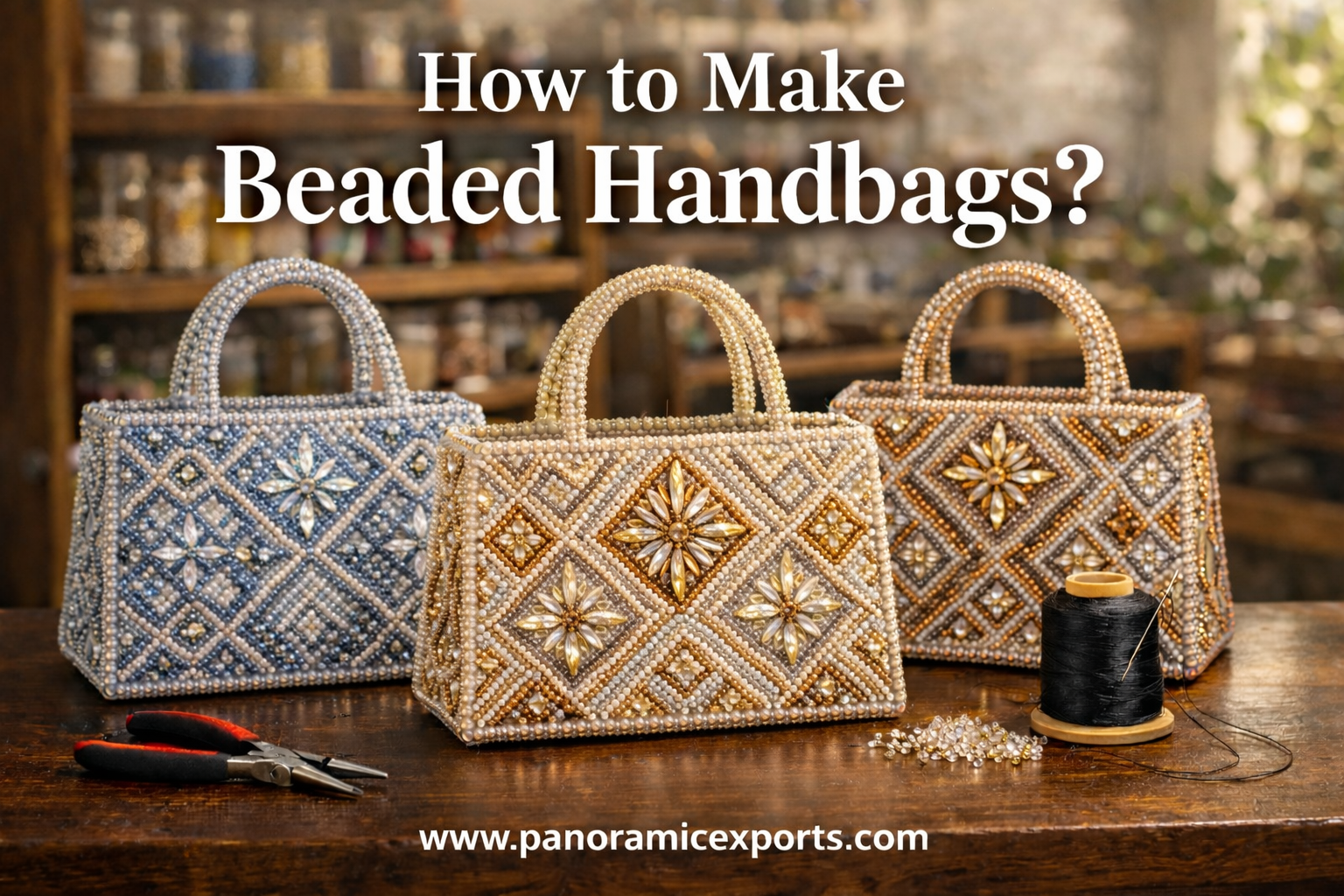
    Look, most people think making Beaded Handbags is just a relaxing afternoon of stringing glass on a line. If that’s your plan, you aren’t making a product; you’re making a mess. In the world of high-end export, a beaded bag isn’t jewelry—it’s a load-bearing structure. You’ve got thousands of glass beads trying to pull themselves to the floor and if your engineering is weak, the bag will look like a sad, saggy sack before it even hits the retail shelf.

    At Panoramic Exports, we treat Beaded Handbags like a construction project. It’s about managing gravity and friction. If you want to build something that actually survives a night out or a global shipping container, you have to stop thinking about “pretty” and start thinking about “structural integrity”.


    The Math Before the Needle

    Before anyone picks up a bead, we’re doing math. Beaded Handbags are deceptively heavy. A standard-sized clutch can easily weigh as much as a small laptop. The material density and durability of the beads themselves also matter, especially when understanding the glass bead manufacturing process that influences overall bag strength. If you just start weaving without a plan, the weight will stretch your thread and by day three, the bag will be two inches longer than you intended.

    We map out the weight distribution on a technical grid. We don’t use standard fishing line because it’s rubbish—it stretches and eventually snaps under UV light. We use a bonded nylon thread or a polymer-coated steel wire. You need something that has zero “creep.” If you want your Beaded Handbags to keep their shape, the foundation has to be as stiff as a bridge cable.


    The Lattice: More Than Just a Pattern

    When we weave a bag at Panoramic Exports, we aren’t just sewing. We are building a lattice. This is the “skin” of the bag and it’s under constant tension. The secret to a bag that feels “solid” rather than “mushy” is the double-pass. Every single bead has the thread running through it at least twice, often three times in the corners.

    This creates a redundant system. If a customer snags a bead on a car door and one thread snaps, the bag stays together. Most cheap Beaded Handbags use a single-pass method. One break and the whole thing unspools like a nightmare. We also hide “anchor knots” every few inches. It’s a pain to do and it slows down production, but it’s the only way to guarantee the bag won’t fall apart.


    The Bone Structure: Frames and Mesh

    If you put a bag on a table and it collapses into a puddle of beads, you failed. To get that high-end, sculptural look, you need a skeleton. For professional Beaded Handbags, that usually means a hidden acrylic box or a reinforced wire mesh frame.

    This skeleton takes the weight so the beads don’t have to. It gives the bag that satisfying “clink” when you set it down. It’s the difference between a cheap souvenir and a luxury accessory. Without a frame, the gussets (the sides) will always buckle inward. You can’t fix that with more Beads; you fix it with better bones.


    The Lining: Don’t Glue It

    This is where the amateurs give themselves away. They build a beautiful Bead exterior and then try to glue a lining inside. It never works. Within a week, the glue fails and the lining is a tangled mess.

    For professional Beaded Handbags, the lining has to “float.” We hand-stitch the interior fabric to the frame, not the beads. This way, when the customer drops their heavy keys or a phone into the bag, the weight pulls on the internal frame, not the delicate beadwork. It’s a “bag within a bag” philosophy. At Panoramic Exports, we use high-denier satin that can handle the friction of the beads without fraying.


    Hardware: Anchors, Not Just Zippers

    The handles and clasps are the highest stress points on any bag. If you just sew a handle onto the top layer of beads, it will rip off. Period. For our Beaded Handbags, we use “D-ring” anchors that are woven directly into the structural wire. The handle becomes part of the bag’s DNA.

    We also run “stress tests” in the workshop. We hang the bags with double the intended weight for 24 hours. If there’s even a millimeter of stretch, the design goes back to the drawing board. This is why Panoramic Exports is the go-to for brands that can’t afford quality complaints. We handle the grit so you get the glitter.


    The Sustainability of Craft: Why Construction Matters

    In 2026, you can’t talk about Beaded Handbags without talking about the lifespan of the product. The world is finally waking up to the fact that “cheap” is actually expensive when the item ends up in a landfill after three uses. When we build a bag at Panoramic Exports, we’re thinking about the ten-year mark, not just the ten-minute mark on a retail shelf.

    A bag built with a floating lining and a reinforced skeleton is, by definition, a sustainable choice. Why? Because it doesn’t break. If a thread is bonded nylon and the beads are high-grade glass, the bag doesn’t degrade. It becomes a vintage piece rather than trash. We see a lot of “greenwashing” in the industry, but true sustainability starts with a needle that doesn’t fail and a frame that doesn’t snap.

    This level of detail is also what protects the artisans. Hand-weaving a structural lattice is an elite skill. By refusing to cut corners with single-pass sewing or cheap glue, we ensure that the craft remains a respected profession. At Panoramic Exports, we aren’t just selling a bag; we’re selling the hours of focus and the technical mastery it took to keep those beads in perfect, rigid alignment. If you want a brand that stands for more than just aesthetics, you have to invest in the engineering.


    Conclusion

    Building Beaded Handbags is a brutal, hand-cramping process. It’s slow, it’s expensive and there are no shortcuts. But when you hold a bag that’s been built with proper tension and a solid skeleton, you feel the difference immediately. It feels like an object of value, not a fragile toy.

    At Panoramic Exports, we aren’t interested in making “fast fashion” junk. We make pieces that are intended to be kept. If you want to know how to make a bag that actually lasts, you start with the structure and end with the sparkle.


    FAQs

    1. Why does my beaded bag look “warped”?

    It’s a tension issue. You’re likely pulling too hard in some spots and not enough in others. You need a consistent “drag” on the thread.

    2. Can I use regular thread for Beaded Handbags?

    No. Cotton will rot and polyester will stretch. Use bonded nylon or coated steel wire if you want it to survive a season.

    3. How do I stop the bottom from sagging?

    You need an internal base plate—usually acrylic or a heavy-duty mesh. Beads cannot support their own weight over a wide area.

    4. Is hand-weaving better than machine-made?

    For intricate 3D shapes, machines can’t touch the precision of a human hand. Machines are for “flat” work; artisans are for “structure.”

    5. How do you clean these Beaded Handbags?

    Gently. Use a soft damp cloth. Never soak them—the internal wire might be rust-resistant, but you don’t want to test the lining’s limits.

  • Bulk Leather Tote Bags Supplier for Retail Brands

    Bulk Leather Tote Bags Supplier for Retail Brands

    Bulk Leather Tote Bags Supplier for Retail Brands

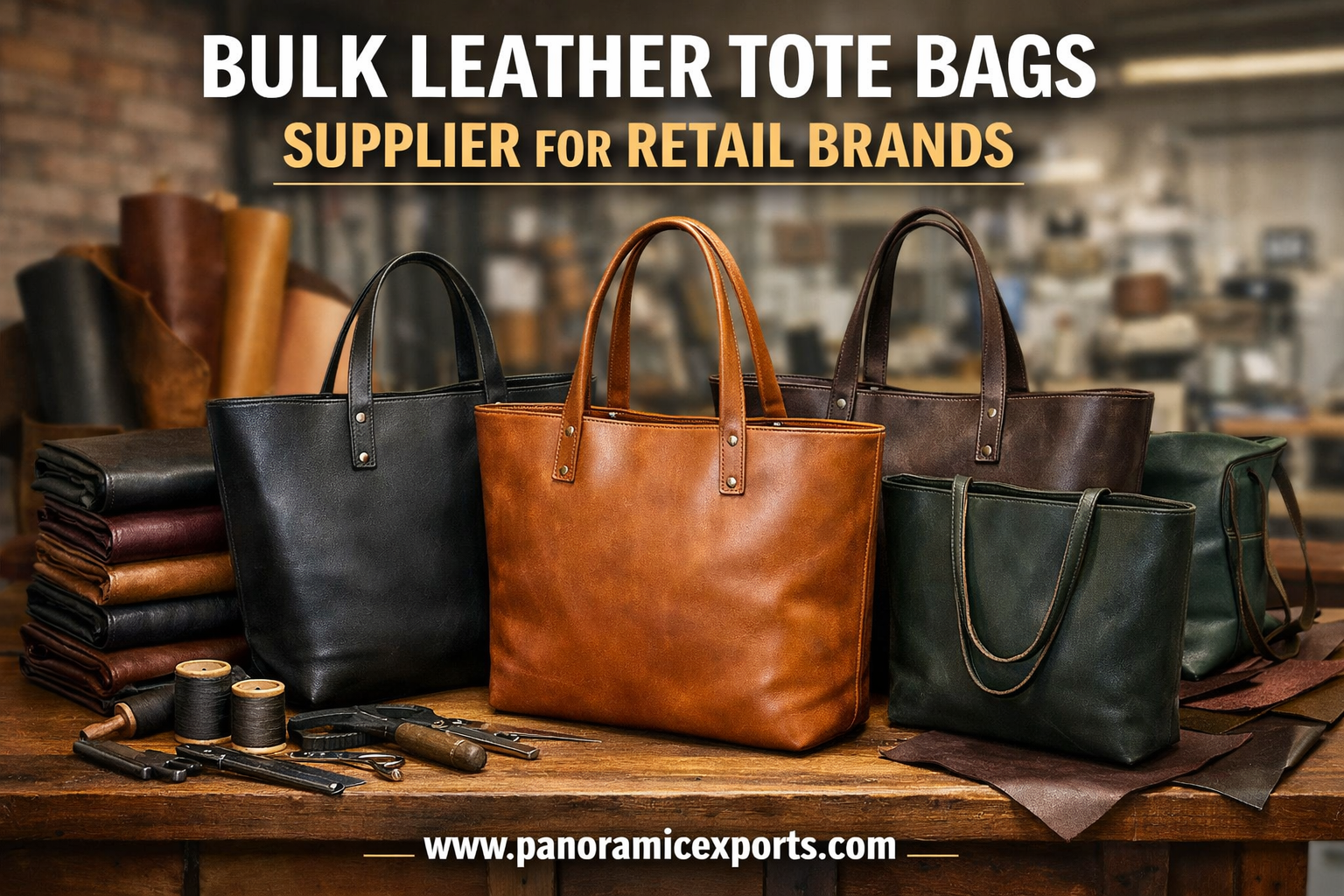
    If you’re running a boutique or a growing retail label, you know the “tote trap.” You find a bag that looks great in a catalog, but when the crate arrives, it feels like cardboard or smells like a chemical plant. As a Bulk Leather Tote Bags Supplier, we’ve seen it all. At Panoramic Exports, we don’t just “source”—we build. We focus on that specific, heavy-duty buffalo leather that doesn’t just sit on a shelf; it actually survives the daily grind.

    Finding a partner for Bulk Leather Tote Bags Supplier isn’t about finding the lowest price on a spreadsheet. It’s about finding a factory that understands the “pull” of the grain and the strength of a reinforced handle. If your totes fail at the shoulder strap after three months, your brand is dead. We make sure that never happens.


    The Raw Truth About Your Materials

    Most “premium” wholesalers are just moving mass-produced junk. When you look for a Bulk Leather Tote Bags Supplier, you need to be asking about the “crust” and the tanning cycles, not just the price per unit. Understanding the tanning cycles and hide quality is essential in leather sourcing, as explained in the Leather Industry and Production Process, which directly impacts durability and finish.

    • The Grain Reality: We use top-grain buffalo hide. It’s thick, it’s honest and it develops a patina that looks better the more your customers use it.

    • The Tanning Grind: We don’t rush the drums. A lot of suppliers cut the soak time to save a few bucks on electricity, resulting in “papery” leather. Our process ensures the oils actually penetrate the hide.

    • Hardware That Holds: A tote is only as good as its rivets. We use solid brass or reinforced alloy hardware because there’s nothing worse than a beautiful bag with a snapped clip.


    Why Boutiques Trust Our Floor

    Running a boutique means you can’t afford to sit on 5,000 units of one color. You need agility. As your Bulk Leather Tote Bags Supplier, we get that. The typical “factory” mindset is rigid—they want massive MOQs and zero changes. Panoramic Exports operates differently. We lean into the “artisan export” model.

    We’re small enough to care about your custom embossed logo but big enough to handle a global shipment without breaking a sweat. We treat every order of leather tote bags wholesale as a portfolio piece for your brand. If your customers aren’t obsessed with the smell of the leather when they open the box, we haven’t done our job. It’s that hand-cramping effort in the workshop that gives our bags their soul.


    Engineering the Perfect Everyday Shopper

    A tote bag looks simple, but it’s an engineering challenge. It’s a literal bucket made of skin that has to carry a laptop, a water bottle and a life’s worth of clutter. Any Bulk Leather Tote Bags Supplier can stitch two squares together, but making it last requires understanding stress points.

    At Panoramic Exports, we double-stitch the stress zones and use a specific bonded nylon thread that doesn’t rot or fray. When you buy leather tote bags wholesale from us, you’re buying peace of mind. You won’t have customers coming back with torn linings or loose threads. We build these to be “buy it for life” items, which is the only way to build real brand loyalty in a world of disposable fashion.


    Navigating the Global Supply Chain

    We aren’t a middleman office in a glass tower. Panoramic Exports is rooted in the manufacturing hubs where the work actually happens. When you search for a bulk leather tote bags supplier, you’re usually talking to a salesperson. When you talk to us, you’re talking to the people who check the stitching tension on every single bag.

    Our focus is 100% on the export market. We know the compliance rules, the SEDEX standards and the shipping logistics that usually give small brands a headache. We handle the grit of the production line so you can focus on the “Premium” part of your brand. In the world of leather tote bags wholesale, we are the partner that actually answers the phone when you have a question about a dye lot or a shipping lead time.


    Scaling Your Brand Without the Bloat

    One of the biggest hurdles for new labels is the sheer cost of entry. Most Bulk Leather Tote Bags Supplier options force you into huge inventories that kill your cash flow. We’ve flipped that model. By keeping our production lines flexible, we allow boutiques to source leather tote bags wholesale in manageable batches.

    This allows you to test colors, play with different textures and see what your customers actually want before you go all-in on a massive run. We’re in this for the long haul. We want to be the bulk leather Tote Bags supplier that helps you grow from a local shop to a global name. Your success on the retail floor is the only metric that matters to us.


    The Real-World Inspection Grind

    When you’re standing in a warehouse, you quickly realize that a “good price” is a trap if you aren’t watching the hides like a hawk. The reality of dealing with a Bulk Leather Tote Bags Supplier is that the best stuff never just falls into your lap; you have to go in and pull it out yourself. It’s about knowing the difference between a hide that was rushed through the drum and one that was given the time to actually take the oils.

    To survive the sourcing grind, you’ve got to keep a few hard truths in mind:

    • Grain Over Shine: Never trust a high-gloss finish. Suppliers often use it to hide scars.

    • The Drum Reality: If the leather feels “papery,” they cut corners on the tanning time.

    • The Smell Test: Real leather smells earthy, not like a chemical plant.


    Conclusion

    You aren’t just buying inventory; you’re buying your brand’s reputation. Whether you need a classic tan shopper or a modern black oversized tote, being a Bulk Leather Tote Bags Supplier means we have to be better than “good enough.” We have to be the best. At Panoramic Exports, we’ve spent years perfecting the balance between artisanal hand-finishing and export-scale production. If you’re tired of the hollow, machine-made junk and want a leather tote bags wholesale partner who actually knows their hides, let’s talk.


    FAQs

    1. What’s your MOQ for custom branded totes?

    We’re flexible. We work with boutique-friendly volumes to help you scale without the inventory bloat.

    2. What kind of leather do you specialize in?

    We are all about buffalo leather. It’s durable, heavy-duty and perfect for a high-end tote.

    3. Do you handle the shipping and customs?

    Yes. Panoramic Exports manages the logistics from our floor to your door.

    4. Can I get custom colors?

    Absolutely. We can match specific pantones or create custom finishes like oil-pull-up.

    5. How long does an order take from a Bulk Leather Tote Bags Supplier?

    Usually, 45 to 60 days. Good tanning and hand-stitching can’t be rushed.

  • How to Make a Beads Bag?

    How to Make a Beads Bag?

    How to Make a Beads Bag?

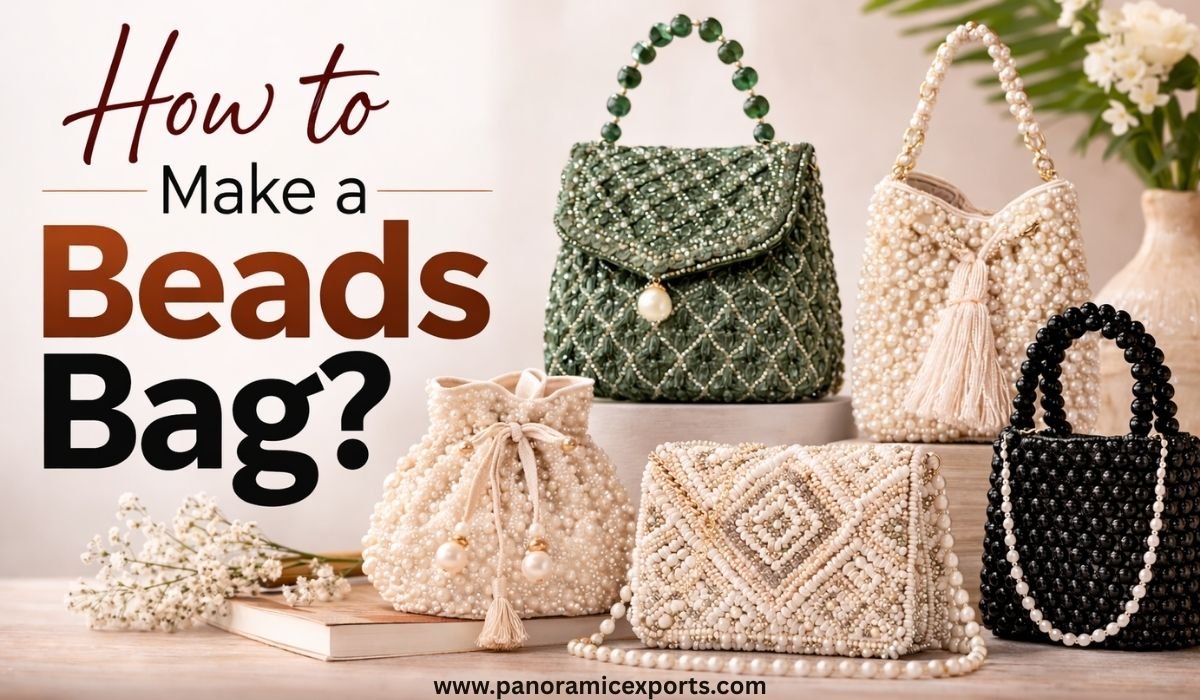
    Look, making a Beads Bag is basically a marathon for your fingers. It’s the trend that won’t quit because these bags have a tactile, heavy soul that plastic-molded fast fashion can’t touch. But don’t let the pretty colors fool you—this is structural work. If you don’t get the physics right, you’re just making a expensive pile of loose beads. A real bag is all about one thing: tension.

    It’s about that raw, sore-thumb feeling after four hours of pulling nylon tight. You’re fighting the material the whole time. If you go soft on the line for even a second, the whole bag loses its “bones” and starts to sag like an old sweater. You want a Beads Bag that feels like a solid brick in your hand—something that clacks with authority when you set it down on a glass table. That only happens when you commit to the grind.


    Understanding the Anatomy of a Beads Bag

    You have to stop thinking like a jeweler and start thinking like a mason. You’re laying bricks, not stringing a necklace.

    The Beads (Choose Wisely)

    Your choice of bead dictates the weight of your life for the next ten hours. Acrylics are the go-to for that chunky, 90s-style Beads Bag vibe. They’re light enough that you won’t get a shoulder ache. Glass or crystal is the play if you want that high-end “clink” when the bag hits the table. I always suggest 8mm or 10mm rounds. If you go smaller for your first bag, you’ll probably throw the whole project out the window by hour three.

    The Gear You Actually Need

    Forget the stretchy cord from the craft aisle. It’s useless here.

    • The Line: You want 0.5mm clear nylon monofilament. It’s fishing line, basically. It doesn’t stretch and it’s tough as nails.

    • The Count: Grab 1,500 beads. You’ll lose ten under the couch, so overbuy.

    • The Nippers: Use a pair of flush-cut snips. You need to bury the knots inside the beads so they don’t scratch your hands.


    Step-by-Step Guide: How to Make a Beads Bag?

    The “Right Angle Weave” (RAW) is the industry secret. It creates a grid that’s stiff enough to stand up on its own.

    1. The Starting Square

    Cut a length of line about as long as your arm span. Put four beads on. Take the right end of the line, loop it back through the fourth bead on the left and yank it. You should see a tight little square. This is the “seed” for your Beads Bag.

    2. Building the Foundation

    Add two beads to the left string and one to the right. Cross the right string through the last bead on the left side. Repeat. Keep going until you have a flat strip that matches the width you want for your bead bag. If the strip feels floppy, you’re being too gentle. Pull that line until the beads lock together.

    3. Turning the Corner (The Walls)

    Now you have to go vertical. You stop adding to the end and start “hooking” your line into the side beads of the base. This is where the beads handbag starts to feel like a real object. Every time you cross a unit, give the line a sharp tug. Consistency is everything. If one row is loose, the whole bag will sag.

    4. Toughening the Handles

    The handle is the failure point for most DIY projects. Don’t just string beads on a wire. Weave a flat, narrow strap of beads and then “zip” it onto the main body of the beads bag. Once it’s attached, run your thread through the entire handle loop three times. This reinforces the beads bag so it can actually hold a heavy phone without the line snapping.


    What Makes it “Professional”?

    There’s a massive gap between a bag made on a kitchen table and one that sits in a luxury window. Professional-grade work means zero visible knots and zero gaps. In the global trade, this kind of manual labor is respected because it can’t be automated. For those tracking how these artisanal skills contribute to the economy, The World Bank’s trade reports often highlight the value of hand-manufactured exports.

    A pro Beads Bag often uses reinforced internal lines and custom-dyed acrylics that a typical hobbyist just won’t have access to.


    Panoramic Exports: The Industrial Standard

    This is exactly where Panoramic Exports dominates. We’ve taken the soul of the handmade Beads Bag and applied industrial-level quality control to it. Based out of India, we don’t just “make” bags; we produce export-quality accessories that hit the international market with perfect symmetry and durability. We handle the massive orders that individual crafters can’t touch.

    At Panoramic Exports, we focus on the technical side of the craft. We use high-tensile strength lines and premium-grade beads that won’t fade or crack. Our artisans are masters of the “pull,” ensuring every bag has that signature rigidity. Whether it’s a sleek evening clutch or a massive beaded tote, our manufacturing process ensures that the quality stays consistent across a thousand pieces. For us, a bead bag is a piece of precision engineering.


    Conclusion

    Making a Beads Bag is a grind. It’s one bead, one cross-stitch and one pull at a time. There’s no machine that can replicate the specific tension a human hand gives to a bead bag. Whether you’re trying to DIY your own signature piece or you’re a brand looking for the massive scale that Panoramic Exports provides, you have to respect the hours that go into every single weave. It’s slow fashion at its best.

    This isn’t just about throwing together a quick purse; you’re actually building something with enough grit and personality that it refuses to be ignored. When you finally tuck in that last knot and cut the line, you’re holding a solid piece of work that isn’t going to fall apart or look dated by next season. It’s that raw, hand-cramping effort—the kind you can’t fake—that gives a bead bag its real soul in a world that’s already overflowing with hollow, mass-produced junk.


    FAQs

    1. Why does my Bead Bag look crooked?

    It’s almost always a tension issue. You’re pulling harder on one row than the other. You need to “snap” each unit into place with the same force.

    2. What’s the best way to hide the knots?

    Tie a surgeon’s knot, then use your pliers to pull the knot into the center of a bead hole. It should “pop” in and disappear.

    3. Is the bead bag trend over?

    Not even close. The bead bag is a classic because it’s 3D texture. It doesn’t go out of style any more than a pearl necklace does.

    4. Can I use silk thread?

    No. Silk will fray and rot over time. For a bead bag, you need clear nylon. It’s waterproof and won’t stretch.

    5. Does Panoramic Exports do custom colors?

    Yes. Panoramic Exports specializes in matching bead colors to specific brand palettes for wholesale orders.

  • How to Make a Beaded Purse?

    How to Make a Beaded Purse?

    How to Make a Beaded Purse?

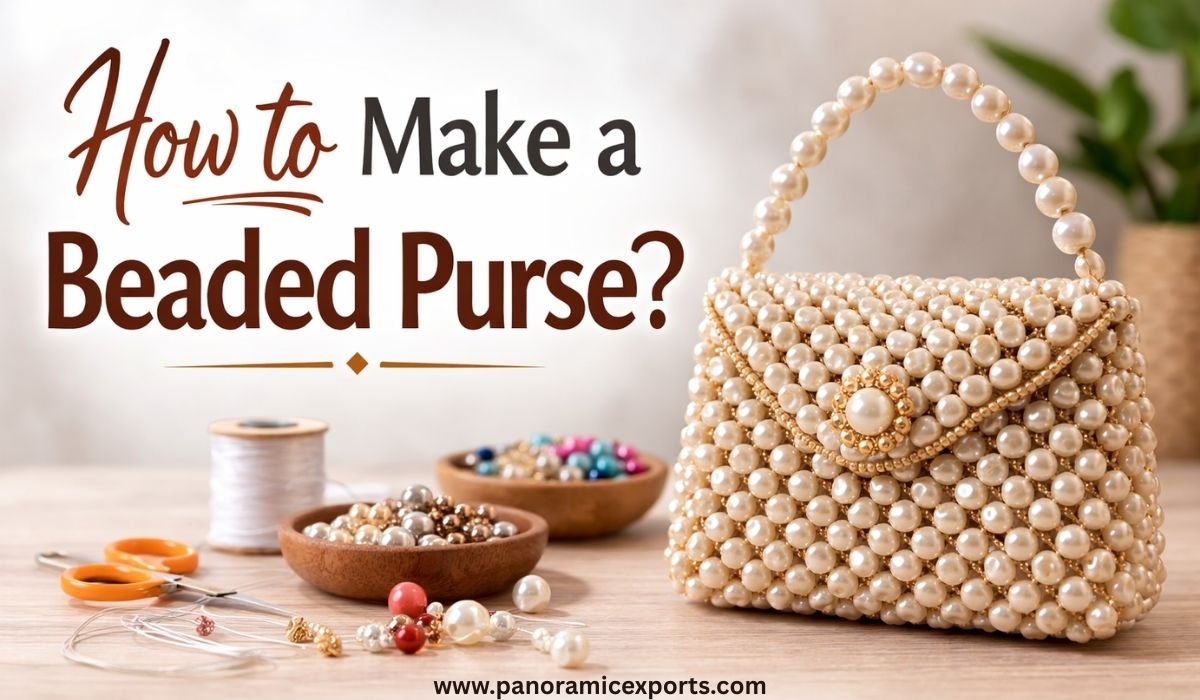
    Look, making a Beaded Purse is basically a marathon for your fingers. It’s the trend that won’t quit because these items have a tactile, heavy soul that plastic-molded fast fashion can’t touch. But don’t let the pretty colors fool you—this is structural work. If you don’t get the physics right, you’re just making an expensive pile of loose beads. A real Beaded Handbag is all about one thing: tension.

    It’s about that raw, sore-thumb feeling after four hours of pulling nylon tight. You’re fighting the material the whole time. If you go soft on the line for even a second, the whole bag loses its “bones” and starts to sag like an old sweater. You want a Beaded Purse that feels like a solid brick in your hand—something that clacks with authority when you set it down on a glass table. That only happens when you commit to the grind and respect the friction between the spheres.


    The Physics of the Build

    Stop thinking like a jeweler. Start thinking like a mason. You’re laying bricks, not stringing a necklace. If the foundation is weak, the whole Beaded Handbag folds the second you put a heavy wallet in it. The entire structure relies on a geometric system called the Right Angle Weave, a cross-locking beadwork method that creates strong, structured surfaces in purse construction. You can understand the technical weaving process in detail by reading this guide on Right Angle Weave technique.

    Picking Your “Main Character”

    The character of your Beaded Purse starts with the material. Acrylics are the go-to for that chunky, 90s-style vibe. They’re light enough that you won’t get a shoulder ache. Glass or crystal is the play if you want that high-end “clink” when the bag hits the table. I always suggest 10mm rounds for a standard purse. If you go smaller for your first project, you’ll probably throw the whole thing out the window by hour three. The weight of the bead matters because it provides the gravity needed to keep the weave seated properly.

    Essential Tools and Materials for Making a Beaded Purse

    Forget the stretchy cord from the craft aisle. It’s useless for a Bead Purse. You need 0.5mm to 0.6mm clear nylon monofilament. It’s fishing line, basically. It doesn’t stretch and it’s tough as nails. You’ll also need about 1,200 beads—overbuy, because you’ll lose ten under the couch. And get a pair of flush-cut snips. You need to bury the knots inside the beads so they don’t scratch your hands or snag on a silk dress.


    The Construction Reality: How to Make a Beaded Purse?

    We aren’t following a “tutorial” here; we’re following a blueprint. The construction of a beaded purse is a non-linear process that happens in three specific structural planes.

    Constructing the Floor

    The base of your beaded purse dictates the entire silhouette. You start by threading four units onto your line and crossing the ends to create a “cell.” By repeating this horizontally, you create the floor. This section must be exceptionally tight, as it bears the brunt of the interior weight. If the floor of your beaded handbag is soft, the walls will collapse inward the moment you pick it up.

    Rising Vertically

    To move from a flat mat to a three-dimensional beaded purse, you have to pivot. You “link” into the side units of your floor and begin building the walls. This is where the bag starts to gain its characteristic rigidity. If your tension is uneven here, the bead handbag will lean. It’s a slow-motion battle against the tangling of lines and the limits of human finger strength. You’re fighting the material the whole time.

    The Kinetic Stress Points

    The handle and closure are where most DIY efforts fail. To prevent a snap, you have to weave the handle directly into the grid of the beaded purse, distributing the weight across the entire frame. This “deep-root” weaving is what makes a professional beaded handbag last for decades rather than weeks.


    Industrial Excellence: The Panoramic Exports Standard

    While individual crafting is a slow, meditative process, the global market demands a level of consistency that is difficult to achieve in a home setting. This is the niche occupied by Panoramic Exports. As a specialist in the manufacturing and distribution of artisanal goods, our company bridges the gap between traditional Indian hand-weaving and the rigorous demands of international fashion houses.

    At Panoramic Exports, we don’t just “make” things; we manufacture them to withstand the real world. Every Beaded Purse produced by our team undergoes a specific tension-test to ensure the weave is uniform across every square inch. We focus on “Invisible Finishing,” a technique where knots are buried deep within the sphere cores to prevent skin irritation. For boutiques and wholesalers, partnering with our company means access to a level of craftsmanship where every single bead is accounted for. We handle the heavy lifting of production so that the final Beaded Handbag hits the retail shelf with perfect symmetry.


    Conclusion

    The journey of creating a Beaded Purse is a grueling exercise in focus. It is a slow, methodical grind where one missed loop can compromise the entire structure. From the initial layout of the base to the final reinforcement of the straps, making a Bead Purse is about honoring the material and the clock. It’s one Bead, one cross-stitch and one pull at a time.  Whether you’re trying to DIY your own signature piece or you’re a brand looking for the massive scale that Panoramic Exports provides, you have to respect the hours that go into every single weave. It’s slow fashion at its best.

    This isn’t just about throwing together a quick purse; you’re actually building something with enough grit and personality that it refuses to be ignored. When you finally tuck in that last knot and cut the line, you’re holding a solid piece of work that isn’t going to fall apart or look dated by next season. It’s that raw, hand-cramping effort—the kind you can’t fake—that gives a Beaded Purse its real soul in a world that’s already overflowing with hollow, mass-produced junk.


    FAQs

    1. Which thread is strongest for a Bead Purse?

    A clear, non-stretch nylon fishing line (0.6mm) provides the best mix of strength and invisibility for a Beaded Purse.

    2. How many beads does it take to finish a Bead Purse?

    Depending on the size, you can expect to use anywhere from 1,200 to 1,500 beads for a standard beaded purse.

    3. How do I fix a loose row in my bead purse?

    You can’t just “tighten” it from the outside; you usually have to unweave and restart that section of the beaded purse to fix the tension.

    4. Is a beaded purse waterproof?

    The beads and nylon are waterproof, but you should dry a Beaded Handbag thoroughly to prevent moisture from weakening the internal line.

    5. Does Panoramic Exports handle custom purse designs?

    Yes, Panoramic Exports works closely with global designers to manufacture specific, high-quality purse patterns for international markets.

  • How to Make a Bead?

    How to Make a Bead?

    How to Make a Bead?

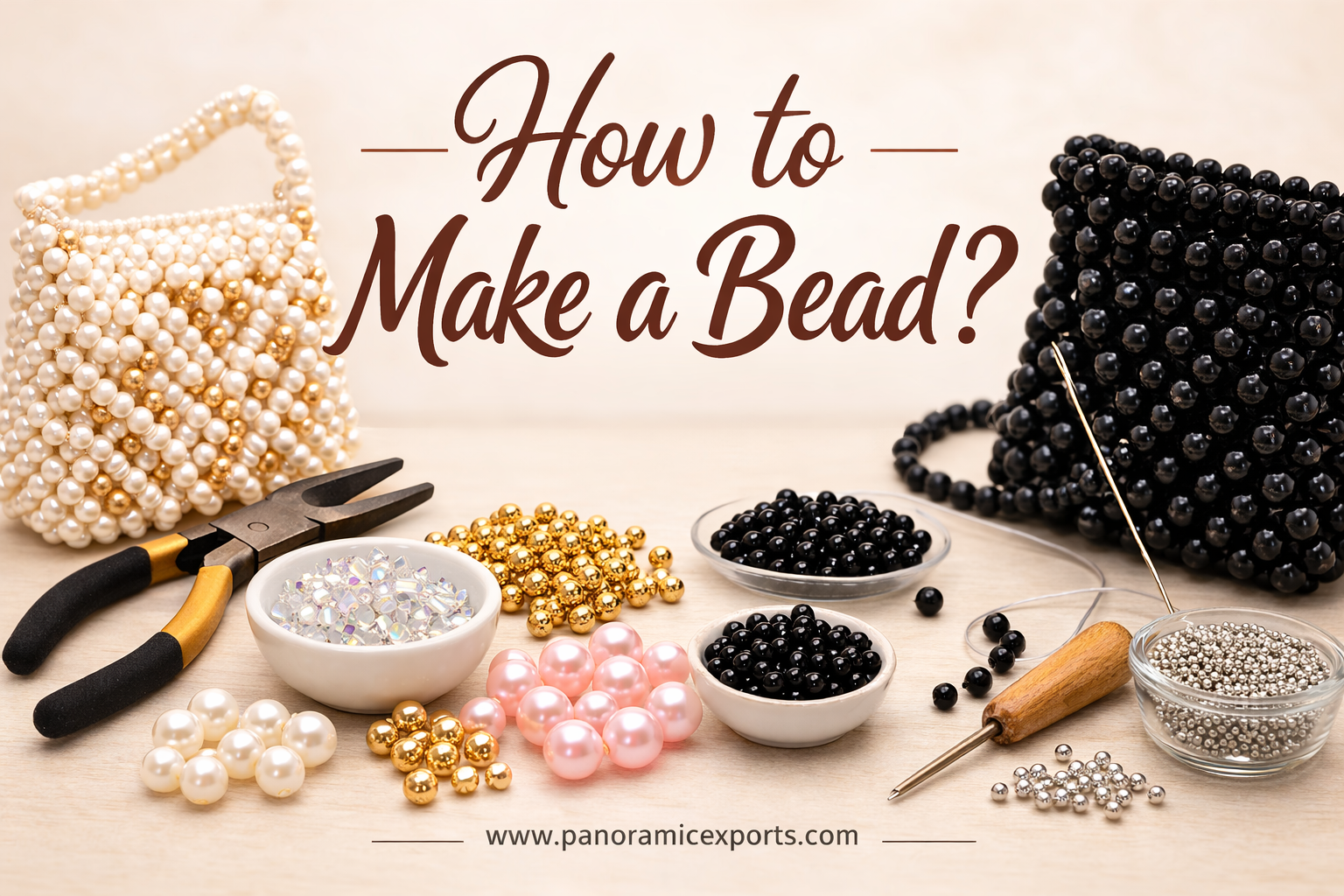
    There’s a real, almost hypnotic magic in the way a high-end bag rattles and catches the light. When you pick up a signature piece—whether it’s a delicate vintage clutch or a bold, oversized tote—you aren’t just holding a simple accessory; you’re carrying a mosaic made of thousands of tiny, individual stories.

    At Panoramic Exports, we’ve moved past seeing the Bead as just a shiny bit of glass or plastic for decoration. To us, it’s a structural “brick.” In the intense world of international fashion, every single unit has to be engineered with the same precision you’d expect from high-end machinery. It’s this technical obsession that separates a cheap, one-season trinket from a true fashion heirloom that you’ll want to keep forever.


    Picking the Right Materials for Your Bag

    To build a bag that actually sets a trend, you have to start with the right foundation. We pick our materials based on how they play with the light and how much weight they can actually carry once you throw in your phone, keys and wallet.

    • Glass Seed and Bugle Varieties: These are the workhorses of luxury embroidery. To make these, silica is melted down at crazy-high temperatures. They are perfect for those flat “Staud-style” patterns because their uniform shape keeps the bag surface feeling totally smooth.

    • 3D “Berry” and Chunky Baubles: One of the biggest vibes this year is the “Tactile Tote”. Many of these bold styles are influenced by the History and Evolution of Beaded Handbags, where designers first experimented with sculptural bead textures and statement silhouettes. We use huge, 14mm units that give the bag a bumpy, sensory feel. They offer a great grip and a bold, rebellious look that pops in flash photography.

    • Crystal Bicones: For evening wear, the crystal Bead is the undisputed king. These are cut with tiny, sharp facets to bounce light in every direction. When a bag “glows” across a dark restaurant, it’s usually because of these precision-cut angles.

    • Acrylic and High-Density Resins: For those massive totes that carry your whole life, glass can be too heavy. That’s where resin comes in. It can look exactly like marble or bone but stays light enough to carry all day without a backache.


    The Workshop Secret: Step-by-Step Production

    Making a professional component for the export market is a world away from a DIY craft kit you’d find in a hobby store. It’s a disciplined process that ensures every piece is a perfect clone of the last.

    1. Melting the Color In: Everything starts in the furnace. We heat the material until it’s liquid and fuse the dye directly into the molten core. This means the color is permanent. Unlike cheap versions that peel, a “fused-color” Bead stays bright for years.

    2. The Perfect Hole: The molten goop is drawn through a machine to create a long, hollow tube. This is where we form the “aperture.” In professional bag making, that hole has to be perfectly centered. If it’s even slightly lopsided, the whole bag will pucker.

    3. Precise Slicing: Those long tubes are cooled and fed into high-speed cutters. Every unit is sliced to the exact same millimeter. This consistency is what allows an artisan to weave a bag that feels as fluid as silk.

    4. The Smooth-Down: Freshly cut pieces have sharp, nasty edges. To make the bead “thread-safe,” we put them in a centrifugal tumbler. This rounds off the edges and polishes the inside of the hole so it doesn’t “saw” your thread in half during daily use.


    Why a Smooth “Friction-Free” Interior Is Everything

    If you’ve ever had a bag suddenly fall apart while you were out, you’ve likely experienced “thread snap.” It’s the most common reason cheap beadwork fails and it usually happens because the manufacturer took a shortcut on the parts you can’t see. When a bag has a rough, unpolished center, the hard material acts like a tiny saw. Every time you walk and the bag shifts against your hip, that jagged edge is slowly grinding away at the internal string.

    At Panoramic Exports, our “Secret Sauce” is a obsessed focus on that internal finish. We make sure every single Bead is fire-polished on the inside to create a slick, friction-free tunnel for our industrial-strength threads. By making sure the hardware actually “breathes” with the movement of the bag rather than biting into it, we can comfortably promise that our pieces will hold a heavy smartphone and a stuffed wallet without the disaster of a sudden mid-day snap.


    The 2026 Style Guide: Winning Looks

    Why is this craftsmanship the current “it” item? It’s all about a “Pop of Personality.” In a world of boring “Quiet Luxury,” an embellished bag is where you finally get to be a little loud.

    • High/Low Contrast: Try rocking a glitzy crystal Bead Bag with an oversized, distressed leather jacket.

    • The Retro Remix: Taking 1920s-style elements and putting them on a modern, geometric “bucket bag” shape.

    • Eco-Glam: Using a recycled glass unit to satisfy the massive demand for sustainable luxury.

    Feature Cheap Market Alternative Panoramic Exports Standard
    Coloring Surface Painted (Peels) Fused Core (Permanent)
    The Hole Sharp & Rough Polished & Smooth
    Consistency Wonky Sizes Digital Calibration
    Durability Cracks Under Pressure Load-Tested

    Panoramic Exports: Crafting the Future of Accessories

    At Panoramic Exports, we believe the journey of a thousand miles begins with a single, perfect Bead. Based in India’s most skilled artisan clusters, we’ve spent years balancing traditional handcraft with modern industrial standards. We don’t just assemble bags; we engineer them from the ground up.

    Our commitment to quality means we oversee every step. From the initial melting of the base material to the final hand-stitch, we ensure our products meet the “export-grade” benchmarks required by luxury boutiques in London, New York and Tokyo.


    Conclusion

    At the end of the day, a small component is only as good as the hands that crafted it. Whether it’s the shimmer of a seed Bead or the bold statement of a resin bauble, these materials are the heartbeat of modern fashion. We don’t just manufacture them; we make pieces that become part of your favorite memories. When you invest in a work of art, you aren’t just buying a bag—you’re buying a legacy.


    FAQs

    1. Which material is most durable for daily wear?

    A “fused-color” resin or fire-polished glass Bead is best because they resist scratches and oils.

    2. Why are “Berry” silhouettes trending right now?

    These 3D sculptural shapes provide a tactile, knobby texture that adds a layer of unique personality to any bag.

    3. Can I use standard craft store supplies for professional bags?

    No, because every export-grade bead must be digitally calibrated to ensure the weave tension remains perfectly even.

    4. Will a heavy weight eventually snap the bag handles?

    We prevent this by using load-tested handles and mixing heavy glass with lightweight acrylic to keep the structure secure.

    5. Are your manufacturing materials eco-friendly?

    Yes, we create “Green Luxury” by using recycled glass in our production to protect the planet.

  • Leather Bags Supplier for Etsy Sellers & Handmade Brands

    Leather Bags Supplier for Etsy Sellers & Handmade Brands

    Leather Bags Supplier for Etsy Sellers & Handmade Brands

    Introduction: The Artisanal Advantage for Etsy Success

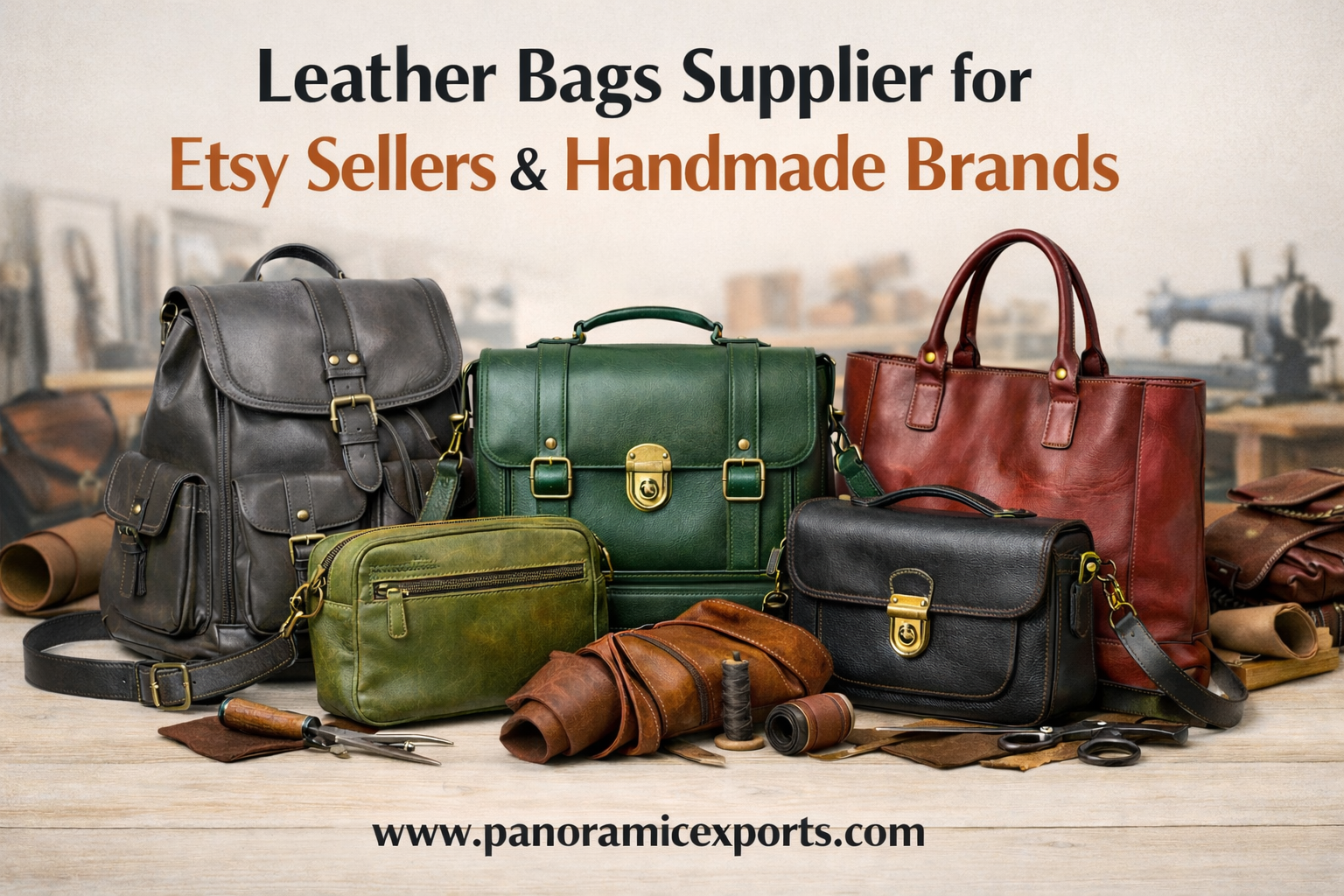
    To independent creators and niche boutiques, Etsy marketplace is the highest level of genuine craftsmanship. But, the difficulty can change as a shop develops and it can become, how do I make this? to “how can I sell this and not lose the soul of my brand? This is where identifying a Leather Bags Supplier for Etsy Sellers is a transforming move.

    Etsy has its own Creative Standards which demand that the products should be manufactured, created or selected by the vendors. To most of them, this implies moving to a designer position and collaborating with a Leather Bags Supplier for Etsy Sellers who would also serve as a production partner. By partnering with master craftsmen in India, the Etsy entrepreneurs will be able to provide the world with high-quality hand-sewn leather products of world standards and fulfill the high standards of validity demanded by the platform and satisfy an international client.


    Navigating Etsy’s Production Partner Guidelines

    Transparency is the key success factor to a long-term presence in Etsy. When you get the leather bags supplier for Etsy sellers, you are basically dealing with a “Production Partner”. As per the policies of Etsy, you need to report this partnership in your About section and on individual listings, according to the Etsy Handmade Policy.

    Handmade vs. Manufactured

    The genuine handmade leather bags supplier does not have the factory-line appearance. Etsy buyers seek:

    • Manual Stitching: The hand-punched detailing, the art of which is the Saddle Stitch, that machines cannot duplicate.

    • Vegetable-Tanned Leather: Natural tanning and develops a special patina with time.

    • Artisanal Irregularities: Minor differences in the texture of the hides that confirm that the product was not manufactured on a large scale.

    The Designer-Maker Relationship

    In order to be an Etsy vendor under production assistance, you need to be the Designer. The Leather Bags Supplier for Etsy Sellers must be able to work based on your sketches, mood boards, or 3D render. This keeps the intellectual property in your possession and the product is in the mind of the community to be yours.


    Critical Quality Benchmarks for Niche Brands

    When a supplier of handmade leather bags is under scrutiny, a supplier is not merely what you are seeking, you are seeking a custodian of your brand. Etsy customers are also extremely vocal and detail-oriented, unlike bulk retail.

    1. Material Authenticity and Traceability

    Etsy buyers love a story. Does your leather bags supplier for Etsy sellers use Full-Grain bovine leather? Does it use ethically sourced leather, which comes out of regulated tanneries? Having the ability to say your bags are made out of premium Indian Full-Grain leather, hand cut, will give the bags a massive perceived value and will justify high pricing.

    2. Hardware and Finishing Details

    The distinction between a craft project and a luxury accessory is in the hardware. Give the supplier of your handmade leather bags solid brass or high-grade stainless steel. Zippers ought to be oily-smooth and rivets are to be absolutely positioned. These are the facts that convert casual purchasers to the Star Seller reviews.

    3. Small-Batch Flexibility (Low MOQs)

    The majority of Etsy brands begin with small inventory. An elite Leather Bags Supplier for Etsy Sellers realizes that and provides the Small Batch production. Find partners that can accommodate Minimum Order Quantities (MOQs) of 5 to 10 pieces per style. This will enable you to experiment with new designs without the risk of high dead-stock.


    Why Choose Panoramic Exports for Your Etsy Brand?

    We operate in Panoramic Exports, where we focus on the intersection between the old Indian handicraft and the new e-market business. We understand that we are a Leather Bags Supplier for Etsy Sellers, so we will be your invisible studio; we will be the technical expertise you need to transform your creative vision to reality and at the same time, preserve the spirit of the maker.

    Key Advantages:

    • The Artisanal Touch: We do not subscribe to mass production. Our network concentrates on the methods that are of the greatest concern to your customers, like hand-punched detailing, manual saddle-stitching and hand-painted edges.

    • Bespoke Design Development: Our work is based on your sketches or mood boards. Since we are your leather bags supplier for Etsy sellers, the intellectual property will be yours and you will easily qualify to be listed as a Designer-Maker on Etsy with no doubts.

    • Ethical Manufacturing as a Story: We are entirely socially accountable. You can be the first retailer to present your partner with Panoramic Exports as an authentic means to share your story of how you were raised in an ethical setting and have your bags made, which makes a great conversion tool to conscious shoppers.

    • Small-Scale Flexibility: We realize that the small-scale brands have to handle the cash flow. We also provide low Minimum Order Quantities (MOQs) and you can experiment with new designs or colors of limited editions without the weight of large stock.


    Scaling Your Brand: From One-of-a-Kind to Collections

    As your shop flyer, your Leather Bags Supplier for Etsy Sellers should assist you to grow. The most profitable Etsy brands lead to the direction of unified collections.

    • Phase 1: Prototyping. Etsy sellers will need to use your leather bags supplier to create one of the products, known as a Hero.

    • Phase 2: Variation. Introduce the same design in a variety of colors or finishes on leather (e.g., Crazy Horse, Nappa, or Suede).

    • Phase 3: Ecosystem. Go into similar accessories such as wallets, cardholders, or keychains and build a Total Brand experience with your followers.


    Conclusion

    The luxury trend is shifting away towards the Logo and into the Loom. The purchasers of Etsy are at the forefront and as a seller, the seller-to-buyer relationship is the strongest asset that you can have. The collaboration with a leather bags supplier for Etsy sellers can make sure that you can be where you belong: in design, marketing and community and technical craftsmanship is in the hands of experts.

    At Panoramic Exports, we are committed to being the Leather Bags Supplier for Etsy Sellers who makes you leave a legacy. We make your design ideas a physical masterpiece that gets 5-star ratings and creates a sustainable business that is labor intensive.


    FAQs

    1. Can I use the Etsy supplier of leather bags using Etsy sellers?

    Yes, under the condition that you are the designer of the items and you inform about your “Production Partner” in your shop settings and listings.

    2. How do you compare a factory and a supplier of handmade leather bags?

    A factory has assembly lines and heavy machines; a handmade supplier strives at hand-cutting, manual stitching and artisanal detailing, which seems unique in every work.

    3. Are custom samples before a bulk order available?

    Absolutely. Your supplier of leather bags would serve as a reliable supplier of the bags to the Etsy sellers, with a physical counter sample in place before any production run can commence.

    4. How do I handle shipping if my supplier is in India?

    Many sellers use their Leather Bags Supplier for Etsy Sellers for direct “Drop-Shipping” (if allowed by Etsy) or, more commonly, for consolidated air-freight shipments to their home country for final inspection and branding.

    5. What are the typical lead times for handmade leather goods?

    Because of the hand-stitched nature of the products, lead times generally range from 30 to 60 days, depending on the complexity of the design and order volume.

  • Custom Logo Leather Bags Supplier for Brands

    Custom Logo Leather Bags Supplier for Brands

    Custom Logo Leather Bags Supplier for Brands

    The Psychology of the Mark: Why Branding Defines Value

    The two-thirds of the branded product in the sector of premium leather is not the tangible product, but the signature of the brand. A Custom Logo Leather Bags Supplier is the most critical resource in your ecosystem in case of a high-growth fashion label. A logo is not ink or an imprint, it is a haptic mark of authenticity that warrants high-gauge pricing and is generating a number of generations of faith.

    When a customer rubs his finger on a flawlessly debossed logo, he is touching the spirit of your brand. Being a manufacturer of a specialized logo leather bag, we know that even a misalignment of the branding by a fraction of a millimeter will result in the perceived value of the whole piece crashing. Branding is the place of the artisanal and the industrial.


    A Technical Deep-Dive: 4 Pillars of Leather Personalization

    The process of picking a Custom Logo Leather Bags Supplier would entail choosing the exact “language” of your logo. The technical techniques are listed below of how we turn your brand into hide.

    1. The Deep-Heat Deboss (Recessed Luxury)

    This is the gold rule of heritage brands. The manufacturer of the logo leather bags presses the design on the leather with a magnesium or brass die that has been heated to specific temperatures. This gives an indelible, deep and shadowed effect. It is delicate, classy and meant to wear out with the leather.

    2. High-Fidelity Foil Stamping (The Contrast Factor)

    Foil stamping is the solution to the brands that desire to control the space of visual media. A single piece of thin metallic film is inserted between the die and the leather. The foil welds with the fibers under heat. We provide gold, silver, rose gold and even matte black foils as a high-contrast finish to give your custom logo leather bags a modern look as a supply.

    3. Raised 3D Embossing (Architectural Branding)

    In case you prefer your logo being the focal point, 3D embossing brings the design out of the surface. This involves two dies (a man and a woman) that squeeze the leather back to shape. The producer of a good logo leather bag has to strike the right balance when it comes to the amount of pressure it applies so that the leather does not tear.

    4. Custom Hardware Integration (360-Degree Branding)

    Elite brands do not end with the leather. We are a specialist supplier of custom logo leather bags with customized metal. Engraved zipper pulls, embossed buckles, branded rivets, etc., we make every point of contact of the bag bear your name.


    The Anatomy of Material Response

    The leathers do not all brand in the same manner. The professional custom logo leather bags supplier would take you through the “Material Response” of various hides. Educational initiatives like Leather Naturally promote transparency and awareness about genuine leather materials.

    • Vegetable-Tanned Leather: King of the debossing. This is because of the high tannin content that makes the leather darken naturally in the heat to give it a burned-in appearance, which is much desired.

    • Pebbled or Saffiano Leather: These leathers are the most suitable as the texture creates the effect to be foil stamped or high pressure debossed so as to make the logo visible across the grain.

    • Nappa and Smooth Skins: These are sensitive. Being your custom logo leather bags seller, we apply less heat and extended dwell time to avoid scalding such delicate surfaces.


    The Panoramic Exports Workflow: From Tech-Pack to Retail-Ready

    At Panoramic Exports, we have spent decades refining the bridge between creative vision and flawless factory execution. As a direct Custom Logo Leather Bags Supplier, we operate with an on-the-ground presence that ensures your branding remains as durable and timeless as the leather itself. Our vertical integration allows us to maintain total control over the artistic and technical integrity of every piece.

    The Die-Casting & Prototyping Stage

    Our precision process begins by converting your vector artwork into custom-milled metal branding dies. Unlike standard vendors, we strictly prohibit moving to mass manufacturing until you have physically approved a “Branding Sample”. As a premier Custom Logo Leather Bags Supplier, we meticulously audit the depth, clarity and centering of your logo to ensure it aligns perfectly with your brand’s technical specifications.

    Global Compliance and Quality Audits

    We manage a sophisticated, pre-vetted system of master artisans across India’s leading leather districts. By selecting Panoramic Exports, you are partnering with a custom logo leather bags supplier that prioritizes precision and international standards through:

    • Symmetry Audits: Every logo application is verified against a laser-guided grid to ensure mathematical centering.

    • Color Fastness: We guarantee that foils and prints will not fade, crack, or scrape away during transit or rigorous daily use.

    • Ethical Sourcing: We are fully SEDEX and LWG compliant, ensuring that your branded collections are produced in a socially responsible and environmentally sustainable manner.


    Strategic Advantage: Why OEM Branding Matters

    Collaboration with an exclusive Custom Logo Leather Bags Supplier would offer an enormous ROI to emerging brands:

    • Direct-to-Factory Pricing: With no middle man, you get to invest more in high-quality hardware and better grade leathers.

    • Exclusivity of the Product: When you are our custom logo leather bags supplier, we assist you in coming up with proprietary silhouettes that can never be duplicated by any other manufacturer in the market.

    • Brand Equity: An advertised bag is a moving ad. Impressions are made in real world each time your customer picks up his bag bearing your logo.


    Conclusion

    Leather is still the ultimate representation of durability in a world of mass-produced items. A difference between a trend and a brand is having a Custom Logo Leather Bags Supplier that knows the specifics of the craft.

    We are proud to be the custom logo leather bags supplier that makes you what you are at Panoramic Exports. We get into the pressure of the press and tannery issues as you get to expand your fashion business. We should make a name that will leave your name behind decades even more.


    FAQs

    1. Does a Custom Logo Leather Bags Supplier have the capability to apply my logo on a curved surface?

    Although stamping is best performed on flat surfaces, we stamp gussets or circular bags with special purpose curved dies to ensure no distortion occurs.

    2. Does a manufacturer of logos bags made of leather need a certain type of file?

    Yes we need high-resolution vector files (AI, EPS, or PDF) so that we can make the precision metal dies required to create a clean impression.

    3. What is the initial branding fee?

    A: The majority of custom logo leather bags supplier are charging a one-time “Die Charge” to have your metal stamp done and it is held in storage where it will be used in all your future orders.

    4. Is it possible to have various logos in various areas of the bag?

    Certainly. As a full-service logo leather bag manufacturer, we can deboss the exterior, print the interior lining and engrave the hardware simultaneously.

    5. What is the average lead time for a branded order?

    Typically, sampling takes 10–14 days and bulk production takes 45–60 days, depending on the scale and complexity of the branding.