Category: Leather Goods

  • Why Leather Messenger Bags Are Best for Work

    Why Leather Messenger Bags Are Best for Work

    Why Leather Messenger Bags Are Best for Work

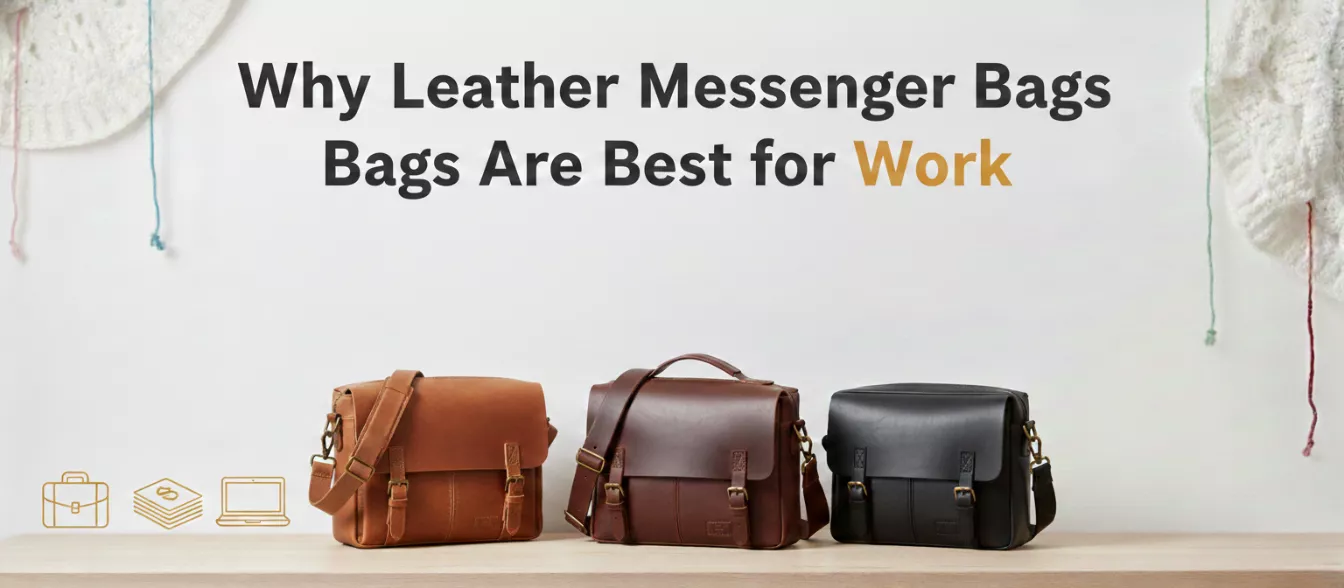
    In the fast-paced corporate environments of the USA, the tools a professional carries are more than just functional items; they are an extension of their executive presence. While backpacks have seen a surge in casual offices, the leather messenger bag has maintained its status as the premier choice for those who value a blend of heritage and modern utility. For global wholesalers and retail buyers, understanding the specific leather messenger bags features that drive this commercial demand is essential for successful market positioning.

    The modern “work bag” must now act as a mobile office. As hybrid work models become the standard, the average professional requires a carrier that transitions seamlessly from a home office to a corporate boardroom or an airport lounge. This guide provides an in-depth analysis of why leather messenger bags remain the superior choice for work, focusing on the material science, ergonomic design, and structural features that appeal to a high-end international clientele.


    The Strategic Anatomy of Professional Carry Solutions

    What differentiates a professional messenger from a casual satchel is the intentionality behind its internal and external architecture. Leather messenger bags features are engineered specifically to address the pain points of a busy professional who needs both accessibility and protection.

    The Engineering of Tech-Safe Compartments

    Modern work is undeniably digital, which means the safety of a laptop or tablet is the user’s primary concern. Premium bags prioritize:

    • Suspended Laptop Sleeves: High-density foam compartments that are “floated” away from the base of the bag to prevent direct impact if the bag is dropped.

    • Velcro or Magnetic Security: Ensuring the device remains stationary during movement, preventing internal friction against other metal accessories like chargers or keys.

    Ergonomic Mobility for the Urban Commuter

    In major USA cities, hands-free mobility is a non-negotiable requirement. The crossbody nature of these shoulder bags offers unique ergonomic advantages:

    • Crossbody Weight Distribution: By distributing the load diagonally across the torso, the bag centers the center of gravity, making it easier to navigate public transit or cycle to work.

    • Padded Shoulder Straps: Wide, adjustable straps with integrated padding reduce local pressure on the trapezius muscles, ensuring the bag remains comfortable even when fully loaded with a 16-inch laptop and legal documents.


    Why High-Grade Hide Outperforms Synthetic Alternatives

    From a commercial perspective, the value of a bag is measured by its lifespan and return on investment. While nylon and polyester bags are cheaper to manufacture, they fail to provide the professional “status signal” and longevity associated with natural leather.

    In the United States, leather product descriptions and material claims are regulated under federal guidelines to prevent misleading labeling, making transparency around full-grain and genuine leather especially important for professional work bags.

    The Resilience of Full-Grain Leather

    When evaluating leather messenger bags features, material grade is paramount. Full-grain leather is the strongest part of the hide, with intact fibers that haven’t been weakened by sanding or buffing. This gives the bag the structural integrity to support heavy weight without the seams stretching or tearing.

    The Esthetic Advantage of the Patina

    Unlike synthetic materials that fray and look worn over time, high-quality leather develops a patina. This natural darkening and sheen serve as a testament to the bag’s history and quality. In the professional world, a well-aged leather bag is a symbol of maturity and experience, making it a favorite for senior executives and partners.


    Organizational Excellence: Features for the Global Professional

    Global buyers and sourcing agents prioritize leather messenger bags features that offer “organizational mastery.” These bags are designed to act as a command center for the person on the move.

    Internal Compartmentalization

    A cluttered bag leads to a cluttered mind. Professional messengers often feature:

    • Gusseted Dividers: Allowing the bag to expand for large files and contract for a slim profile when only carrying a tablet.

    • Dedicated Tech Loops: Specialized elastic or leather loops for cable management, pens, and external batteries.

    Accessibility Features

    The ability to retrieve an item quickly is a hallmark of good design.

    • Rear Quick-Access Pockets: Essential for storing travel documents or smartphones without needing to unbuckle the main flap.

    • Magnetic Snaps Under Buckles: This clever design provides the formal look of a buckle with the convenience of a quick-release magnet, a highly sought-after detail in the USA market.


    Manufacturing Integrity: The Professional Perspective

    Success in the international export market requires a manufacturing partner that understands the nuanced demands of the professional user. A strategic manufacturing partner must look at the product through a “panoramic” lens—considering not just the final look, but the ethical and structural journey of the item.

    Panoramic Exports: A Focus on Structural Integrity

    In a shift away from standard mass-production, some manufacturers prioritize the “Panoramic” view of a product’s life. Panoramic Exports focuses on the intersection of traditional Indian leather-working and the strict social compliance standards required by USA importers. By ensuring the “invisible” leather messenger bags features—such as reinforced base plates, nylon-bonded stitching, and industrial-grade hardware—are perfect, they provide a product that meets the heavy-usage demands of international professionals. Their commitment to SEDEX-audited facilities ensures that the commercial value of the bag is matched by its ethical value.


    Procurement Checklist: Assessing Professional Commercial Value

    When sourcing professional gear, retail buyers should evaluate the following leather messenger bags features to ensure they are providing the best possible ROI to their customers:

    Feature Category Target Requirement Commercial Impact
    Material Grade Full-Grain or Top-Grain Lower return rates and higher resale value.
    Hardware Solid Brass or Gunmetal Zippers No mid-commute mechanical failures.
    Strap Quality Padded, Detachable, Adjustable Higher user comfort and satisfaction.
    Protection High-Density Tech Sleeves Increased perceived value for tech-users.
    Certifications LWG or REACH Compliance Critical for entry into premium retail.

    Preservation Protocols for Maximum Product Life

    To ensure leather messenger bags maintain their premium status throughout their life cycle, consistent care is required. This is a vital part of the value proposition for the end-user.

    Cleaning and Dusting

    Leather is a porous material. Regular cleaning with a dry, soft cloth prevents surface dirt and skin oils from becoming embedded in the grain.

    The Necessity of Conditioning

    Every six months, a pH-balanced leather conditioner should be applied. This restores the natural oils in the hide, preventing it from drying out or cracking—especially in offices with high air-conditioning levels.


    The Economic Value of Longevity

    In a retail environment that is increasingly focused on sustainability and “Slow Fashion,” the economic value of a leather bag is clear. While a synthetic backpack might last 2 years, a well-made leather messenger can last 15 to 20 years. This durability makes the “cost per wear” incredibly low, positioning leather messenger bags as the most sensible economic choice for the working professional.


    Conclusion

    Leather messenger bags remain the definitive choice for the modern workplace because they effectively bridge the gap between style and substance. By prioritizing leather messenger bags features like ergonomic weight distribution, tech-safe padding, and full-grain durability, professionals can invest in a tool that enhances both their efficiency and their professional image. As the global demand for “investment pieces” continues to rise, the leather messenger bag stands as the ultimate symbol of the modern, resilient professional.


    FAQs

    1. Are leather messenger bags more professional than backpacks?

    Yes. While backpacks are more common in tech startups, the leather messenger bags features provide a more formal silhouette that is preferred in traditional corporate and legal settings.

    2. How do I maintain the laptop sleeve in my leather bag?

    Ensure the sleeve stays dry and avoid placing sharp objects inside that could puncture the foam. Most leather messenger bags features include moisture-resistant liners for this purpose.

    3. What is the most important of all leather messenger bags features for commuters?

    An adjustable, padded shoulder strap is the most critical feature for ensuring comfort during long urban commutes.

    4. Why is full-grain leather better for a work bag?

    Full-grain leather is the strongest part of the hide, ensuring the bag can handle the weight of laptops and files without losing its shape or tearing.

    5. How often should I condition my leather work bag?

    To keep the leather supple and professional, you should apply a high-quality leather conditioner every 4 to 6 months.
  • A Complete Guide to Premium Leather Wallets

    A Complete Guide to Premium Leather Wallets

    A Complete Guide to Premium Leather Wallets

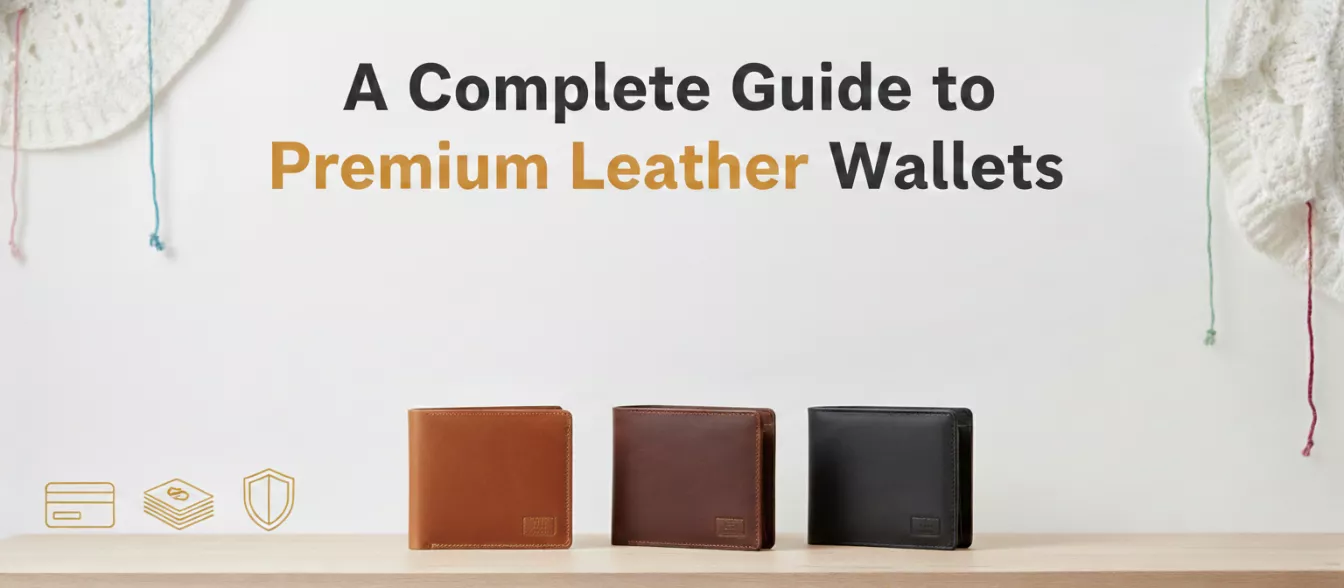
    In a market saturated with disposable fashion and synthetic materials, the classic leather wallet remains a symbol of longevity and functional elegance. It is an essential item for any individual, serving as the primary hub for one’s most important financial and personal documents. For the wholesale buyer and retail professional, navigating the complexities of the leather goods market requires a specialized resource. This premium leather wallets guide is designed to provide that necessary foundation, offering a deep dive into the materials and craftsmanship that define the highest tier of accessories.

    A high-quality wallet is not merely a purchase but a long-term investment. Unlike synthetic items that degrade with use, a wallet crafted from superior hide matures with age, developing a unique character known as a patina. To successfully source or sell these items, one must look beyond the surface and understand the structural and chemical processes that contribute to a product’s “premium” status. This premium leather wallets guide aims to clarify these standards for export-oriented businesses seeking to excel in global markets.


    The Foundation of Quality: Understanding Tanning and Hide Selection

    The quality of any leather accessory is irrevocably tied to the raw material. This premium leather wallets guide emphasizes that the selection of the hide is the most critical step in the manufacturing process.

    The Hierarchy of Leather Grades

    When selecting materials, manufacturers generally categorize hides into three distinct levels of quality. Understanding these is vital for anyone following a premium leather wallets guide to assess product value:

    • Full-Grain Leather: This is the highest grade available. It includes the entire outer layer of the hide, including the natural grain. Because it is not sanded or buffed, it retains the maximum strength and durability of the fibers.

    • Top-Grain Leather: This grade is slightly refined to remove surface imperfections. While thinner and more pliable than full-grain, it is highly prized for its smooth, consistent finish.

    • Split Leather: Derived from the lower layers of the hide, this is often used for suede or lower-end “genuine leather” products. It lacks the natural grain and structural integrity of the upper layers.

    The Role of Tanning Methods

    The tanning process stabilizes the proteins in the hide, preventing decay. Vegetable tanning is the traditional method, utilizing natural tannins found in bark and leaves. It results in a firm, durable leather that ages beautifully. Chrome tanning, while faster, uses mineral salts to create softer, more water-resistant leathers. This premium leather wallets guide notes that the choice of tanning significantly impacts the final “hand-feel” and durability.


    Architectural Profiles: Categorizing Modern Wallet Designs

    Design is where material meets utility. A comprehensive premium leather wallets guide must account for the diverse functional needs of the global consumer.

    The Classic Bifold and Trifold

    The bifold remains the quintessential wallet design, balancing a slim profile with ample storage for cash and cards. The trifold provides even more vertical storage, though it creates a larger footprint in the pocket. Both designs rely on precision folding and high-strength leather to remain functional over time.

    Minimalist Cardholders and Slim Sleeves

    As global markets move toward digital and contactless payments, the demand for minimalism has grown. These designs eliminate the bulk of traditional cash compartments, focusing instead on streamlined card storage. A premium leather wallets guide for modern retailers must highlight these as essential offerings for the contemporary professional who prioritizes a “no-bulk” silhouette.


    Indicators of Excellence: Assessing Stitching and Edge Construction

    True quality is found in the details that the casual observer might overlook. This premium leather wallets guide suggests focusing on two specific areas: the seams and the edges.

    Stitching Integrity

    A premium product is defined by its stitching. High-end wallets often utilize a “saddle stitch,” which is performed with two needles. Unlike machine-made lockstitches, a saddle stitch will not unravel if a single thread breaks. Using this premium leather wallets guide metric, one can quickly determine if an item was mass-produced or artisanal.

    Edge Finishing: Turned vs. Burnished

    The edges of a wallet are its most vulnerable points. A turned edge involves skiving the leather and folding it over for a seamless look. A burnished edge involves sanding the raw edge and sealing it with wax or specialized paint. Both methods are hallmarks of the artisan-level work described in this premium leather wallets guide.


    Technical Utility: Integrating Modern Security and Layout Features

    The modern consumer requires more than just a place to store currency; they need security and intuitive organization. A relevant premium leather wallets guide must address these functional requirements.

    RFID Shielding Technology

    Identity theft via unauthorized electronic scanning is a legitimate concern for today’s traveler. Premium manufacturers now integrate thin, metallic-based liners within the wallet’s layers to block RFID signals. This feature has become a standard requirement for many retail collections in the USA.

    Ergonomic Card Access

    Beyond security, the internal layout should facilitate easy access. This includes “quick-access” slots for primary credit cards. These features, when executed in high-quality leather, combine modern convenience with traditional luxury. Any premium leather wallets guide worth its salt must emphasize user experience as much as material science.


    Sensory Evaluation: The Professional Buyer’s Assessment Checklist

    When using this premium leather wallets guide to inspect physical samples, buyers should rely on their senses to verify quality.

    1. The Scent: Genuine, high-quality leather has a distinct, rich aroma. Any smell of harsh chemicals or plastic is an immediate red flag.

    2. The Hand-Feel: Premium leather should feel warm and slightly supple. If the material feels cold or rubbery, it may be a synthetic blend.

    3. The Wrinkle Test: When pressed, full-grain leather will develop natural wrinkles that disappear when released. As this premium leather wallets guide points out, fakes fail this test.


    Supply Chain Dynamics: Sourcing for International Markets

    Navigating the global market for leather goods involves more than just selecting a design. This premium leather wallets guide emphasizes the importance of understanding the logistics and compliance standards required for international trade.

    For wholesale buyers, consistency is the primary challenge. Sourcing from manufacturers who adhere to the Leather Working Group (LWG) standards ensures that the environmental impact of the tanning process is managed responsibly. Furthermore, maintaining a direct line of communication with production facilities allows for better quality control.


    Preservation Protocols: Conditioning and Long-Term Maintenance

    The final component of any premium leather wallets guide is the long-term care of the product. Proper maintenance is what allows a high-quality hide to last for years.

    Cleaning and Dusting

    Leather is a porous material. Regular cleaning with a soft, dry cloth prevents dirt and oils from becoming embedded in the grain. For deeper cleaning, a pH-balanced leather cleaner should be used.

    The Importance of Conditioning

    Over time, leather can dry out and crack. Applying a natural leather conditioner every few months keeps the fibers supple. This is especially important for wallets that are frequently exposed to body heat. Following this premium leather wallets guide ensures that the investment remains protected.


    Strategic Export Considerations for USA Buyers

    When exporting to the USA, buyers must be aware of specific market preferences. US consumers prioritize durability and specific aesthetic features like a rustic “distressed” look or high-gloss finishes. This premium leather wallets guide recommends that exporters focus on certifications that prove ethical sourcing.

    Moreover, the competitive landscape in the USA requires a focus on storytelling. Knowing whether a wallet is vegetable-tanned or chrome-tanned allows retailers to market the item more effectively. This premium leather wallets guide is an essential tool for creating that marketing narrative.


    Maximizing Longevity: Expert Tips

    To truly understand the value of a high-end accessory, one must know how to maintain it. This premium leather wallets guide wouldn’t be complete without expert tips for longevity:

    • Avoid overstuffing, as leather has a “memory” and will not return to its original shape.

    • Keep the wallet away from direct sunlight for extended periods to prevent fading.

    • Use this guide to educate your end-customers on proper storage.


    Conclusion

    Choosing the right accessory is a blend of technical knowledge and aesthetic preference. As this premium leather wallets guide has demonstrated, the true value of a wallet is found in the integrity of its materials and the precision of its assembly. For retailers and exporters, focusing on these pillars of quality is the key to building a reputable brand that satisfies the demands of a global audience.

    By prioritizing full-grain hides, traditional tanning methods, and expert construction, one can provide products that are not just functional but are true artifacts of craftsmanship. This premium leather wallets guide serves as a roadmap for anyone looking to excel in the high-end leather goods sector.


    FAQs

    1. Why is full-grain leather considered the best in this premium leather wallets guide?

    It is the highest grade available, utilizing the strongest outer layer of the hide to ensure maximum durability and a natural aging process.

    2. Can I tell if a wallet is machine-stitched or hand-stitched?

    Hand-stitched items typically feature an interlocking saddle stitch that creates a slight diagonal pattern and will not unravel if a thread breaks.

    3. Does RFID protection add significant bulk to a wallet?

    No, modern shielding materials are paper-thin and integrated seamlessly between the leather layers without affecting the wallet’s silhouette.

    4. How do I fix a scratch on a premium leather wallet?

    Light surface scratches can be buffed out with your fingertips, while deeper marks can be blended using a high-quality leather conditioner.

    5. Is vegetable-tanned leather better than chrome-tanned?

    Vegetable tanning is more eco-friendly and produces a firmer leather that patinas beautifully, whereas chrome tanning offers more softness and water resistance.

  • Leather Pouches Exporter from India: Quality, Design & Global Reach

    Leather Pouches Exporter from India: Quality, Design & Global Reach

    Leather Pouches Exporter from India: Quality, Design & Global Reach

    The Strategic Value of the Indian Leather Export Sector

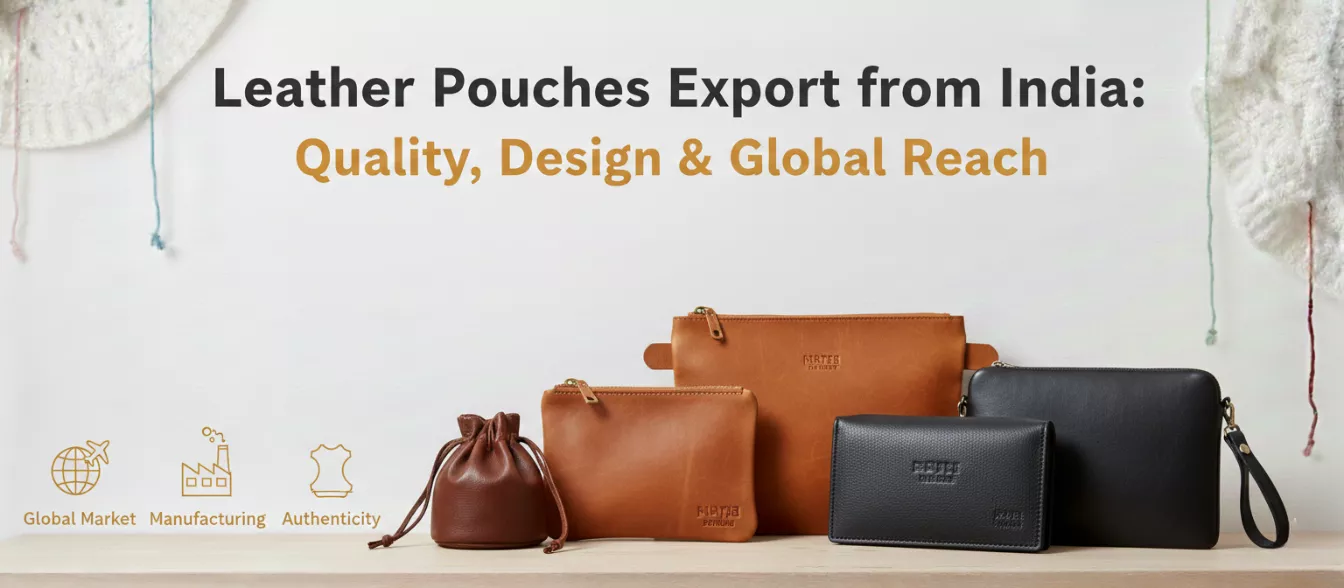
    For global procurement officers and retail distributors, identifying a reliable leather pouches exporter is a high-priority task that directly impacts profit margins, inventory risk, and long-term brand positioning. For global buyers searching for a leather pouches exporter India can reliably support at scale, the country offers a mature, compliant, and export-ready manufacturing ecosystem. In accessory-driven retail categories, consistency matters as much as creativity. India has solidified its role in the global small leather goods (SLG) supply chain by offering a rare combination of cost efficiency, export maturity, and artisanal depth.

    What differentiates India structurally is not just production capacity, but ecosystem depth. From tanneries and component suppliers to finishing units and export logistics partners, the supply chain operates as a connected system rather than isolated vendors. This allows buyers to consolidate sourcing, reduce coordination risk, and maintain tighter control over timelines.

    As post-pandemic sourcing strategies move away from fragile, single-country dependencies, India’s diversified manufacturing base provides resilience that many buyers now consider non-negotiable. From raw hide availability to finished-goods export logistics, the ecosystem is vertically integrated in a way that minimizes disruption caused by labor shortages, port congestion, or material volatility. This structural advantage is a key reason international buyers continue to evaluate India when onboarding a dependable leather pouches exporter.

    Choosing to source from a leather pouches manufacturer in India allows brands to bypass the high labor and compliance overheads of European production while still achieving the material integrity expected in the USA premium and bridge-luxury segments. This guide functions as a commercial roadmap, explaining how buyers can leverage craftsmanship, compliance, and operational efficiency when selecting the right sourcing partner. When executed correctly, collaboration with an experienced leather pouches exporter can elevate a simple accessory into a high-margin, repeat-purchase retail category.


    Technical Material Standards for International Trade

    Material quality is the single most decisive factor in the commercial success of leather accessories. In export markets, buyers are not merely purchasing a product; they are investing in repeatability, performance, and brand trust. Transparency around hide sourcing and processing is what separates a strategic partner from a transactional vendor. A professional leather pouches exporter will proactively educate buyers on leather grades rather than obscuring specifications.

    Leather used in export-grade pouches must perform across varied climates, handling conditions, and storage environments. Heat resistance, moisture tolerance, and surface stability all affect how the product performs after retail distribution. These factors directly influence return rates, customer satisfaction, and brand perception in destination markets.

    Full-Grain Resilience: Many international buyers actively seek a leather pouches exporter that works with full-grain hides. Because these hides are not sanded or corrected, the natural fiber structure remains intact. This results in superior tear resistance, better aging characteristics, and a patina that enhances perceived value over time—critical for tech organizers, travel pouches, and premium gifting lines.

    Vegetable-Tanned Sustainability: Manufacturers specializing in vegetable tanning offer a clear differentiation opportunity. This method relies on plant-based tannins instead of chromium salts, producing leather that appeals to environmentally conscious consumers. Beyond sustainability, vegetable-tanned leather also allows for richer burnishing and edge finishing, which enhances visual depth.

    Grade-A Sourcing Discipline: A reliable supplier maintains strict internal grading systems to control color variation, thickness tolerance, and grain consistency across bulk orders. This level of control is precisely why experienced buyers prioritize long-term relationships with a proven leather pouches exporter, rather than sourcing opportunistically.

    Chemical Safety Compliance: Export-ready leather must comply with REACH, CPSIA, and destination-specific regulations. A globally active exporter ensures that restricted substances are eliminated at the tannery level, reducing compliance risk for importers and retail brands while protecting end consumers.


    Expanding Your Collection Through Custom Leather Pouch Export

    In saturated accessory markets, differentiation is driven by thoughtful design execution rather than price alone. The Indian manufacturing ecosystem is uniquely positioned to support custom leather pouch export programs that range from subtle branding modifications to structurally new product concepts.

    Customization in India benefits from proximity between design teams, sampling units, and production floors. This reduces interpretation gaps and allows design feedback to be incorporated quickly, which is especially important when working with new silhouettes or complex internal layouts.

    Bespoke Branding Techniques: Beyond basic logo placement, a capable leather pouches exporter can deliver advanced branding options such as deep debossing, foil stamping, contrast edge painting, and laser engraving. These branding elements allow even minimalist designs to maintain strong brand recognition.

    Functional Engineering: Customization also extends to performance features such as RFID-blocking layers, padded compartments for electronics, water-resistant linings, or anti-scratch microfiber interiors for watches and eyewear. These enhancements increase both usability and perceived value.

    Private Label Flexibility: Indian factories are structurally well-suited for boutique-at-scale production. Small and mid-size brands benefit from flexible MOQs without sacrificing process control, making India ideal for seasonal launches and limited collections.

    Prototyping Speed: Rapid sample development is a competitive advantage. An experienced leather pouches exporter shortens the design-to-sample cycle, enabling brands to validate concepts, test pricing, and gather early buyer feedback before committing to volume production.


    The Panoramic Standard: Industrial Reliability in India

    Global sourcing success depends on a partner that understands the full lifecycle of an order—from compliance audits to final delivery. This panoramic approach ensures that cost efficiencies never compromise ethical standards or execution reliability.

    SEDEX and SMETA Compliance: Facilities aligned with international audit frameworks meet the expectations of large US and EU retailers. This is essential for any leather pouches exporter supplying regulated markets, where traceability and labor transparency are mandatory.

    Handmade Precision at Scale: A hybrid production model blends artisanal handwork with centralized quality management. This approach preserves craftsmanship while ensuring consistency across export volumes.

    Quality Assurance Protocols: Multi-stage inspections cover stitch density, zipper alignment, edge finishing, logo placement, and dimensional accuracy. A disciplined leather pouches exporter treats quality as a system embedded throughout production, not a final inspection event.

    Worker Welfare: Ethical labor practices directly influence product consistency. Skilled artisans with stable working conditions produce more accurate, durable, and refined goods over time.


    Commercial Benefits of Small Leather Goods (SLGs)

    From a business perspective, leather pouches offer advantages that larger leather goods cannot, particularly for brands focused on inventory efficiency and fast sell-through.

    High Profit-to-Volume Ratio: Compact dimensions deliver strong retail pricing while occupying minimal shipping space, making partnership with a leather pouches exporter commercially efficient for both sea and air freight.

    Low Shipping Overhead: Favorable weight-to-value ratios allow brands to replenish bestsellers quickly without eroding margins.

    Gift-Ready Versatility: Pouches perform exceptionally well in gifting categories, subscription boxes, and seasonal promotions, particularly in the USA market.


    B2B Procurement Checklist for Leather Pouches

    Before finalizing a sourcing agreement, buyers should verify whether a leather pouches exporter meets the following criteria:

    Material Certifications: Access to compliant tanneries and transparent sourcing documentation aligned with standards such as the Leather Working Group (LWG)
    Hardware Integrity: Use of branded zippers and solid fittings that withstand repeated use
    Edge Construction: Turned edges or professionally executed hand-painted finishes
    Packaging Standards: pH-neutral tissue, silica gel, dust bags, and export-safe cartons


    Streamlining the Export Transaction

    Logistics execution determines landed cost accuracy and delivery reliability, especially for time-sensitive retail launches.

    Logistical Transparency: Complete documentation, HS code accuracy, and shipment visibility are essential
    Sampling Efficiency: A responsive leather pouches exporter supports faster buying and planning decisions
    End-to-End Protection: Proper internal packing ensures products arrive retail-ready without surface damage


    The Economic Impact of Artisanal Clusters

    India’s leather industry operates through specialized clusters such as Kanpur, Chennai, and Kolkata. Working with a leather pouches exporter provides access to this concentrated expertise, shortening lead times and improving material freshness.

    Cluster-based sourcing also allows faster sourcing of linings, hardware, and finishing chemicals, enabling quicker design iteration and tighter quality control across production cycles.


    Conclusion

    India’s reputation as a dependable leather pouches exporter is built on the alignment of tradition, compliance, and scalable production. By partnering with the right manufacturer, brands unlock design flexibility, material integrity, and export reliability.

    Selecting a leather pouches exporter is not a short-term procurement decision—it is a long-term brand investment supporting sustained growth in the small leather goods category.


    FAQs

    1. What defines a reliable leather pouches exporter?
    Consistency in material quality, compliance, and logistics execution.

    2. Can Indian manufacturers handle high-volume custom orders?
    Yes, while maintaining craftsmanship and process control.

    3. What is the main advantage of custom leather pouch export?
    Brand differentiation through exclusive design and functional detailing.

    4. How do buyers verify handmade leather quality?
    By evaluating samples for stitching accuracy, edge finishing, and leather feel.

    5. Is sustainability supported in Indian leather sourcing?
    Yes, including vegetable-tanned and responsibly sourced leather options.