Category: Leather Goods

  • How Retailers Choose the Right Handbag Supplier

    How Retailers Choose the Right Handbag Supplier

    How Retailers Choose the Right Handbag Supplier

    The issue of identifying the appropriate Handbag Supplier for Retailers is among the key considerations that fashion enterprises must make in order to grow sustainably and profitably. No matter whether you have a boutique, an online store of fashion, or a big retail chain, the quality of your products, pricing, brand image and customer satisfaction depend on your supplier directly. This is a detailed guide on how to assess, compare and conclude with a handbag manufacturer in wholesale and reduce risks and maximize the future value.


    Strategic Significance of Supplier Alignment

    Retailers need not only a vendor but a partner to conduct operations with over time, a reliable Handbag Supplier for Retailers. The choice of supplier determines the inventory movement, seasonal launching, customer loyalty and profitability. The retailers which have the right fit with the manufacturing partner form a more stable supply chain and foreseeable growth.

    In cases of low supplier alignment, retailers can undergo inconsistency in craftsmanship, delayed deliveries, fluctuating prices or lack of scalability. These problems affect the business and destroy brand reputation.

    Collaborating with a reliable handbag supplier for retailers is a sure way of:

    • Stable production planning

    • Regular quality of craftsmanship

    • Wholesale prices that are competitive

    • Scalable support of manufacturing

    • Stability of long term retail growth


    Step 1: Retail Positioning

    When you are approaching any Handbag Supplier for Retailers, clearly state your brand positioning:

    • Do you aim at the luxury, middle, or low-cost consumers?

    • Are you interested in leather or vegan leather or sustainable materials?

    • Is it trend-driven or timeless designs that you are selling?

    By comprehending their niche, retailers will be able to shortlist a wholesale producer of handbags that would meet their audience expectation.

    When you have sustainability as a brand identity, make sure that your handbag supplier for retailers is accountable in terms of sourcing responsibly and meeting material traceability regulations.


    Step 2: Assess Quality Standards of Products

    Customer retention is determined by the quality of the product. A Handbag Supplier for Retailers should supply:

    • Material samples

    • Consistency of stitching and finishing

    • Hardware durability

    • Color fastness reporting

    • Load-bearing strength tests

    In case of bulk production, retailers must always check samples before facilitating the confirmation. To learn more about the leather grading and responsible sourcing, retailers can use the information about the Leather Working Group guidelines. This will aid in checking the compliance of the handbag supplier for retailers to the international standards.


    Step 3: Evaluate the Capacity to Manufacture

    Before accepting a Handbag Supplier for Retailers, they have to ensure that the latter will have the capacity to meet their orders. Important areas include:

    • Monthly production volume

    • Workforce specialization

    • Machinery infrastructure

    • Lead time accuracy

    • Peak season scalability

    In case your sales grow rapidly, the manufacturer of your handbags on wholesale needs to retain quality and produce more.


    Step 4: Pricing Transparency and Structure of MOQ

    Retail sustainability is based on profit margins. In checking a Handbag Supplier for Retailers, demand:

    • Detailed cost sheets

    • Clarity of Minimum Order Quantity (MOQ)

    • Payment structure

    • Sampling policies

    • Shipping cost estimates

    A wholesale manufacturer of handbags is a professional who has no hidden variables to their pricing.

    Never choose a handbag supplier for retailers simply because they are cheap because this can compromise the quality of its materials or even morality.


    Step 5: Certification and Compliance Check

    There should be strict compliance with regulations in the international retail markets. A compliant handbag supplier to the retailers must offer:

    • EU markets compliance with REACH

    • CPSIA report on imports in the US

    • Certifications of social audit

    • Export administration services

    Companies that import retailers of handbags worldwide need to make sure that their wholesale handbag company is familiar with labeling, customs documentation and testing regulations. Retailers can also review international trade regulations and market access requirements through the International Trade Centre (ITC) guidelines.

    A resolute handbag supplier in retailers reduces legal and logistical hazards.


    Step 6: Communication Infrastructure and Responsiveness

    Effective communication does not cause havoc to operations. The supplier of professional handbags to the retailers must provide:

    • Dedicated account managers

    • Regular production updates

    • Open milestone reporting

    • Fast issue resolution

    The retailers enjoy the systematic communication network which minimizes misconceptions and delays in production.

    A well structured wholesale manufacturing company of handbags greatly enhances the efficiency of the supply chain.


    Step 7: Customization and Private Label Capabilities

    Retail competitiveness is a result of brand differentiation. An efficient Handbag Supplier for Retailers should be able to offer:

    • Custom logo embossing

    • Private label services

    • Proprietary design development

    • Customized packaging services

    • Individualized material and color

    The retailer who would like brand exclusivity should make sure that the wholesale handbag company protects intellectual property.

    A retailer-friendly handbag supply provider helps to launch the brand in the long term.


    Step 8: Logistics Co-ordination and Export Management

    The reliability of shipping is pivotal in product launching that is seasonal. A reliable handbag vendor to retailers must control:

    • FOB and CIF shipping models

    • Freight coordination

    • Packaging optimization

    • Shipment tracking systems

    • Multi-product order consolidation

    The retailer that operates globally must ensure that his wholesale handbag producer knows the export compliance procedures.

    Effective logistics done by your handbag supplier for retailers makes sure there is no disruption in your inventory.


    Risk Avoidance and Due Diligence Model

    The retailers should implement a systematic risk evaluation prior to the closure of a Handbag Supplier for Retailers. The main steps of due diligence are:

    • Conducting factory audits

    • Checking compliance documents

    • Testing production samples

    • Checking the history of exports in the past

    • Authentication of financial stability

    Inability to practice due diligence normally results in expensive disruptions.

    By using systematic verification criteria in the process of identifying a supplier of handbags to the retailers, the retailers save a great deal of operational risk and form more durable supply chain alliances.


    Panoramic Sourcing: Why the Retailers Work with Them

    In Panoramic Sourcing, we assist companies to find the appropriate supplier of handbags to retailers, by means of approved sourcing systems and organized supplier analysis.

    Our services include:

    • Wholesale handbag manufactures networks that have been pre-screened

    • Factory audit verification

    • Production monitoring

    • Quality inspections

    • Open-minded cost negotiation

    We make sure that all handbag manufacturers of retailers in our network achieve quality, compliance and scalability requirements.

    Retailers that collaborate with us will feel secure about the choice of their wholesale handbag supplier for retailers and will minimize the sourcing risks.


    Conclusion

    The process of choosing the appropriate Handbag Supplier for Retailers takes a structured analysis, tactical planning and detailed conformity. Reliability of suppliers, transparency of prices and consistency of goods are important factors that define the success of retailers.

    Retailers that take time to check their wholesale handbag manufacturer develop better brands and have sustainable growth.

    With the implementation of due diligence models and alignment with a reputable handbag retailer in case of retailers, companies have the chance to be profitable in the long run and remain stable.


    FAQs

    1. What are the methods used by retailers to check the Handbag Supplier for Retailers and place bulk orders?
    The retailers must carry out auditing, take samples and check the compliance records.

    2. So what is the optimal MOQ of a wholesaler of handbags?
    MOQ is reliant on product complexity, but flexible quantities help to decrease initial risk.

    3. What is the reason as to why compliance is important to international retail imports?
    Conformity would facilitate clearance of customs and evade legal sanctions.

    4. Is it possible to have retailers to create distinctive handbag designs with manufacturers?
    There are a lot of manufacturers, who provide services of customization and their own label.

    5. How long does handbag production usually take?
    Standard timelines range between 30 to 60 days depending on order volume.

  • Leather Bag Quality Inspection Process for Export

    Leather Bag Quality Inspection Process for Export

    Leather Bag Quality Inspection Process for Export

    The competitive global market is not to be conquered by high-quality materials alone; it must be supported by a strict Leather Bag Quality Inspection system. For exporters to the USA, UK, EU, Canada and Australia, product approval depends on durability, safety, craftsmanship precision and compliance documentation. A small mistake—like loose stitching, uneven edge paint, or restricted chemical content—can result in rejected shipments, refunds, or long-term brand damage.

    By 2026, global buyers will require manufacturers to move beyond basic visual inspections and adopt a structured leather bag QC checklist that includes raw material inspection, workmanship monitoring, functionality testing, compliance validation and packaging integrity checks. A professional leather bag quality inspection system ensures that every bag shipped is uniform, compliant and export-approved.


    The Ultimate Leather Bag QC Checklist: A Step-By-Step Guide

    A systematic Leather Bag Quality Inspection process is divided into structured operational stages. A standardized leather bag QC checklist enables exporters to detect defects early, reduce production loss and maintain consistency in high-volume shipments.


    1. Pre-Production Inspection (PPI)

    This process begins with raw material verification and sample approval before bulk manufacturing starts.

    Key PPI Checkpoints:

    • Leather Grading & Thickness
      Inspectors measure thickness in millimeters, verify grain consistency and match color to approved “Golden Samples.” Natural scars, insect bites, or deep wrinkles must remain within acceptable tolerance limits.
    • Moisture Content Testing
      Leather must maintain balanced moisture levels to prevent cracking or mold formation during sea transport.
    • Hardware Resilience
      Zippers, buckles, rivets and D-rings must be non-ferrous and corrosion-resistant. Salt spray testing verifies rust resistance.
    • Lining & Adhesives
      Inspect bonding strength and confirm adhesives meet international safety standards.

    At this stage of leather bag quality inspection, expensive production rework is minimized and technical clarity is ensured between buyer and manufacturer.


    2. Inline Inspection (DUPRO)

    During production, Leather Bag Quality Inspection shifts to assembly-line monitoring of craftsmanship. Inline inspection prevents cumulative defect build-up across entire batches.

    Workmanship Control Areas:

    • Stitch Density Standardization
      Maintain 7–9 stitches per inch (SPI) to ensure seam strength and aesthetic balance.
    • Panel Alignment & Symmetry
      Pockets, zippers, handles and logos must align precisely to avoid structural imbalance.
    • Edge Paint Consistency
      Inspect smoothness and uniform coating without cracks or uneven application.

    Inspectors use a structured leather bag QC checklist to record defects in real time, allowing immediate corrective action.


    3. Final Random Inspection (FRI)

    Final Random Inspection is the most critical stage of Leather Bag Quality Inspection before shipment.

    When production is 100% complete and at least 80% packed, inspectors apply the AQL (Acceptance Quality Limit) sampling method.

    Final Audit Includes:

    • Visual & Surface Review
      Examine scratches, stains, loose threads and surface inconsistencies.
    • Functional Testing
      Zippers must complete 20+ pull cycles. Magnetic snaps and buckles must operate smoothly without stiffness.
    • Load Stress Test
      The bag is filled to its maximum rated capacity and suspended for 4 hours to test seam strength and handle durability.
    • Rub & Smell Test
      A rub test checks for dye transfer, while a smell test detects chemical over-treatment or mold contamination.

    All checkpoints are documented in the leather bag QC checklist to provide objective shipment approval data.


    2026 Global Standards and Compliance

    Modern leather bag quality inspection cannot be separated from regulatory compliance.

    Chemical Safety (REACH & CPSIA)

    Export leather bags must comply with:

    • Chromium VI limit (≤ 3mg/kg)

    • Lead content restrictions

    • Prohibited azo dyes

    • Phthalate limitations

    Exporters may consult the European Chemicals Agency (ECHA) to understand REACH obligations and restricted substance limits:

    Compliance verification during leather bag quality inspection prevents customs delays and penalties.


    Packaging and Transit Protection

    Leather Bag Quality Inspection must include packaging integrity for sea and air shipments.

    Inspectors verify:

    • Five-ply or seven-ply export cartons

    • Silica gel moisture absorbers

    • Proper dust bag quality

    • Barcode accuracy

    • Carton drop resistance

    Poor packaging can damage premium leather during transit, leading to retailer complaints and returns.


    Defects in Leather Bag Quality Inspection

    Professional reports classify defects as:

    • Critical Defects
      Hazardous flaws such as sharp edges, needle fragments in lining, or chemical non-compliance.
    • Major Defects
      Structural issues like broken zippers, uneven stitching, or seam slippage.
    • Minor Defects
      Cosmetic imperfections such as slight color variation or minor surface wrinkles.

    Inspectors use a structured leather bag QC checklist to assign defect levels based on AQL standards and determine pass or fail status.


    Documentation and Reporting Structure

    A professional quality inspection report includes:

    • Factory name and inspection location

    • Total production quantity

    • AQL sampling size

    • Defect classification summary

    • Photographic evidence

    • Corrective action notes

    • Final shipment recommendation

    Buyers require transparent documentation before releasing final payments.

    A well-designed leather bag QC checklist ensures traceable accountability and builds buyer confidence.


    Why Leather Bag Quality Inspection Determines Export Success

    Exporters who do not implement a professional bag quality inspection system face higher risks of:

    • Container rejection

    • Financial penalties

    • Marketplace suspension

    • Increased returns

    • Brand reputation loss

    By adopting a detailed leather bag QC checklist, manufacturers align Indian craftsmanship with global performance standards.

    Quality consistency is not accidental; it is structured and measurable.


    Panoramic Exports: Your On-Ground Quality Assurance Partner

    At Panoramic Exports, we treat Leather Bag Quality Inspection as a strategic safeguard, not a procedural formality. We combine international buyer specifications with real-time factory supervision.

    Each leather bag QC checklist is customized according to:

    • Market-specific regulations

    • Retailer brand standards

    • Private label requirements

    • Packaging expectations

    • Shipment timelines

    Within 24 hours of inspection, clients receive a detailed report with high-resolution images and AQL evaluation results.

    From handcrafted clutches to large-scale office messenger shipments, our quality inspection system ensures global compliance and brand protection.


    Conclusion

    A structured Leather Bag Quality Inspection process is the foundation of a reliable export business. From raw leather verification to final packaging audits, every stage contributes to shipment integrity and customer satisfaction.

    By following a comprehensive leather bag QC checklist and staying updated on global compliance standards, exporters can confidently meet international expectations in 2026 and beyond.

    Quality is not a one-time action. It is a disciplined system that begins with material selection and ends with consumer trust.


    FAQs

    1. What is a “Critical Defect” in leather bag inspection?
    A: It is any flaw that makes the product unsafe or non-compliant, such as sharp metal burrs or chemical violations.

    2. How many stitches per inch should export-grade bags maintain?
    High-quality export bags typically require 7–9 stitches per inch for durability.

    3. Why is the rub test essential in Leather Bag Quality Inspection?
    It ensures that dye does not transfer onto clothing during normal use.

    4. What AQL level is common for leather exports?
    Many buyers accept AQL 2.5 for major defects and 4.0 for minor defects.

    5. Can brands customize their own leather bag QC checklist?
    Yes, sourcing partners can tailor inspection checkpoints to match specific brand standards.

  • Where to Buy Unique Handmade Bags Crafted by Local Artisans

    Where to Buy Unique Handmade Bags Crafted by Local Artisans

    Where to Buy Unique Handmade Bags Crafted by Local Artisans

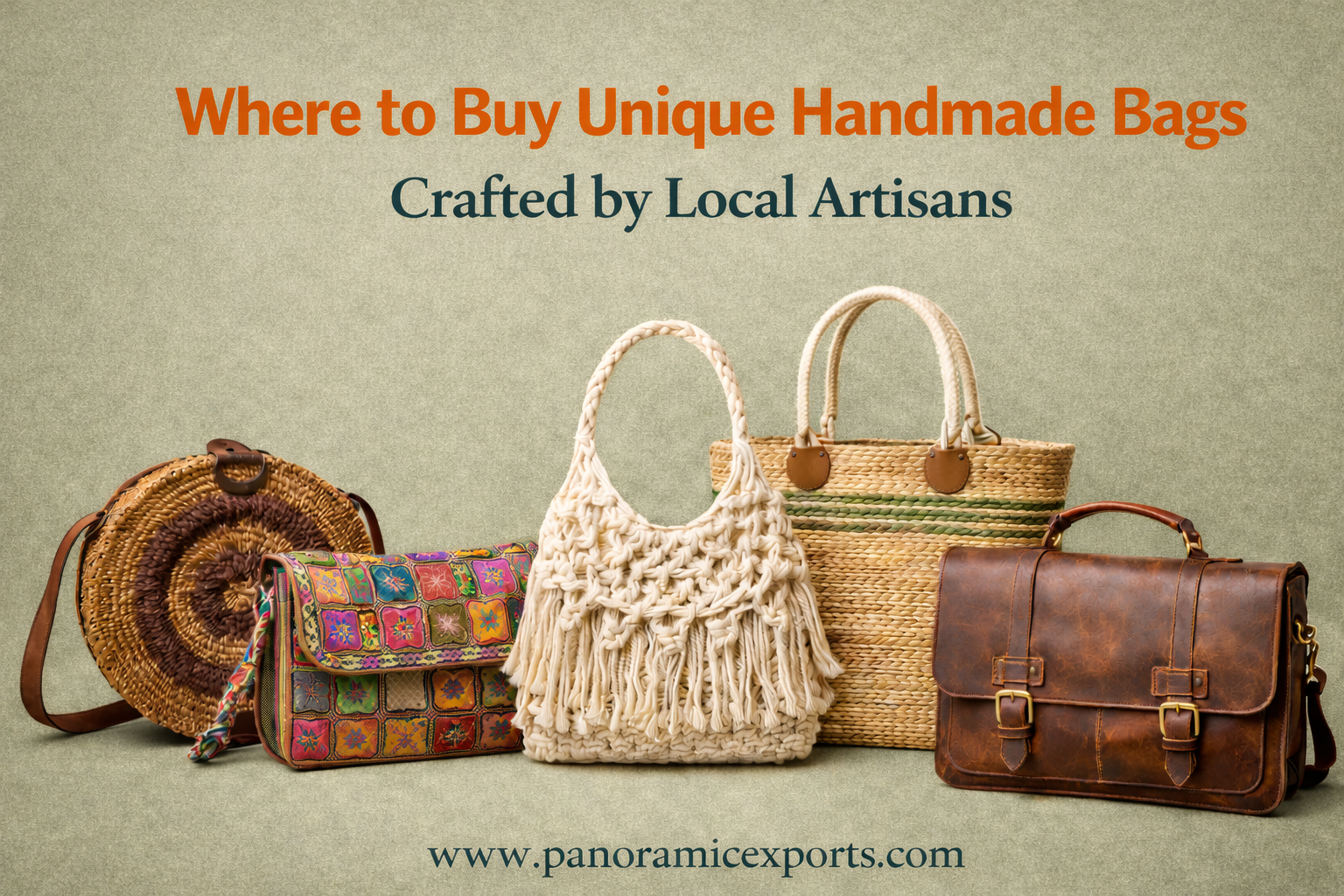
    A bag with a story is a luxury that is hard to find in the world of fast fashion and mass production. You are in the right place in case you want to purchase unique Handmade Bags produced by local artisans. More than a mere accessory, a handbag is hours of craftsmanship, artisanal methods and an ethical devotion to fashion.

    To the people who desire the best and something unique, the hand-made bags are the fashion item. Whether it is Handmade Bags with lavish embroidery patterns on ladies bags or a rough leather computer case to shield your technology, when you buy something directly off of creators you are assured that your money is going to a real person who is making a living as opposed to a corporate machine.


    The Reason Handmade is Better than Mass-Produced

    The trend to slow fashion has turned handbags into more popular than ever before. When you purchase a handcrafted item, you are not merely purchasing a box to keep your stuff in, you are investing in:

    • Durability: Most hand make bags are strengthened at stress points and stitched with the best quality threads that are durable and last decades unlike factory-glued counterparts.

    • Uniqueness: Due to the impossibility of two pieces of leather or hand-weaved fabrics being the same, each bag has its fingerprint.

    • Ethical Sourcing: The main concern of most local craftsmen is good pay and sustainable materials, like vegetable-tanned leather or organic cotton.


    Where to Purchase Specialty Handmade Handbags by Local Artisans USA

    In case you are seeking where to purchase unique Handmade Bags produced by the local artisans USA, American maker movement is flourishing. Since the leather atelier of Rhode Island to the textile studios in Colorado, the crafters of the US are combining modern utility and traditional grit.


    1. Makers Markets and Local Fairs

    Local craft fairs are one of the most appropriate places to get handmade bags. Such gatherings as the Renegade Craft Fair or the West Coast Craft demonstrate hundreds of designers. In this case, you are able to feel what it feels to hold a messenger bags line made of leather that is made by hand and even talk to the one who made the cut of the hide.


    2. Specialty Artisan Sites

    Although Etsy continues to be a monopoly, certain critical buyers are flocking to curated markets, such as Makers Market or The Local Branch. These sites are particularly vetting their sellers so that what you are looking at when you see Handmade Bags are actually independent artists who are ethically making and designing their bags.


    3. Boutique Leather Studios

    Where it comes to professional needs, seek small-batch studios that have a focus on office equipment. An American craftsman leather computer case may have full-grain leather, which also gets an attractive patina with use and is something you will never see at a big-box store.


    A Craft of the Stitch: Handbags Made by Ladies

    To most women, a handbag is the most used fashion piece in the wardrobe. Lady bags are also handcrafted and therefore have certain art that uplifts any outfit. It can be boho-chic macrame totes, or high end silk lined clutches, the possibilities are unlimited.

    A lot of artisans in 2026 are targeting meaningful luxury. This implies the use of traditional methods such as block printing, hand embroidery or weaving. Carrying one of these hand made bags is to be carrying a bit of history of culture.


    Professional Style: Made Leather Messenger Bags

    The contemporary professional has a hard time balancing between being corporate and cool. It is in this area where leather messenger bags that are made by hand excel. It has a softer yet structured look and appearance that it becomes better with increased use compared to a stiff, synthetic briefcase and it has a hand-stitched leather bag which can be easily used on a daily basis.

    The craftsmen also incorporate considerate details which are not considered by the machines like:

    • Hardware- Solid brass which does not chip.

    • Burnished edges with the hands.

    • Cushiony inner areas that are designed to hold contemporary gadgets.

    In case you require something less elaborate, a specially-crafted leather computer sleeve may provide thin coverage without the provisions of a full bag.


    How to Determine Real Hand Make Bags

    When in a market full of competitors, one should learn how to identify a true work of an artisan product. The following are some signs of quality in hand make bags:

    • Stitch Consistency: Whereas machines come up with absolutely similar stitches, hand-stitching (such as saddle stitch) is slightly tilted and by far more powerful. When one of the threads snaps on an old fashioned stitched bag, the rest of the seam is still there.

    • Edge Finishing: The edges of the high-quality Handmade Bags will be either painted, beeswax burnished, or folded. Rough edges of leather are hairy, which is an indicator of hurried manufacturing.

    • Material Transparency: An actual artisan will know the place of origin of their leather or fabric. It can be a leather computer cover that can be found in an ancient tannery or a cotton tote that can be found in a local mill but the point is transparency.


    Supporting Local Artisan Communities

    You are joining a world trend towards sustainability when you are searching where to purchase unique handmade bags made by local artisans. Bags which are mass-produced usually find their way into landfills after a period of one year. Conversely, handbags are made to be mended, rather than discarded.

    You can save old time artisans that are on the verge of extinction by picking up the Handmade Bags among ladies or a rugged leather cover to your computer. On the side of the artisan, each sale will allow the resources to further the education and invest in superior tools.


    Panoramic Exports- Reliable Manufacturer of Bags

    Panoramic Exports is a company that deals with the production and export of high quality hand made bags made by talented artists in India. The company integrates the old artisanship and the systematic export systems to cater to the international retailers and the low-level brands.

    Due to its high emphasis on quality, compliance and customization, Panoramic Exports will have a set of international standards due to which any handmade bag will not lose its artisanal integrity.

    Key strengths include:

    • Certified craftsmen groups and responsible manufacturing units.

    • Personal designing of handbags among ladies.

    • Organized manufacture of leather handmade messenger bags.

    • High-End finishing of leather computer sleeve collections.

    • Bulk order and labeling of other products privately.

    • Tough quality checks at the port of shipment.

    Panoramic Exports collaborates with global consumers in designing the hand make bags that meet the market trends and design requirement on sustainability. The company maintains uniformity, artisanship and trustworthiness in all handmade bags collections to the international markets among other things in the sampling process through to the final export documentations.


    Conclusion

    It is a quality and creativity search to determine where to purchase unique Handmade Bags produced by local artisans. In the market of handmade bags, durable leather computer sleeve, or professional handmade leather messenger bags, it is always worth making an effort of finding a local maker in your market.


    FAQs

    1. Are handmade bags more costly than mass-produced ones?
    Generally yes, because they use better materials and skilled labor, but their durability makes the cost per wear lower over time.

    2. How should I care for leather messenger bags?
    Keep them away from prolonged sunlight and moisture and apply a quality leather conditioner every 6–12 months to maintain suppleness.

    3. Can I order a custom leather computer sleeve?
    Yes, most local craftsmen accept custom orders for specific laptop sizes and preferred leather colors.

    4. Why choose handmade bags for ladies over designer brands?
    Handmade Bags offer superior materials, individuality, and craftsmanship without inflated marketing costs.

    5. Are fabric hand make bags machine washable?
    Fabric hand make bags are best maintained through spot cleaning rather than machine washing to preserve structure and quality.

  • Leather Goods Quality Standards for Export Markets

    Leather Goods Quality Standards for Export Markets

    Leather Goods Quality Standards for Export Markets

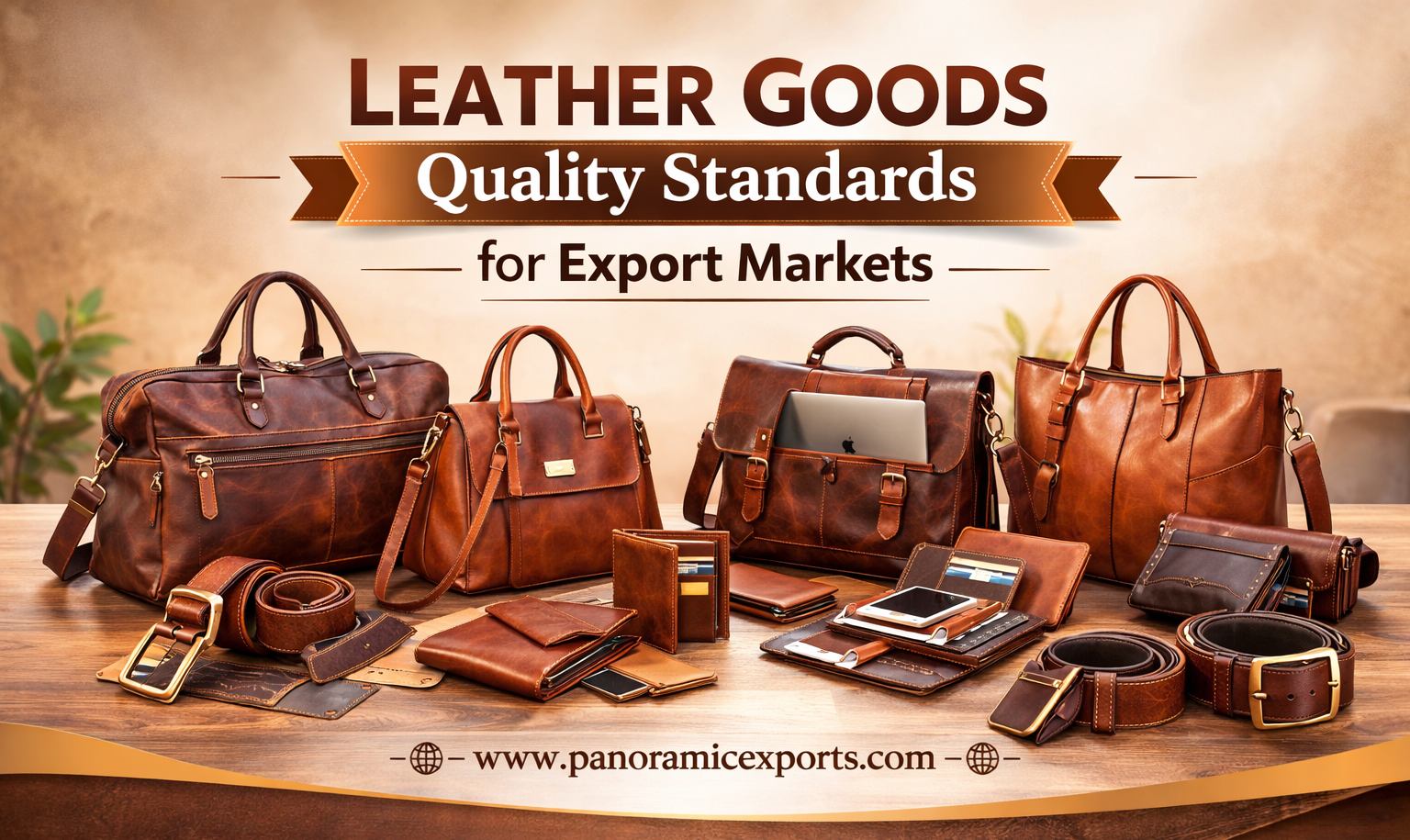
    The requirement of Leather Goods Quality Standards in leather accessories is very high in the world and it has never been on a higher point, yet when it comes to entering the international market more than the aesthetic value is required. The manufacturers have to meet high standards of the quality of the leather goods in order to achieve success in the USA, UK and European markets. These policies have made products safe to the consumer, eco-friendly and long lasting to warrant their high pricing strategies.

    As a company looking to export leather, the key to success in any business relationship is the knowledge of leather quality control in exportation which makes the difference between a long lasting business partnership and an expensive rejection of the shipment. This guide expounds on the important standards, such as chemical compliance or physical durability, that characterize the quality of export grade leather and global quality leather goods.


    Learning about the Quality Standards of Core Leather Goods

    By discussing the standards of quality of leather goods, we are talking about a complicated system of international standards and testing rules that are supposed to coordinate quality internationally.

    1. ISO 9001 (Quality Management)

    This is the international standard of consistency in processes. It dictates that when a raw hide is received at the tannery until the last stitch on a handbag each process undergoes a documented and reproducible process that is in line with the quality requirements of leather goods.

    2. LWG (Leather Working Group)

    LWG certification audits of tanneries in relation to environmental impact (including water use, energy use and waste management) are becoming increasingly mandatory to European retailers. A significant number of the premium consumers have made it a compulsory requirement to have Leather Working Group compliance as part of the expectations of quality on leather goods.

    3. Physical Performance Standards

    Export markets require great wear and tear resistance. This is tensile strength (pull resistance), color fastness (resistance to rubbing and fading) and flex endurance (resistance of cracks in fold points). These are the measurable measures that set Leather Goods Quality Standards for international goods.


    Lesson of Leather Export Quality Control

    The strong quality control mechanisms in leather export are a mandatory prerequisite to the current factories. Quality control is not an end-of inspection, it is an operational philosophy that is incorporated in the production.

    1. Chemical Compliance (REACH & CPSIA)

    • REACHRegistration, Evaluation, Authorisation and Restriction of Chemicals
      (European Union chemical regulation framework)
    • CPSIAConsumer Product Safety Improvement Act
      (United States federal law regulating consumer product safety)

    The REACH regulation is very strict on the usage of toxic chemicals like Chromium VI, Azo dyes and Formaldehyde in the EU and UK. The CPSIA controls phthalates and lead in the USA, particularly in the leather accessories of children.

    The consequences of failing a chemical lab test include the unwarranted instant recalls, shipment rejection and substantial fines. That is why chemical validation is an initial element of Leather Goods Quality Standards especially leather export quality control systems.


    2. Visual and Tactile Examination

    Although leather may pass through chemical conformity, it has to satisfy aesthetics and structural anticipations. The teams that control the leather goods quality standards check:

    • Uniform feel of all of the panels.

    • Defect Mapping: Scars, insect bites or structural weaknesses are identified.

    • Hardware Integrity: Free zipper flow, anti-oxidation.

    These inspections aim at making sure that final products are of premium quality of leather goods and ready to package beforehand.


    3. Needling and Workmanship Accuracy

    In the quality criteria of leather goods, luxury is determined by the quality of the finishing. The factors to be carefully inspected include:

    • No peeling edge painting.

    • Aligning pockets symmetrically.

    • Not less than 7-9 stitches/inch structural durability.

    • Reinforced stress points

    Regular workmanship ensures that the returns are minimal and that the buyers have confidence in the processes of quality control of leather exports.


    Panoramic Exports: Establishing the Standard of the Quality of Leather Goods

    Panoramic Exports being a leader in the Indian export business has gained its reputation in relation to its Zero-Tolerance policy on quality deviations. This has been facilitated by incorporating state of the art quality control of leather exports at all the manufacturing centers, such as tanneries of Kanpur up to the leather stitching units of Noida, which is known to help the company to adhere to the Leather Goods Quality Standards set internationally.

    Panoramic Exports deals with:

    • Market-Specific Compliance: Producing to the requirements of the destination of the leather goods such as the UK, USA and California using its REACH, CPSIA and Prop 65 compliance requirements.

    • In-House Laboratory: PH test, dry and wet rub fastness, tear strength and tensile test prior to the beginning of production.

    • Hardware Testing: Lead-free, non-ferrous components put through salt-spray corrosion testing.

    • Indian Mastercraft with Technical Discipline: A combination of Indian artistry and technical leather export quality controls.

    Through its collaboration with Panoramic Exports, foreign brands are confident that all leather computer sleeves or handmade messenger bags would be showroom worthy and they would comply with the leather goods quality standards worldwide.


    Why the Leather Goods Quality Standards is a Competitive Advantage

    Great credentials of quality leather goods go beyond complying to standards and create brand credibility.

    Manufacturers who invest in organized Leather Goods Quality Standards for export are advantaged with:

    • Reduction in shipment rejection.

    • Reduced compliance risks

    • Higher retailer confidence

    • Better long term collaboration.

    • Improved high quality brand positioning.

    The quality standards of leather goods are not the frivolity anymore, but the strategy, in a global market where sustainability and transparency are more than ever.


    Conclusion

    The knowledge of Leather Goods Quality Standards is a continuous process of accuracy, records and adjustment. With the growing importance of the consumer in terms of safety and sustainability, the quality control expectations of leather export will keep growing as well.

    To the manufacturers and exporters, investing in the establishment of organized inspection mechanisms, compliance with chemicals and excellence in the workmanship is not just a matter of compliance with regulations. It is a long term investment in brand trust, efficiency of operation and global competitiveness.

    Those companies that manage to match their production processes to international quality standards of leather goods are placed to grow sustainably in their high-end export market.


    FAQs

    1. Which test on leather is most important when exporting leather?
    Chromium VI should be tested as the substance is strictly controlled in Europe, as it belongs to carcinogenic products.

    2. What is the role of ISO standards in the leather goods quality standards?
    ISO 9001 guarantees the stable production quality and documented process control at stages of production.

    3. Export-grade leather: What is that?
    It is leather that is in compliance with international leather goods quality standards in terms of chemical safety, durability and consistency of finish.

    4. Is LWG certification obligatory on the international level?
    Although it is not legally obligatory as REACH would, most high-end UK and EU retailers have it as one of their quality standards systems in leather products.

    5. What is the leather goods quality standards at Panoramic Exports?
    Batch testing, third-party lab coordination, structured inspections and adherence to destination specific requirements of the quality of leather goods.

  • How to make a leather laptop bag

    How to make a leather laptop bag

    How to Make a Leather Laptop Bag

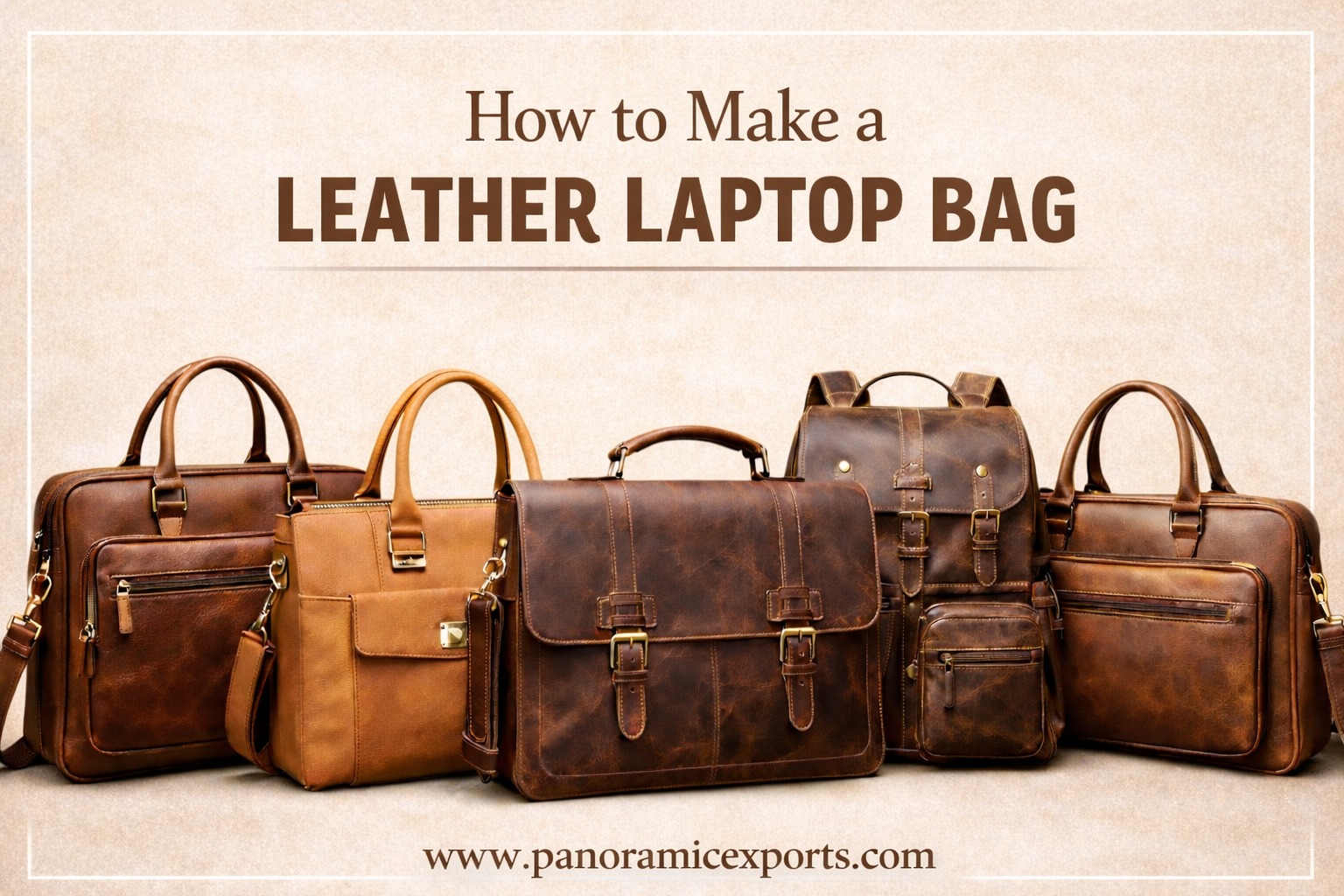
    The development of professional accessories has made the Leather Laptop Bag the core of the modern workspace. For global retailers and procurement officers, it is important to understand how to make a leather bag that meets international manufacturing standards. A professionally manufactured product should combine sophistication, structural durability and reliable device protection. This guide describes the industrial process used in producing a high-quality bag for international export markets.


    1. Market Research and Demographic Design

    The design team defines the target user profile before production begins. Construction requirements vary depending on the intended demographic.

    Targeting the Executive:

    A men’s Leather Laptop Bag typically focuses on a sleek look and structured shape. Most designs resemble a leather briefcase laptop bag with strengthened panels to ensure that it retains its shape even when empty. Structural stability is essential in this segment.

    The Modern Professional:

    A women’s leather bag may use softer curves without compromising internal strength. Convertible handles and adjustable straps allow the design to shift between professional and casual use.

    The Urban Commuter:

    A leather backpack laptop bag is created for mobility. These styles require ergonomic padding and proper weight distribution to ensure comfort during heavy daily usage.

    The design phase determines dimensions, compartment positions, reinforcement areas and hardware specifications for the final leather bag.


    2. Strategic Material Sourcing and Selection

    Durability and market value are determined by material selection. A genuine Leather Laptop Bag is usually made from full-grain leather hides chosen for strength and long-term performance.

    High-grade hides must have consistent thickness, generally between 1.4 mm and 1.8 mm for structural parts. A uniform grain appearance is important, especially for a leather briefcase laptop bag where the front and back panels must match.

    Each hide is inspected for:

    • Surface consistency

    • Natural grain quality

    • Structural density

    • Minimal blemishes

    High-quality raw material ensures long-term resistance against daily handling and friction.


    3. The Technical Pattern and Precision Cutting

    Accurate pattern development ensures efficiency and consistency in mass production. Using CAD systems, manufacturers create templates for each component.

    Template Drafting:

    Patterns are prepared for body panels, gussets, handles, flaps and the internal device sleeve. Precision is necessary to ensure modern laptops fit correctly.

    Die Cutting:

    For structured products such as a leather briefcase laptop bag or a men’s Leather Laptop Bag, steel dies or laser cutting machines are used to produce symmetrical panels with minimal wastage.

    Skiving for Seams:

    Edges are thinned using skiving machines to achieve a smooth profile after folding and stitching.

    Accuracy at this stage prevents errors and ensures consistency across production batches.


    4. Engineering the Protective Internal Sleeve

    Device protection is the primary purpose of a leather laptop bag. Internal engineering focuses on impact absorption and scratch prevention.

    Shock Absorption:

    High-density foam layers are placed between the exterior leather and interior lining. In a leather backpack laptop bag, the bottom panel is often reinforced to protect the device if the bag is placed down heavily.

    Anti-Scratch Lining:

    Soft interior lining materials are used to prevent surface damage. A genuine leather bag for laptop must balance structural strength with interior softness.

    Padding placement is tested to ensure effective protection without adding unnecessary weight.


    5. Structural Assembly and Industrial Stitching

    Assembly requires heavy industrial equipment capable of handling thick material layers.

    Walking Foot Machines:

    These machines ensure stable stitching across multiple layers. A men’s Leather Laptop Bag and a women’s bag for laptop must maintain seam strength under repeated stress.

    Reinforcement:

    High-stress areas such as handle attachments and strap anchors are reinforced using bonded nylon thread and metal rivets. Handle strength is a major durability factor in a leather briefcase laptop bag.

    Edge Finishing:

    Exposed edges are sanded, painted and sealed to create a smooth and water-resistant finish.

    Stitch density and seam alignment are carefully inspected to maintain structural integrity. For a broader understanding of industrial leather production techniques, you can explore this detailed overview of the leather bag making process.


    6. Hardware Integration and Final Finishing

    Hardware improves usability and durability.

    Zippers:

    Heavy-duty zippers are installed to ensure smooth and secure closure. A women’s leather laptop bag often features high-polish hardware, while a men’s leather bag typically includes matte finishes.

    Straps and Buckles:

    In a leather backpack laptop bag, adjustable straps must securely support weight. Hardware is selected based on tensile strength and corrosion resistance.

    Conditioning:

    After assembly, each laptop bag is treated with conditioning agents to maintain flexibility and improve resistance to moisture and dust.


    Panoramic Exports: Your Manufacturing Partner

    For global brands seeking reliable manufacturing, Panoramic Exports offers mass production combined with traditional craftsmanship. The company specializes in producing export-quality collections for international markets.

    Ethical Compliance and Standards

    Panoramic Exports operates as a Sedex-compliant manufacturer, ensuring responsible labor practices and environmental standards during production.

    Manufacturing Capabilities

    Panoramic Exports offers:

    1. Prototype development for men’s laptop bag collections
    2. Design support for women’s leather bag for laptop ranges
    3. Structured production of leather briefcase laptop bag models
    4. Mass production of leather backpack laptop bag designs
    5. Customization programs for genuine leather laptop bag collections

    From sampling to shipment, every laptop bag is inspected to ensure export readiness.


    Conclusion

    Understanding how to make a Leather Laptop Bag requires attention to design precision, material integrity, protective engineering and structural reinforcement. Each stage contributes to long-term durability and functionality.

    Regardless of the style or structure selected, consistent quality standards determine long-term value. A well-constructed leather laptop bag is a practical investment designed to withstand everyday professional use.

    By partnering with Panoramic Exports, brands can ensure that international standards of quality, compliance and craftsmanship are consistently met.


    FAQs

    1. What will be the benefit of an authentic laptop bag?

    A genuine leather bag offers superior durability, natural aging and long-term structural strength compared to synthetic alternatives.

    2. What is the difference between a men’s leather bag and a women’s bag?

    A men’s leather laptop bag usually has a structured minimalist design, while a women’s leather bag for laptop may feature softer styling and versatile carrying options.

    3. Is a leather briefcase bag suitable for daily office use?

    Yes, a leather briefcase laptop bag is designed for daily professional use with reinforced handles and protective compartments.

    4. Why should I choose a leather backpack laptop bag?

    A leather backpack laptop bag provides ergonomic weight distribution and hands-free convenience for commuting and travel.

    5. What is the lifespan of a leather laptop bag?

    A high-quality bag can last for several years when properly maintained and conditioned.

  • How to Make a Leather Bag

    How to Make a Leather Bag

    How to Make a Leather Bag

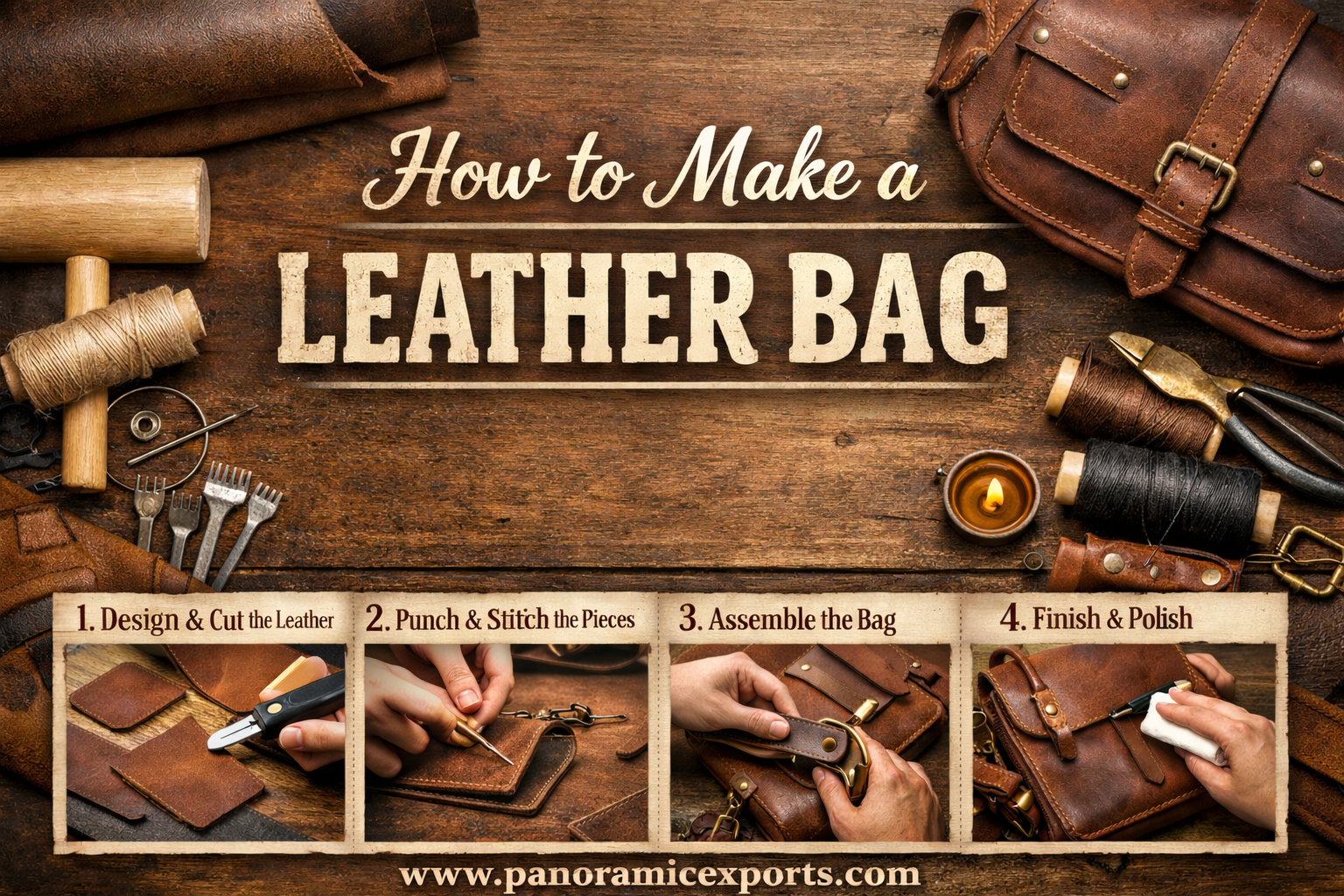
    A good Leather Bag is both a complex combination of the art of the past and the technology of the present. Whether you are seeking bag patterns or a world consumer who is interested in the mechanics of a leather crossbody bag, it is essential to know how it is produced in order to be long-term and stylish. In the contemporary market, the consumers are leaving the mass-produced products to the artisans products which narrate a story of quality and constant usage.

    The choice of hides used to make a leather bag right through to the hand-stained edge can be used to define the difference between the end product being a lifelong companion and a temporary fashion statement. This manual documents the painstaking process of leather work, including the processes that transform a plain hide into an expensive fashion accessory.


    The Leather Bag Foundation: Material Selection

    A Leather Bag starts with the choice of the hide. Leather is not made the same way and the type of the hide used determines the structure, the feel and the aging of the bag.

    Learning about Leather Quality.

    In the case of a high-end bag, the gold standard is the “full-grain” one. Full-grain leather does not remove the top layer of the hide but instead the thick layers of fibers which give the highest tear resistance. In contrast to the terms genuine or bonded leather, full-grain, the bag improves with age as it acquires a beautiful patina. When selecting premium full-grain leather, it is also important to consider responsible sourcing standards such as those set by the Leather Working Group (LWG) , and explore the range of top leather goods exported from India to the USA for quality benchmarks.

    Buffalo vs. Cowhide

    Hides are needed in different products. The buffalo leather that has a thick grain and is naturally breathable is commonly used in rugged and durable objects. Cowhide alternatively is valued due to its uniform texture and sophistication, thus it is used in elaborate leather patterns in handbags.


    Pattern of Designing Bags with Precision

    A blueprint is needed before even the first cut is made. Technical drawings that consider all the seams, folds and the location of all the hardware are the Leather Bag patterns.

    To design patterns of leather handbags, one has to:

    • Ergonomics: Coming up with a leather cross body bag that fits at the hip.
    • Structural Integrity: Designing on where the internal stiffeners are required to ensure that the bag does not have the tendency to hang.
    • Seam Allowance: Unlike fabric, leather is thick; patterns need to consider the turn-over and the thickness of leather at the seams in order to have a flush finish.

    Makers Professional makers commonly make a prototype out of cardstock or heavy canvas to test the patterns of bags before cutting into expensive hides.


    Cutting and Skiving: The Preparation Phase

    Accuracy during the cutting stage is what stands in between the amateur project and a high end Leather Bag . Since leather is a natural substance, the artisans need to check the hide on the presence of the marks of growth or scars and fit their bag designs in such a way that they use the least amount of waste and no scars.

    When the pieces have been cut, they are skived. The thinning of the edges of the leather which will be folded or overlapped is termed skiving. This makes the seams of the bag smooth and they are not overly thickened which is a crucial consideration with handbag designs of high end leather.


    Building the Leather Crossbody Bag

    One of the most trending silhouettes is a leather crossbody bag due to its hands-free nature. Nevertheless, it needs certain construction methods to cope with the continuous movement and weight distribution.

    Reinforced Anchor Points:

    • Leather Bag cross body mostly fail at the point of attachment of the strap to the bag. Professional construction includes overcoming this through:
    • Double-Stitching: The thread is done with two rows of high-tensile polyester.
    • Metal Rivets: Rivets that hold the layers of leather together physically, are metal rivets made of solid brass or steel.
    • Internal Webbing: This is a reinforcement within the leather to ensure that the strap does not stretch with time.

    Structured Bases

    A good leather bag is expected to retain its shape. They are fitted with integrated feet and internal baseboards to give a formal base, which prevents the bottom of the bag to have wear and tear.


    Stitching and Finishing

    The work of embroidery on a bag is practical and aesthetic. Makers of high quality target at 6-8 stitches per inch. This offers the ideal compromise of seam strength and beauty.

    Edge Painting and Polishing

    Premium leather bag does not expose the raw edges of leather. They are sanded, sprayed using several layers of special edge paint and heat sealed. This produces a smooth waterproof surface that does not allow the leathers to fray.


    Panoramic exports: Best leather workmanship

    Panoramic Exports has become one of the leading suppliers of high-performance leather products when it comes to sourcing in the global market. We know that a global consumer in the USA, UK, or EU needs the bag to be of the highest quality in terms of luxury.

    We are Panoramic Exports and we focus on the fusion of the traditional Indian hand-finishing and the industrial-grade durability. We specialize in designing the ideal leather crossbody bag, that is, one that has both beauty and the functionality of what can be worn as a crossbody bag on a daily basis.

    Why Panoramic Exports are the preferred company by Global Buyers:

    • Full-Grain Integrity: Our collections are made to last with full-grain buffalo and cowhide, which we only use.
    • Hardware Excellence: We use a YKK type of zippers, which are very precise and solid brass D-rings and the moving components of the bag are as durable as the leather itself.
    • High-end Reinforcement: Stress points Our cross body include high-tensile webbing, hidden in places where it is most needed, allowing it to stay in place, unlike inferior products.
    • Artisanal Attention: Each bag is hand-painted in the outer edges and edges with hand-sewing because of the tradition of Indian leatherwork.

    Your collaboration with the Panoramic Exports is an investment in a supply chain which focuses not only on quality, but also on transparency and long-term satisfaction of your customers.


    Conclusion

    During the process of design of a one-piece item based on the patterns of Leather Bags or the purchase of a big assortment of crossbody design patterns, the emphasis should be on quality. A properly encountered bag is not just an accessory, it is a long-lasting work of functional art. Through the integration of the appropriate material and construction methodology, you will be able to guarantee that each bag that you produce or buy will be able to survive the test of time.


    FAQs

    1. What is the best leather used in crossbody bag?
    The crossbody bag is to be composed of full-grain cowhide or buffalo leather to be as durable as possible and with the weight evenly distributed to be able to use it every day.

    2. Can fabric patterns be used to create leather handbag patterns?
    No, leather needs custom leather bag designs since it is thicker, it is not shreddable as fabric and has a set bending radius.

    3. What is the reason there is a metal rivet on a leather bag?
    High-stress sections such as handle attachments are strengthened using metal rivets because they form a superior mechanical bond to stitching.

    4. How do I maintain the quality of a leather bag?
    Use a good leather conditioner after every six-month interval to ensure that the fibers are kept damp and they do not crack or become brittle.

    5. What is the difference between machine and hand-stitched leather bags?
    Interlocked threads are usually stitched by hand in a technological process to create a strength, whereas accuracy and durability in Panoramic Exports is achieved with modern industrial machines at the discretion of global luxury.

  • Top Leather Backpacks for Professionals in 2026

    Top Leather Backpacks for Professionals in 2026

    Top Leather Backpacks for Professionals in 2026

    The modern corporate landscape is witnessing a structural shift toward “rugged luxury,” where leather backpacks for professionals are no longer just utility items but essential career investments. In 2025, the global backpack market has reached a valuation of USD 21.74 billion, with a projected compound annual growth rate leading into 2030. This growth is heavily influenced by high-income populations in North America and Europe who prioritize premium, performance-based work accessories over seasonal fast fashion. For the modern executive in the USA, leather backpacks work as a versatile bridge between the corporate boardroom and international business travel, offering a level of sophistication that synthetic alternatives cannot match.


    The Corporate Transformation: High-Performance Gear Over Tradition

    The transition toward modern business backpacks is fueled by the rise of hybrid work cultures and the need for ergonomic efficiency. Unlike traditional briefcases, leather backpacks for professionals distribute weight evenly across both shoulders, reducing physical strain during long commutes or airport transits. In 2025, the trend of “Quiet Luxury” has firmly taken hold, emphasizing minimalist aesthetics, matte finishes, and high-quality leather that avoids the “slouchy” appearance of fabric bags while remaining strictly professional.

    • Elite Professionalism: High-quality leather projects an air of competence and refinement, making it ideal for high-stakes client meetings in major USA business hubs like New York and San Francisco.

    • Anatomic Superiority: Modern leather backpacks work to protect your posture. 2025 designs feature contoured shoulder straps and breathable 3-D mesh back panels designed for 8–10 hours of daily comfort.

    • Sustainability as a Status Symbol: As environmental awareness becomes a global corporate priority, 57% of professionals now consider eco-friendly materials when choosing work gear, favoring the natural biodegradability of genuine leather over petroleum-based synthetics.


    Technical Benchmarks: Defining Quality in Professional Business Packs

    To qualify as one of the top leather backpacks for professionals in 2025, a design must balance aesthetic polish with high-performance utility. Professional organization now starts with thoughtful pocket placement and intelligent sizing systems.

    1. Digital Fortress: Tech Protection and Smart Layouts

    Modern business backpacks are engineered to serve as mobile workstations for the global professional.

    • Floating Laptop Sleeves: Top-tier 2025 models feature “floating” compartments that provide at least 15mm of lift from the bag’s base, ensuring a 16 or 17-inch laptop never touches the ground directly during impact.

    • Modular Internal Pockets: Specific zones for power banks, RFID (Radio Frequency Identification) blocking passport slots, and cable management help traveling executives stay organized. RFID technology is vital for protecting credit cards and biometric passports from unauthorized scanning.

    • Rapid-Access Externals: Strategically placed “security pockets” on the back panel allow for quick, safe retrieval of smartphones or wallets in crowded metros while keeping them hidden from pickpockets.

    2. Industrial Resilience for Worldwide Commuting

    Rugged durability is a non-negotiable requirement for the best leather backpacks for professionals.

    • Full-Grain Integrity: This is the most sought-after layer of the hide, renowned for its ability to resist scratches and develop a rich patina over years of use. In 2025, the industry standard for durability in the premium tier is a leather thickness of 1.4–1.6mm.

    • Mechanical Strength: The use of solid metal YKK (Yoshida Kogyo Kabushikigaisha) zippers—specifically AquaGuard waterproof versions—and reinforced anchor points ensures the bag can bear significant weight without deforming.

    • Airport Mobility: Integrated trolley sleeves, which allow the backpack to slide over rolling suitcase handles, are a must-have for international business trips.


    Global Manufacturing Partner: Panoramic Exports’ Quality Standards

    Sourcing premium leather backpacks for professionals requires a manufacturer that understands the delicate balance between artisanal craft and industrial compliance. Panoramic Exports, headquartered in Noida, India, has established itself as a leading exporter with over 25 years of experience delivering high-quality leather goods to major brands in the USA, UK, and Europe.

    Ethical Excellence and Global Export Compliance

    As a SEDEX (Supplier Ethical Data Exchange) certified company, Panoramic Exports is committed to ethical manufacturing and sustainability, ensuring every backpack meets international safety and labor standards.

    • Certified Quality Control: Their production processes are audited to comply with strict REACH (Registration, Evaluation, Authorisation, and Restriction of Chemicals) in the European Union and CPSIA (Consumer Product Safety Improvement Act) in the USA, monitoring chemical use and physical strength.

    • Premium Material Sourcing: From supple Nappa and Nubuck to rugged Buffalo and Cow leather, they source materials that meet the highest durability benchmarks.

    • Tailored Private Labeling: They offer extensive OEM (Original Equipment Manufacturer) and ODM (Original Design Manufacturer) services for bulk orders, allowing businesses to develop unique lines of business backpacks with custom embossing or tech-integrated features.


    Market Geography: Regional Demand for High-End Work Accessories

    The appetite for leather backpacks for professionals varies across key global regions, with each market prioritizing different design philosophies. For a comprehensive look at how the Indian industry facilitates this global demand, professionals often consult the Council for Leather Exports (CLE), the apex body under the Ministry of Commerce and Industry, Government of India.

    • USA / North America Leadership: North America is expected to hold a dominant market share of 37.10% in 2025, with a strong preference for oversized, tech-integrated business backpacks that transition from the office to travel and even light outdoor recreation.

    • European Sustainable Luxury: The European market is increasingly focused on “Quiet Luxury,” favoring minimalist gear with sleek hardware and vegetable-tanned leathers. For insights into the high-end European design standards, industry experts often refer to Fortune Business Insights for deep-dive market analytics.

    • Asia-Pacific Innovation: This region is projected to have the highest growth rate (8.9% in 2025), driven by a rising digital nomad lifestyle and early adoption of smart innovations like built-in wireless charging and Bluetooth-enabled tracking.


    2025 Consumer Archetypes: Who is Buying These Bags?

    Understanding the core consumer is essential for tailoring products to modern needs. Market research identifies three primary archetypes driving the demand for high-end leather gear:

    1. The Executive Commuter: This individual travels between suburbs and urban centers. They prioritize ergonomic straps, weather resistance, and a slim profile to navigate public transport with ease.

    2. The Digital Nomad: Working from various locations, they require maximum organization. For them, leather backpacks work best when they include modular internal pouches and extensive tech panels for mice, keyboards, and portable hard drives.

    3. The Sustainable Professional: This persona is driven by ethics. They seek leather backpacks for professionals made through vegetable tanning processes and sourced from LWG (Leather Working Group) audited tanneries to ensure a reduced ecological footprint.

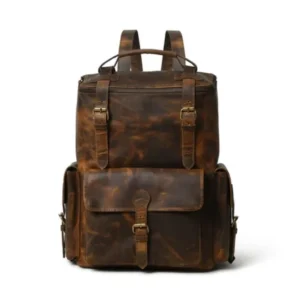
    Rugged brown full-grain leather backpack for professionals featuring multiple buckled utility pockets and ergonomic design for business travel.


    Engineering the Future: Smart Features and Modular Design

    The future of professional gear is poised for significant growth, driven by consumer preferences for personalized, tech-integrated solutions. In 2025, we are seeing the emergence of multidisciplinary cooperation among designers, engineers, and material scientists to create the next generation of gear.

    • Smart Sensor Integration: Some manufacturers have released business backpacks equipped with smart sensors and Bluetooth connectivity to sync with mobile apps, providing real-time updates about their belongings and weight distribution.

    • Modular Customization: Innovative brands are offering gear with customizable compartments. This allows a user to swap out a tech panel for a gym-kit organizer, reflecting the broader trend toward personalization.

    • Ergonomic Health: For professionals with back concerns, backpacks with adjustable harness systems and contoured back panels are gaining traction, emphasizing that leather backpacks work best when they prioritize the wearer’s long-term health.


    Maintenance and Longevity: Protecting Your Investment

    A high-quality leather backpack is a significant investment in both productivity and personal branding. Unlike synthetic alternatives that degrade quickly, a well-maintained leather bag can last decades.

    • Regular Conditioning: Experts recommend applying a leather balm or conditioner every 2–3 months to keep the hide supple and prevent cracking, especially in varyingly humid climates like the USA.

    • Avoid Overpacking: Exceeding a weight limit strains the zippers, stitches, and back panels. It is advised to carry only what is necessary and distribute weight evenly to maintain structural integrity.

    • Storage Best Practices: When not in use, avoid tossing your bag on the floor. Instead, hang it up or place it upright in a cool, dry place to maintain its structure.


    Conclusion

    Choosing the right leather backpacks for professionals in 2025 is a strategic decision that affects both productivity and personal branding. As professionals in the USA and globally continue to demand gear that is as resilient as it is refined, the market for high-quality business backpacks will only intensify. By partnering with experienced manufacturers like Panoramic Exports, brands can ensure they deliver the durability and craftsmanship that the modern global workforce requires.


    FAQs

    1. What is the best leather type for professional backpacks? Full-grain leather is the most durable option, as it retains the natural strength of the hide and ages beautifully over time. It is preferred in 2025 because its structure prevents a “slouchy” look often seen in lower-grade leather.

    2. How can I identify a high-quality business backpack for export? Look for SMETA (Sedex Members Ethical Trade Audit) compliant manufacturing, solid metal hardware (like YKK zippers), and a stitch density of 6–8 stitches per inch for maximum seam strength.

    3. Why is a trolley sleeve important for leather backpacks work? A trolley sleeve allows you to slide the backpack over a rolling suitcase handle, providing hands-free mobility and reducing physical strain during airport travel.

    4. Are there specific regulations for exporting leather goods to the USA? Yes, exporters must comply with CPSIA lead limits and ensure that all tanning chemicals and metal trims meet safety standards.

    5. What is the expected growth of the backpack market in 2025? The market is valued at USD 21.74 billion in 2025 and is expected to reach nearly USD 30 billion by 2030, driven by premium upgrades and e-commerce expansion.

  • Leather Belts Styling Tips: Fashion + Utility

    Leather Belts Styling Tips: Fashion + Utility

    Leather Belts Styling Tips: Fashion + Utility

    In the United States, a high-quality waist strap is one of the most consistently worn accessories across everyday wardrobes. From corporate offices and business-casual workplaces to weekend denim and frequent travel, these items are a daily necessity for millions of Americans. While the functional role of such an accessory is straightforward—keeping trousers secure—its visual and structural impact is often underestimated. A well-chosen piece defines body proportions, creates visual balance, and links footwear, watches, and other elements into a cohesive outfit.

    Despite this importance, these items are frequently treated as an afterthought rather than a deliberate styling element. Understanding leather belts styling tips allows wearers to move beyond basic utility and use them as intentional fashion tools. In the USA, where dress codes vary widely by industry, region, and lifestyle, these details make a noticeable difference. At the same time, the principles discussed here apply globally, making them relevant for international consumers, fashion brands, and exporters.

    Whether you are starting with limited knowledge or refining an existing collection, this guide covers everything from material quality and sizing to advanced proportion techniques. By following proven advice, you can build outfits that feel polished, confident, and adaptable across both American and global style contexts.


    The Foundation: Understanding Material Quality

    Before applying any professional techniques, it is essential to understand the raw material itself. In the USA, these accessories are often worn for long hours—during commuting, office work, travel, and social activities—so durability directly affects comfort and appearance. Not all hides perform the same, and choosing the right grade determines how an item ages over time.

    Full-Grain Options

    Full-grain is considered the highest-quality selection. It uses the complete outer layer of the hide, preserving natural texture. This makes it exceptionally durable and allows it to develop a rich patina with use. In American wardrobes, these are favored for their longevity and premium feel, especially in professional settings.

    Top-Grain Varieties

    Top-grain is lightly sanded to remove surface imperfections, resulting in a smoother and more uniform appearance. Many professionals in the USA prefer these for office wear because they balance refinement with flexibility. It is a staple in high-end belt designs.

    Genuine Grade

    Despite its name, genuine grade refers to lower-quality layers bonded together. These are common in mass-market retail across the USA but often stretch, crack, or peel with regular wear. From a long-term perspective, they offer limited value. Relying on this grade often contradicts the core advice of experts regarding durability.

    Bonded Materials

    Bonded materials are made from shredded scraps combined with synthetic binders. They lack durability and should be avoided if longevity and appearance matter. Most modern belt designs in the luxury sector avoid this construction entirely.

    Understanding these distinctions is the first step toward applying leather belts styling tips that actually last. Quality is the bedrock of any well-curated wardrobe.


    Knowing Your Styles: Casual vs. Formal

    One of the most common mistakes in the USA is wearing the wrong strap for the occasion. American dress codes range from formal corporate environments to relaxed casual settings, making it essential to understand where each of the diverse belt designs belongs.

    Formal Styles

    Formal options are designed to support tailored outfits without drawing unnecessary attention.

    • Width: Typically between 1 inch and 1.35 inches.

    • Finish: Smooth, polished, or lightly glossy.

    • Buckle: Small, minimalist frame hardware in silver, gold, or gunmetal.

    In American offices and formal events, these are standard with suits, dress slacks, and tailored chinos. One of the most important leather belts styling tips here is restraint—the accessory should complement the outfit rather than dominate it.

    Casual Styles

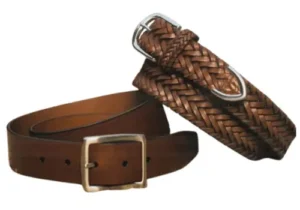
    High-quality leather belts in brown tones featuring a smooth classic strap and a rugged braided design for casual styling."

    Casual options reflect the relaxed side of American fashion and often feature rugged looks.

    • Width: Usually 1.5 to 1.75 inches.

    • Finish: Matte, textured, suede, pebbled, or braided.

    • Buckle: Larger or heavier, including roller or western-style hardware.

    These pair naturally with jeans, cargo pants, and casual chinos, making them staples of everyday USA wardrobes. Utilizing these insights ensures your casual look remains grounded and masculine.


    Finding the Perfect Fit: Sizing 101

    Fit is one of the most overlooked yet critical areas of fashion. In the USA, where these items are worn for extended periods, incorrect sizing quickly becomes uncomfortable and visually distracting. Proper sizing is a key component of functional elegance.

    The Golden Rule

    The standard size should be approximately two inches larger than your pant waist measurement. For example, a 34-inch pant typically pairs with a 36-inch strap. This is among the most basic leather belts styling tips.

    The Pro Tip

    A correctly sized strap should fasten at the third (middle) hole of a five-hole system. This ensures balanced proportions and leaves a clean tail length—an essential detail in professional settings. If you find your belt designs don’t fit this way, it may be time for a resize.


    Matching Metals and Colors

    Accessory coordination is a hallmark of polished American styling and a core element of a sharp wardrobe.

    Material Coordination

    The strap should match the color family of your shoes. Black shoes require black; brown shoes require brown. Exact shade matching is not required, but warm and cool tones should align. This is a fundamental rule in the fashion world.

    Metal-to-Metal Coordination

    Match the buckle with other metal accessories such as watches or rings. Silver with silver, gold with gold. This subtle detail significantly improves overall outfit cohesion and is frequently cited as a top recommendation.


    The “Gig Line”: Precision Alignment

    The “Gig Line” is a styling principle borrowed from military dress standards and widely respected in American formal wear. It refers to the vertical alignment of your shirt placket, buckle, and trouser fly. Maintaining this alignment creates a disciplined, intentional appearance and is one of the most effective leather belts styling tips for professional environments. It elevates simple belt designs into a sharp, executive look.


    Advanced Proportion Techniques

    Once the fundamentals are mastered, these accessories can be used strategically to enhance body proportions and outfit balance. This is where personal style becomes a true art form.

    Creating Visual Balance

    • Shorter Builds: Matching the strap and trouser colors creates a continuous vertical line, making the body appear taller.

    • Taller Builds: A contrasting color breaks up height and adds a focal point.

    • Women’s Styling: In the USA, cinching over blazers or dresses is increasingly popular for defining the waist and adding structure. Contemporary belt designs for women often focus on these styles.

    Texture and Pattern Choices

    • Suede and Braided Options: Ideal for business-casual and smart-casual American outfits. These add tactile interest.

    • Embossed or Patterned Options: These should serve as statement pieces, balanced by simpler clothing. This is a daring way to use leather belts styling tips.


    Maintenance: Ensuring Long-Term Value

    Since these are everyday accessories in the USA, proper care is essential. Even the best products deteriorate without maintenance. To preserve your investment, follow these steps:

    1. Rotation: Avoid wearing the same strap daily to allow the fibers to rest.

    2. Conditioning: Apply a specialized conditioner every 6–12 months to maintain flexibility.

    3. Storage: Hang vertically or roll loosely to prevent permanent creasing. This keeps your belt designs in pristine condition.

    Consistent care ensures that your style remains effective over time rather than undermined by worn materials.


    Global Trends and Export Insights for 2026

    Looking ahead, the market in the USA is aligning closely with global trends. Quiet luxury, minimalist hardware, and sustainable materials are shaping future belt designs. Vegetable-tanned options are gaining popularity as consumers look for eco-friendly ways to accessorize.

    For exporters supplying the USA, meeting sustainability and quality standards is increasingly important. Global benchmarks and trade guidance are available through the International Trade Centre (ITC), while classic American styling principles continue to influence global markets. The evolution of designs toward a mix of heritage and technology is a key theme for the coming years.


    Summary Table: Quick Style Reference

    Feature Formal Style Casual Style
    Typical Width 1″–1.25″ 1.5″–1.75″
    Texture Smooth, polished Suede, grainy, braided
    Buckle Style Slim frame Roller or plate
    Occasion Business, formal Casual, weekend
    Matching Rule Strict Relaxed

    Conclusion

    Mastering leather belts styling tips is about intentional dressing rather than simple function. In the USA, where these items are worn daily across professional and casual environments, understanding quality, fit, coordination, and proportion makes a measurable difference in appearance. At the same time, these principles remain globally relevant, making them valuable for international consumers and exporters.

    By applying these lessons consistently, a strap becomes more than an accessory—it becomes a defining element of personal style. The intersection of classic fashion and daily utility is where true elegance is found. Invest in high-quality belt designs, maintain them well, and use them to anchor your wardrobe.


    FAQs

    1. Should my leather strap always match the exact color of my shoes?

    In formal American settings, you should match the color and finish as closely as possible, while casual looks allow for more flexibility as long as the shades stay within the same family.

    2. What is the most versatile color for a beginner to own?

    A medium-to-dark brown is the most versatile choice, as it pairs effortlessly with denim, navy, charcoal, and various earth-toned trousers.

    3. Is it ever acceptable to wear a black strap with brown shoes?

    It is generally considered a fashion error to mix black and brown, as the harsh contrast disrupts the visual flow and coordination of your outfit.

    4. How can I tell if a buckle is too large for my outfit?

    A buckle is likely too large if it is wider than the strap itself or if it draws more attention than the rest of your ensemble combined.

    5. Why do high-quality straps tend to curve or bow over time?

    A natural curve develops as the fibers mold to your specific body shape and posture, creating a custom fit that significantly increases long-term comfort.

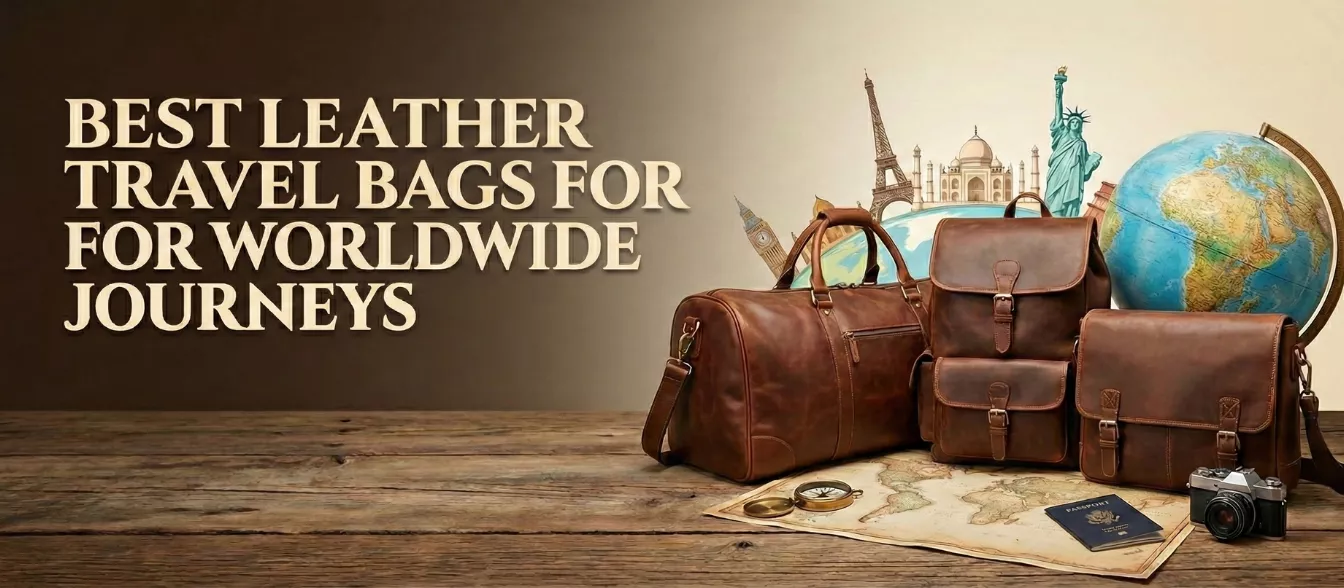
  • Best Leather Travel Bags for Worldwide Journeys

    Best Leather Travel Bags for Worldwide Journeys

    Best Leather Travel Bags for Worldwide Journeys

    The international travel sector is undergoing a structural shift toward high-utility, professional-grade gear. For bulk importers and retail buyers, the best leather travel bags are no longer viewed as simple fashion accessories; they have evolved into high-performance assets meticulously designed for the rigors of global commerce and frequent transit. In the USA, a market valued at approximately 220 billion within the broader leather goods landscape, the demand for “rugged luxury” has transformed durable travel gear into a top-tier category for department stores, boutique outlets, and high-end e-commerce platforms alike.

    For over 25 years, Panoramic Exports has specialized in bridging the gap between traditional Indian craftsmanship and the technical demands of Western markets. By focusing on export-grade construction and ethical manufacturing, we provide the best leather travel bags that meet the stringent quality and compliance standards required for worldwide journeys. As we move into 2026, the global leather goods market is projected to grow at a CAGR of 6.7%, reaching an estimated 501 billion, with premium luggage serving as a primary driver.


    Discover the Best Leather Travel Bags: Rugged Design for Global Export

    Export buyers and frequent travelers prioritize items that offer “structural longevity.” To be classified among the best leather travel bags, a product must balance a high-aesthetic finish with industrial-strength features. For a bag to be considered a leader in its class, it must survive the high-stress environment of international airports, from overhead bin shuffles to rough conveyor belt handling.

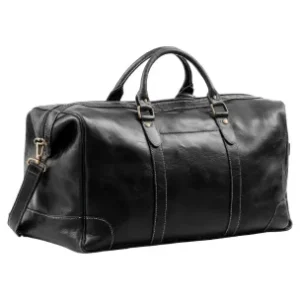
    Best leather travel bags featuring full-grain black leather, reinforced handles, and industrial-strength hardware for global transit.

    1. High-Tensile Construction Standards

    Ruggedness in this category is defined by the technical specifications of the materials used.

    • Full-Grain Superiority: We prioritize full-grain buffalo and cowhide, as these materials retain the dense fiber layers necessary for tear resistance during airport handling. Full-grain is the gold standard for the best leather travel bags because it develops a protective patina rather than peeling or cracking over time.

    • Stress-Point Reinforcement: Every anchor point—where the handle or shoulder strap meets the body—is reinforced with hidden heavy-duty polyester webbing and solid brass rivets. This prevents failure under full loads, a hallmark of the best leather travel bags.

    • Industrial Hardware: The use of solid metal YKK zippers ensures smooth operation even when the bag is packed to its maximum capacity. This is a critical feature, as hardware failure is the leading cause of luggage returns for travelers.

    2. Features Built for the Frequent Traveler

    Frequent travelers require duffles and totes that serve as mobile offices. The best leather travel bags must offer more than just volume; they need intelligent engineering to accommodate modern tech.

    • Trolley-Sleeve Integration: A leather strap on the rear of the bag allows it to slide over rolling luggage handles, providing essential hands-free mobility for USA commuters. High-performance designs always prioritize this level of ergonomic convenience for the user.

    • Device Protection: Integrated, foam-padded compartments for 15-inch and 17-inch laptops are a standard requirement in modern luggage.

    • Organized Capacity: Dedicated internal zones for passports, power banks, and footwear allow travelers to maintain organization throughout a worldwide journey. Premium designs often include a separate shoe compartment to keep garments pristine.


    Strategic Market Analysis: USA & Global Buying Behavior

    Understanding regional demand is essential for retailers looking to optimize their inventory. By analyzing global trends, we can see that consumer preferences shift significantly based on geography, though the desire for quality remains universal.

    The USA: The Hub for Utility-Driven Luxury

    The USA remains the primary target for the best leather travel bags due to its high-volume travel culture. American buyers gravitate toward items that offer:

    • “Oversized” Functionality: Large-capacity duffles that serve for both gym and 3-day business trips. This versatility is what makes them popular for the diverse American lifestyle.

    • Aged Aesthetics: A preference for “Crazy Horse” or oil-pull-up leathers that show character. Top-tier products in this market are those that look better with every mile traveled across the states.

    • Heritage Storytelling: A deep appreciation for the artisan-led manufacturing process provided by partners like Panoramic Exports.

    The Global Perspective: Europe & Asia-Pacific

    While the USA focuses on ruggedness, the global secondary market shows diverse needs:

    • European Refinement: A move toward “Quiet Luxury”—minimalist silhouettes with hidden hardware and smooth, matte finishes.

    • APAC Innovation: Growing demand for tech-integrated totes featuring RFID-shielded pockets and biometric security for secure international transit. High-quality designs in Asia often include smart-tracking features for added safety.


    Panoramic Exports: Your Partner in Professional Sourcing

    Sourcing the best leather travel bags requires a manufacturer that understands both the art of tanning and the science of export logistics. Panoramic Exports operates specialized facilities in Noida and Kolkata, India, allowing us to combine local material expertise with global distribution efficiency. We understand that to produce top-tier goods, one must control the entire supply chain.

    Compliance and Ethical Excellence

    We are a Sedex-certified manufacturer, meaning our production processes are audited for social responsibility and ethical labor practices. This certification is vital for USA and European brands that must maintain transparent and responsible supply chains. Our commitment to excellence is verified through our alignment with global trade standards, which you can verify via the Council for Leather Exports (CLE), the apex body for Indian leather trade promotion.

    Customization for Private Labels

    We offer extensive OEM/ODM services for brands looking to develop their own line of travel gear. From custom-embossed logos to bespoke hardware finishes, we help our clients create a unique brand identity that resonates in the competitive global market for the best leather travel bags.


    Quality Benchmarks for Bulk Procurement

    When evaluating goods for wholesale, we recommend focusing on these three technical indicators:

    1. Edge Finishing: Professional burnishing or painting prevents the leather from fraying at the seams. In high-quality accessories, edges are often hand-painted to ensure a luxurious finish.

    2. Stitch Density: A minimum of 6-8 stitches per inch provides the seam strength required for heavy travel gear. We use heavy-duty nylon thread that is resistant to rot and friction for all our exports.

    3. Hardware Weight: Solid metal hardware should feel substantial; hollow or “pot metal” hardware is a sign of lower-quality construction and is never used in the best leather travel bags.


    The Economics of Genuine Leather Travel Goods

    In 2025-2026, the “Price-per-Wear” and “Longevity” of products have become primary sales drivers. Premium leather goods are seen as long-term investments rather than disposable items. In the USA, the average consumer is willing to pay a premium for the best leather travel bags that offer a lifetime of use. This shift toward durability is a core reason why the genuine leather segment is outperforming synthetic alternatives.


    Conclusion

    Finding the best leather travel bags is a strategic decision that affects both brand reputation and customer loyalty. As global travel continues to expand, the demand for luggage and totes that can survive a worldwide journey will remain constant. By partnering with experienced manufacturers like Panoramic Exports, brands in the USA and beyond can ensure they are offering the highest-quality, ethically produced leather goods available. For up-to-date global shipment analytics and leather trade intelligence, professional buyers often consult The Trade Vision.

    The best leather travel bags are those that marry Indian artistry with the technical performance required for the modern world. As we look toward the future, these products will continue to integrate sustainable practices, such as vegetable tanning and lead-free hardware, ensuring that the best leather travel bags are as good for the planet as they are for the traveler.


    FAQs

    1. What leather grade is best for heavy-duty travel bags?

    Full-grain leather is the gold standard for the best leather travel bags because it retains the strongest fibers of the hide, ensuring maximum durability and tear resistance.

    2. How does Panoramic Exports ensure the quality of its products?

    We utilize a multi-stage inspection process, including stress tests on handles and 10,000-cycle fatigue tests on zippers to guarantee they rank among the leaders on the market.

    3. Are there specific import regulations for travel luggage in the USA?

    Yes, exporters must comply with various standards, including chemical safety (REACH/Prop 65) and labeling requirements (16 CFR Part 24), all of which are managed by Panoramic Exports.

    4. Can I order custom designs for my own brand?

    Yes. Panoramic Exports specializes in private label manufacturing, allowing you to customize the leather type, hardware, and internal features of the best leather travel bags you wish to launch.

    5. How long does a high-quality leather travel bag typically last?

    When made from premium full-grain leather, these bags are designed to last for decades, often looking better as they age and develop a natural patina, truly making them the best leather travel bags for a lifetime of adventure.

  • Best Fashion Bags for Travel in 2026

    Best Fashion Bags for Travel in 2026

    Best Fashion Bags for Travel in 2026

    The global travel landscape is undergoing a significant transformation. This shift is driven by a surge in international tourism and a renewed consumer focus on “functional aesthetics.”

    In 2025, the best fashion bags for travel are no longer defined solely by their silhouette. Instead, success lies in their ability to integrate high-end style with the rigorous demands of modern transit.

    Market data indicates that the global travel bag industry is projected to grow from $21.18 billion in 2025 to over $28 billion by 2029. This growth occurs as travelers prioritize quality over disposable fast fashion.

    For global fashion buyers and export markets, particularly in the USA, the trend has shifted toward versatile, lightweight gear. Consumers now seek sustainably manufactured products that reflect their personal values and style.


    2025 Market Dynamics: The Intersection of Utility and Aspiration

    North America continues to be a powerhouse in the global luggage market. There is a strong emphasis on premium branding and high-performance durability across the region.

    This dominance is propelled by a rising trend among American consumers for short getaways and weekend staycations. Many are also embracing “bleisure” trips—a strategic blend of business and leisure travel.

    According to recent reports, the number of international travelers is expected to reach 1.8 billion by 2025. This creates an unprecedented demand for stylish travel totes and travel fashion bags.

    Ideally, these bags offer enough capacity for a multi-day trip. Simultaneously, they remain compact enough to serve as a personal item on an aircraft.

    The Shift to Carry-On Culture

    Current data suggests that approximately 51% of travelers now actively avoid checked luggage. This behavioral shift aims to save time and reduce expensive airport fees.

    As a result, lightweight designs—specifically those weighing between 7 and 8 pounds when empty—are the gold standard. These are now considered the best fashion bags for travel.

    Consumers are increasingly willing to invest in mid-range and premium segments. These categories are poised to hold nearly 45% of the market share this year.


    Emerging Design Philosophies for Jetsetters

    Fashion in the travel sector is moving toward a more curated, refined aesthetic. The following design philosophies are currently shaping the export markets and retail shelves in the USA:

    • “Americana” and Heritage Aesthetics: A resurgence of conservative aesthetics in 2025 is characterized by neutral palettes and classic silhouettes. Minimalist details convey elegance and a strong connection to American heritage.

    • East-West Silhouettes: Horizontal, elongated shapes are a cornerstone of 2025 trends. They offer a sleek alternative to traditional vertical designs and appeal to minimalist-focused retailers.

    • Textured Luxury: Suede and woven textures in chocolate brown and tan are elevating the perceived value of luxury collections. These materials justify higher price points for stylish travel totes.

    • Convertible Multi-Functionality: Designs like backpack-tote hybrids cater to minimalist travelers seeking a single, multipurpose bag. This versatility is why many consider them the best fashion bags for travel.


    The Smart Luggage Revolution: Tech-Enhanced Voyaging

    Beyond appearance, travel fashion bags in 2025 are increasingly viewed as high-tech tools. Approximately 40% of global buyers now prioritize smart luggage integration.

    Rugged brown full-grain leather travel duffel bag with a front buckle pocket and reinforced top handles.

    This demand is leading to a market growth rate of 10.8% CAGR for tech-enabled suitcases. Key features include:

    • Intelligent Weight Sensing: Built-in sensors notify travelers via mobile apps when they exceed airline weight limits. This is becoming a standard in premium models.

    • Real-Time Visibility: AI (Artificial Intelligence) driven tracking and integrated GPS provide peace of mind. Travelers can locate their bags effortlessly throughout their journey.

    • Seamless Connectivity: Integrated USB charging ports and Bluetooth connectivity ensure that digital nomads stay powered between flights.

    • Biometric Security: The latest elite models now feature fingerprint authentication and facial recognition locks to prevent unauthorized access in crowded hubs.


    Material Mastery: Engineering for the Global Voyager

    For international buyers, the durability of a bag is as critical as its visual appeal. High-performance materials like polycarbonate for hard-shells remain industry favorites.

    Ballistic nylon and high-density polyester are also preferred for soft-sided bags. These materials offer superior protection while maintaining lightweight properties.

    The Sustainable Innovation Peak

    The best fashion bags for travel in 2025 increasingly utilize eco-friendly alternatives. Nearly 35% of buyers now actively favor sustainable products.

    Innovations include:

    • Waste-Based Bio-Leathers: Materials crafted from winemaking byproducts (grape leather) or pineapple leaf waste (Piñatex) offer durable, animal-free alternatives.

    • Regenerated Synthetics: ECONYL, a regenerated nylon made from ocean waste, can be recycled infinitely without losing quality.

    • Natural Fiber Strength: Organic hemp is emerging as a top choice. It offers a carbon-negative footprint and extreme durability, often outlasting conventional cotton.

    • Circular Hardware: Companies are now growing biodegradable components, such as buckles made from starch. This ensures the bag is fully compostable at its end-of-life.


    Panoramic Exports: A Strategic Informational Sourcing Partner

    In the competitive world of international manufacturing, Panoramic Exports stands out. They focus on the intersection of traditional craftsmanship and modern technical standards.

    With over 25 years of experience, they are a recognized leader in producing premium leather accessories. They serve major brands in the USA, UK, and Europe.

    As a partner for global retail brands, Panoramic Exports facilitates the creation of the best fashion bags for travel. They consistently meet the stringent quality benchmarks of the global market.

    Compliance and Quality Excellence

    Their expertise extends into deep export compliance. They ensure that products utilize materials sourced from LWG (Leather Working Group) approved tanneries.

    Operations also adhere to global safety and ethical labor standards. By offering highly customizable stylish travel totes, they allow brands to capture the 2025 aesthetic.

    Their Sedex-certified operations in Noida and Kolkata blend artisanal Indian workmanship with state-of-the-art technology. This makes them a preferred partner for international buyers seeking reliability.


    Strategic Procurement Checklist for Global Retailers

    Procurement Feature Strategic Value in 2025 Preferred Specification
    Empty Weight Compliance with airline carry-on rules 7–8 lbs for maximum packing capacity
    Mobility Systems Ease of navigation in high-traffic hubs 360° double spinner wheels
    Security Layering Theft prevention and identity safety RFID blocking pockets and TSA locks
    Expansion Tech Packing flexibility for last-minute buys Expandable designs (adds 2–3 inches)
    Sustainability Alignment with ethical consumerism GOTS cotton or GRS recycled PET

    Conclusion

    The best fashion bags for travel in 2025 are redefined as stylish companions. They must showcase taste, individuality, and refinement while remaining functional.

    Whether it is a sleek stylish travel tote or a durable travel fashion bag, the focus remains on lightweight construction. Sustainable materials are no longer optional—they are expected.

    As the market evolves toward smart technology, partnering with experienced manufacturers like Panoramic Exports is essential. They ensure your brand stays at the forefront of quality and innovation.

    For an in-depth look at global trends, industry professionals often consult the Travel Goods Association (TGA).


    FAQs

    1. What defines a “Quiet Luxury” travel bag in 2025?

    Quiet Luxury emphasizes minimalist designs and high-quality materials. It prioritizes clean lines and neutral color palettes over loud, flashy logos.

    2. Why are backpacks and duffles surging in popularity for professional travelers?

    These styles comply easily with airplane cabin storage rules. Backpacks specifically offer ergonomic, tech-ready designs and superior hands-free mobility.

    3. Are hard-side travel bags more fashionable than soft-side ones this year?

    Hard-shell bags are trending for their polished, minimalist look. However, soft-sided bags remain popular in the USA for their flexibility and external pockets.

    4. What are the must-have security features for stylish travel totes in 2025?

    The top features include RFID blocking compartments and slash-resistant materials. TSA-approved locks are also vital for safe inspections.

    5. How are “smart” features changing the best fashion bags for travel?

    Integration of built-in weight sensors and GPS tracking transforms bags into essential tools. These features significantly reduce the stress of modern transit.