Category: Leather Goods

  • Leather Handbags Manufacturer for International Fashion Brands

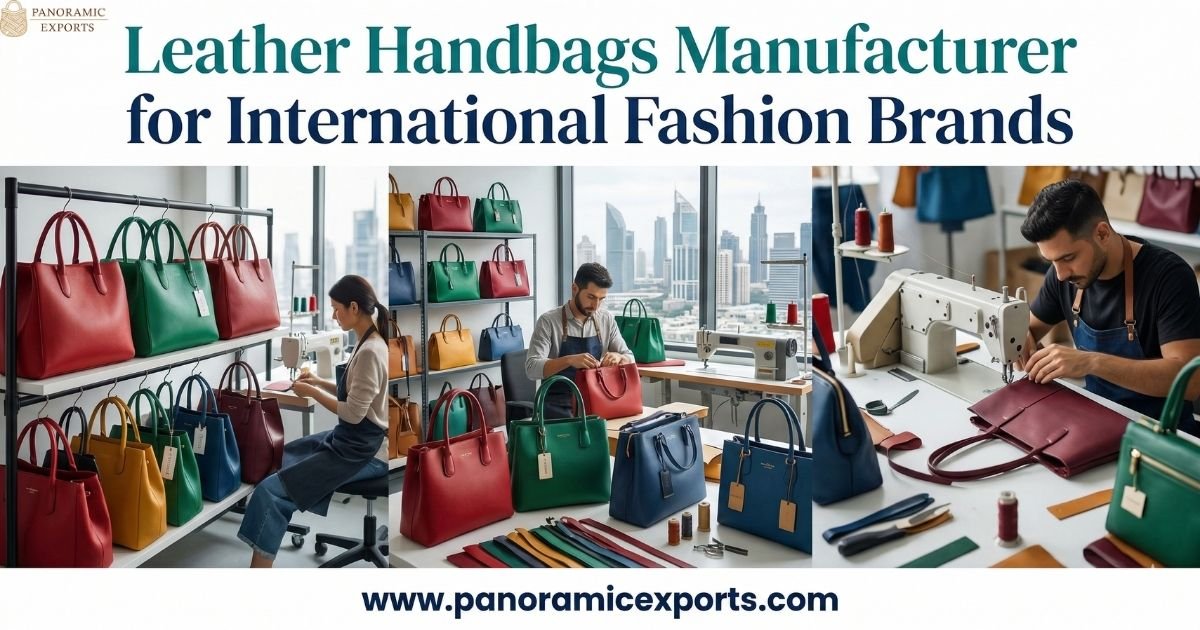
    Leather Handbags Manufacturer for International Fashion Brands

    Leather Handbags Manufacturer for International Fashion Brands

    The birth of a luxury accessory happens long before the runway; it starts in the technical belly of a Leather Handbags Manufacturer. For global fashion labels in the USA, UK and Australia, the search for a reliable leather handbag factory is a search for structural integrity and material truth. In 2026, the retail market is brutal. A single batch of sloppy stitching or mismatched dye lots can tank a brand’s reputation overnight.

    Navigating the Transactional friction of high-volume fashion production requires a partner that operates like a laboratory. A premier leather handbag manufacturer isn’t just a sewing shop; it is the technical architect of your collection, turning raw sketches into retail-ready pieces that meet the harshest international quality benchmarks.


    Internal Engineering: Inside a Specialized Handbag Production Unit

    A world-class leather handbag factory is a symphony of specialized zones. It isn’t just a floor full of sewing machines. It is a space where leather chemistry meets mechanical engineering, supported by strong quality management systems in manufacturing to ensure consistency and precision. To lead as a Leather Handbags Manufacturer, a facility has to master the “unseen” parts of the bag—the parts the customer never sees but always feels.

    The Internal Skeleton: Interlinings and Support

    The life of a luxury bag depends on its bones. A high-end leather handbag factory uses specific grades of “interlining”—salpa, non-woven stiffeners and heat-activated glues—to make sure the bag keeps its shape after three years of use. Without this internal bracing, even the most expensive Full-Grain leather will eventually sag and lose its commercial value.

    Precision Edge Inking: The “Glass” Finish

    One of the fastest ways to spot a professional leather handbag manufacturer is to look at the edges. A meticulous leather handbag factory applies multiple coats of specialized Italian ink, sanding by hand between every single layer. This creates a smooth, “glass-like” finish on the leather seams. This isn’t just for looks; it seals the leather fibers against moisture and prevents the fraying that ruins cheap bags.


    Navigating International Export and Quality Benchmarks

    For a Leather Handbags Manufacturer, the license to ship globally is earned through technical compliance. Every Transactional deal with an overseas buyer relies on the factory’s ability to clear the high bar of Western safety and labor audits.

    1. The REACH and Chrome-Free Mandate

    A responsible leather handbag factory ensures that all materials are clean. This means zero Azo dyes and no Formaldehyde. As a leather handbag manufacturer, maintaining a “Restricted Substances List” (RSL) is a baseline requirement for moving goods into the European and North American markets without getting flagged by customs.

    2. Tensile Strength and Hardware Survival

    Before a single design goes into mass production, a Leather Handbags Manufacturer has to break a few samples.

    • Load Stress: Can the handle rivets survive a 20kg pull test?

    • Oxidation: Will the gold or silver plating on the buckles turn green when they hit the humid air in a shipping container?

    • Stitch Logic: A professional leather handbag factory usually holds 7 to 9 stitches per inch to ensure the seams don’t “grin” or gape under pressure.


    Panoramic Exports: The Vanguard of Leather Manufacturing

    Panoramic Exports operates as a high-spec Leather Handbags Manufacturer, serving fashion houses that want the best of Indian artistry and Western industrial standards. Located in Noida and Kolkata, our leather handbag factory is built to handle the chaotic demands of the 2026 fashion cycle.

    Why the Industry’s Best Choose Us

    We have changed what it means to be a Leather Handbags Manufacturer by offering a total vertical solution:

    • Bespoke Prototype Labs: We turn your mood boards into physical samples in days, not months.

    • Volume Flexibility: Our leather handbag factory manages Transactional orders that range from limited boutique drops to massive retail rollouts.

    • Ethical Roots: We are a Premium handbag assembly plant that puts fair labor and Sustainable leather goods production practices at the front of the line.

    By working as a dedicated leather handbag manufacturer, we take the risk out of your supply chain. We handle the hide selection, the tanning consistency and the final export logistics so your collection arrives in the store flawless and ready for the customer.


    The Fashion Engineering Final Word

    The bond between a designer and their leather handbag factory is the most important link in the chain. By partnering with a Leather Handbags Manufacturer that cares about the technical “inside” as much as the fashion “outside,” you protect your brand’s future. In the world of high-end fashion, quality is the only currency that actually matters.

    Building a brand isn’t just about a flashy logo; it’s about the silent promise of durability. When a leather handbags manufacturer obsesses over the needle heat and the pH balance of the tanning liquors, they aren’t just making a product—they are building your reputation.

    Mastering the Technical Backbone

    A successful leather handbag factory partnership relies on several key “invisible” pillars that separate luxury from mass-market junk:

    • Structural Integrity: We use reinforced baseboards and specialized stays so the bag never “collapses” or loses its silhouette after six months of use.

    • Hardware Longevity: Sourcing high-micron plating that resists the salty sea air during international transit and prevents the “green rust” look.

    • Precision Splitting: Keeping leather thickness uniform to within 0.1mm for a seamless Transactional export experience and tight, clean seams.

    • Lining Mastery: Selecting tear-resistant suedes and heavy-duty cottons that feel as premium as the exterior hide.

    The Economics of Construction

    As you scale, the Leather Handbags Manufacturer you choose becomes the guardian of your margins. Every minute detail, from the way a zipper is mounted to the temperature of the edge-creasing iron, influences the final retail value.

    In the 2026 market, shoppers are savvy. They check the underside of the straps and the neatness of the interior pockets. By working with a leather handbag factory that views fashion as an engineering challenge, you ensure your brand doesn’t just look good on an Instagram screen—it feels exceptional in the customer’s hands.


    Conclusion

    In the high-stakes world of global fashion, your Leather Handbags Manufacturer is the ultimate guardian of your reputation. By prioritizing a leather handbag factory that values technical “insides” as much as aesthetic design, you ensure every piece is a lasting asset to your brand’s legacy.

    Ultimately, the success of your brand hinges on the structural truth of every stitch and the integrity of the hide. Choosing a leather handbag manufacturer that bridges the gap between old-world artistry and modern engineering is the only way to guarantee a flawless, retail-ready collection.


    FAQs

    1. How long does it take for a leather handbag factory to finish an order?

    Usually, as a Leather Handbags Manufacturer, we need 45 to 75 days, depending on how custom the leather is.

    2. Do you do private label for high-end fashion brands?

    Yes, we are a specialized leather handbags manufacturer for private labels, providing custom hardware and embossed branding.

    3. How do you keep the colors the same across a large order?

    Our leather handbag factory uses batch-testing and lab-dip matching to ensure the color never drifts during a Transactional order.

    4. What are the shipping routes for international buyers?

    We manage both sea and air freight, handling every piece of export paperwork needed for a leather handbag manufacturer to ship to the USA or UK.

    5. What is the MOQ for a new design at your leather handbag factory?

    To keep the quality high and the production efficient, our standard MOQ is 50 pieces per style.
  • Leather Bags Exporter: Global Supply Chain Explained

    Leather Bags Exporter: Global Supply Chain Explained

    Leather Bags Exporter: Global Supply Chain Explained

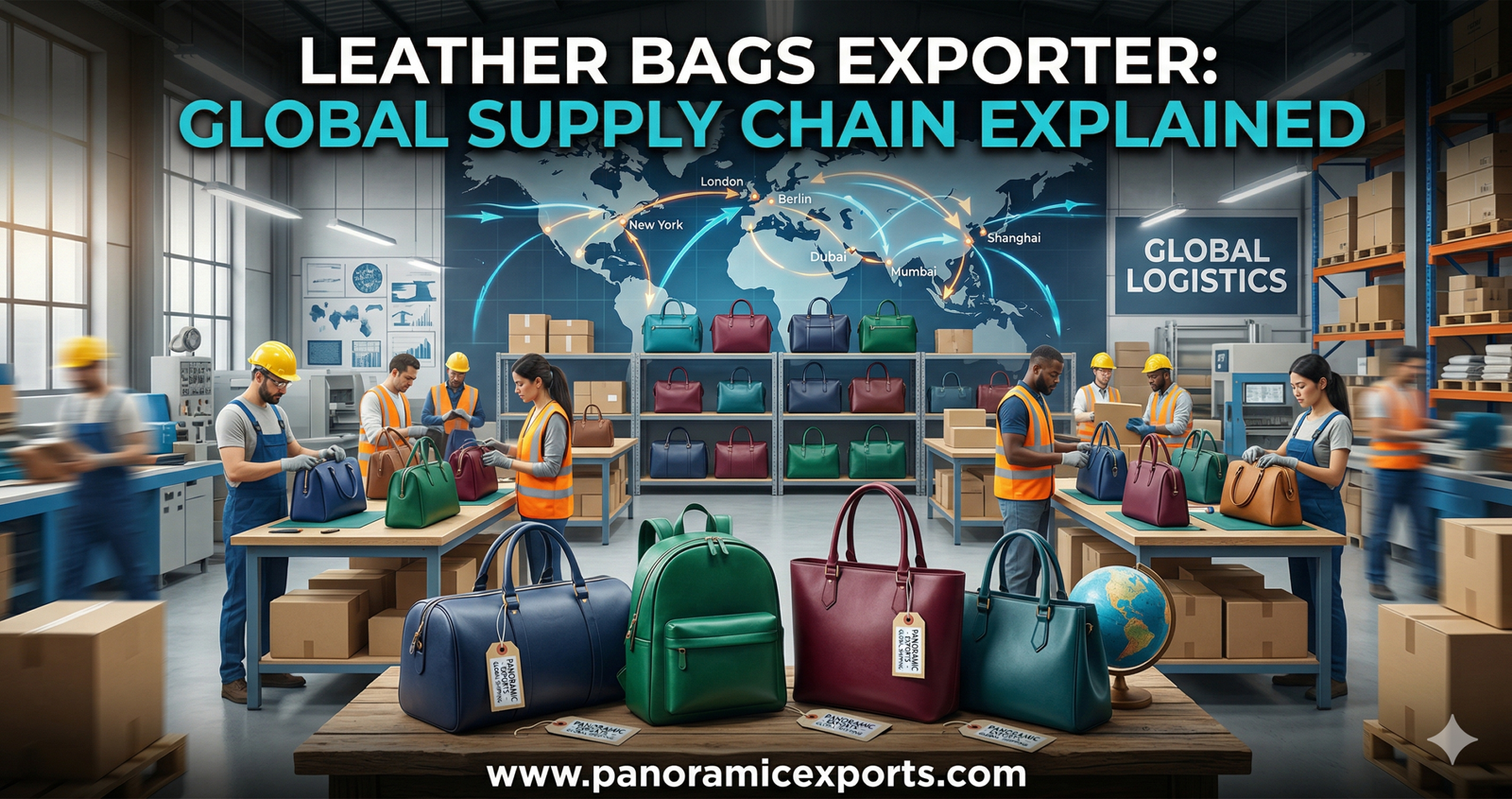
    In the high-speed lane of international fashion, a Leather Bags Exporter is the physical anchor between a workshop bench and a high-street shelf in London or New York. Managing a global supply chain in 2026 isn’t just about booking a container; it’s a high-stakes grind involving material lead times, maritime law and customs strategy. For any brand owner, the choice of a leather bags export company determines if you hit your seasonal launch or end up with a warehouse full of late arrivals and dead margins.

    Navigating the Transactional hurdles of cross-border trade requires a partner that actually understands the “invisible” side of the industry—the math of air-freight versus sea-freight, the precision of duty-free certificates and the brutal quality benchmarks Western retailers demand. As a Leather Bags Exporter, the goal is simple: move the product from the factory floor to the destination port with zero paperwork friction.


    The Operational Blueprint of a Leather Bags Export Company

    A top-tier Leather Bags Exporter functions more like a logistics command center than a simple warehouse. While the factory handles the stitching, the export arm manages the movement. This separation of duties is exactly what allows for the scalability that major fashion houses require.

    Strategic Sourcing and Inventory Buffering

    A professional leather bags export company never waits for an order to think about the hide. We keep “buffer stocks” of high-demand leathers—like cow nappa or pull-up hides—months in advance. This proactive approach lets a leather bags exporter slash production lead times, giving our clients a massive head start over competitors stuck in the raw-material queue.

    The Science of Export Packaging

    Humidity is the silent killer of leather during transit. A seasoned bags exporter knows that standard retail packaging isn’t enough for a 40-day sea voyage. Export-grade protection involves:

    • Silica Desiccants: Strategic placement to combat “container rain” during ocean crossings.

    • Corrugated Edge Strength: Double-walled boxes designed to withstand the pressure of high-stack shipping.

    • Non-Woven Breathability: Avoiding plastic-on-leather contact, which can cause permanent oil migration and staining.


    Mastering the Transactional Realities of Exporting

    The 2026 trade landscape is dense with new regulations. A leather bags export company must be as fluent in Customs Harmonized System (HS) codes as they are in leather textures, following proper export documentation and logistics guidelines to ensure smooth international shipments. If your bags exporter of leather misses a single digit on a commercial invoice, your shipment could face “red channel” inspections for weeks, killing your seasonal momentum.

    1. Duty Benefits and Trade Agreements

    Smart brands work with a Leather Bags Exporter located in hubs that benefit from bilateral trade deals. For instance, Indian exporters often utilize the Generalized System of Preferences (GSP) to drastically reduce import duties for buyers in the UK and Europe. This can save a retailer anywhere from 5% to 12% on the total landed cost—money that goes straight back into your marketing budget.

    2. Incoterms and Financial Clarity

    Every Transactional movement is governed by Incoterms (like FOB, CIF, or DDP). A reliable leather bags export company walks the buyer through these choices early. Whether you take ownership at the port of origin or want the bags exporter of leather to handle everything until it hits your warehouse door, clarity here prevents “hidden” freight surcharges from eating your profit.

    3. REACH and CITES Compliance

    Certain tanning chemicals are banned in specific markets. A professional Leather Bags Exporter ensures that every shipment includes a laboratory test report—a “technical passport” that proves the leather is legal, non-toxic and ready for immediate retail.


    Why India is the Preferred Hub for Leather Bags Exporter Services

    India has solidified its spot as the global leader for leather bags export company services because of its massive livestock wealth and dedicated export zones. In 2026, the country’s infrastructure—specifically the green corridors in Noida and the deep-water access near Kolkata—has made it faster and more cost-effective to ship to the West than ever before.

    • Artisanal Finish: The “Human Touch” in Indian leather goods provides a perceived value that automated, “plastic-feeling” factories cannot replicate.

    • Scalable Volume: Large-scale leather bag exporter hubs can handle orders ranging from 500 to 50,000 units without a dip in quality between the first and last bag.

    • Transparency: Modern Indian exporters use real-time GPS tracking for containers, so you know exactly where your goods are on the Indian Ocean at any given hour.


    Panoramic Exports: Elevating the Standards of Global Trade

    Panoramic Exports operates as a high-precision leather bags export company, focusing on the needs of luxury and “affordable luxury” brands across the globe. We don’t just “send” goods; we manage the entire export ecosystem to protect your brand’s reputation.

    Our Multi-Point Export Protocol

    As your leather-bags-exporter, we implement a “No-Fail” shipping policy:

    • Loading Dock Audits: We perform a final AQL 2.5 inspection at the container door, not just the sewing line.

    • Direct Tannery Control: By owning the source, we act as a bulk leather handbags supplier that can guarantee color consistency across different production batches.

    • Ready-for-Retail OEM: We offer OEM leather bags manufacturer India services, meaning your bags arrive with branded tags, custom hardware and bespoke packaging, ready to be sold the second the box is opened.

    A Leather Bags Exporter is the guardian of your brand’s timeline. Whether you need an Eco-friendly leather bags wholesale exporter or a high-volume custom leather bags manufacturer, we provide the stability needed to scale.


    The Logistics Final Word

    Success in a fashion season often comes down to the final mile. By partnering with a Leather Bags Exporter that understands the raw mechanics of the global supply chain, you eliminate the risk of compliance failure and delays. A leather bags export company isn’t just a logistics firm; they are the specialists who ensure your vision reaches the world in mint condition.


    FAQs

    1. How long does it take for a leather bags exporter to ship to the USA?

    Sea freight usually takes 30 to 40 days; air freight can deliver a leather bag exporter shipment in 5 to 7 days.

    2. Does a leather bags export company handle my customs paperwork?

    Yes, we provide the Commercial Invoice, Packing List and Certificate of Origin for a smooth Transactional clearance.

    3. How do I check the quality of a bulk leather handbags supplier from abroad?

    We provide pre-production samples and welcome third-party inspections at our leather bags export company loading docks.

    4. Is it more cost-effective to use a leather bags exporter in India?

    Yes, due to local hide availability and skilled labor, an Indian leather bag exporter offers a much higher ROI for global brands.

    5. What is the MOQ for an export-grade order?

    Our standard MOQ for Transactional export orders is 50 units per style to ensure shipping and production efficiency.

  • Leather Bags Manufacturer: Production Process & Export Standards

    Leather Bags Manufacturer: Production Process & Export Standards

    Leather Bags Manufacturer: Production Process & Export Standards

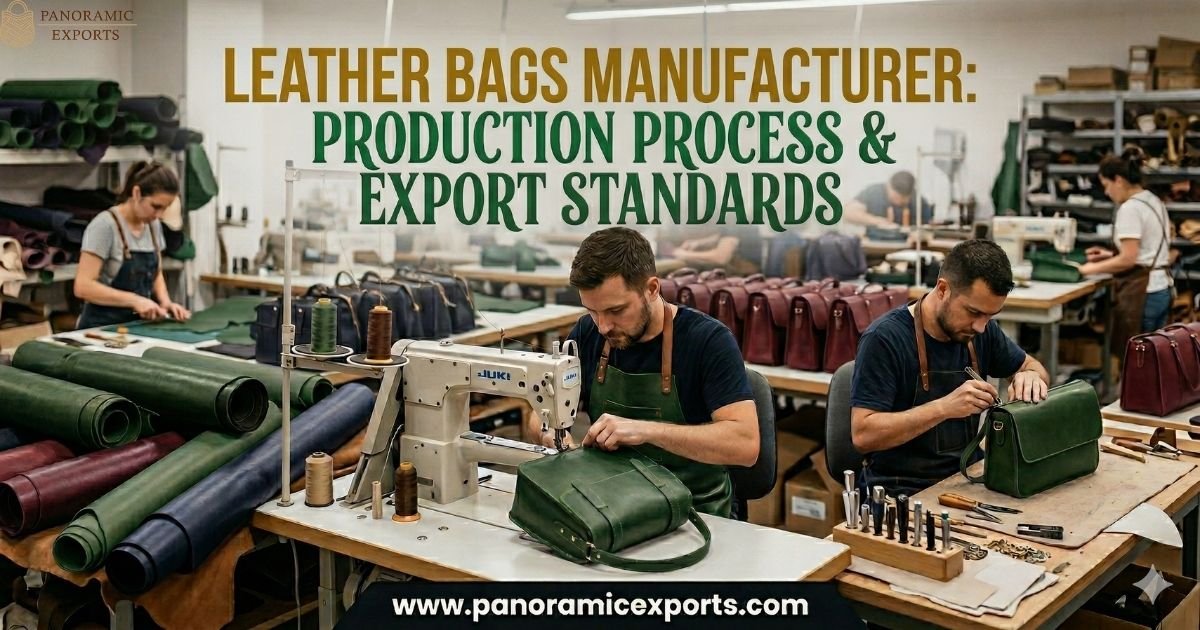
    The leather goods industry in 2026 isn’t just about making a product; it’s about surviving the technical scrutiny of the global market. For any brand looking to scale—whether in the USA, UK, or Australia—picking a Leather Bags Manufacturer is the most heavy-duty business decision you will make this year. It is not just about a low price per unit. It is about finding a leather bag factory that understands the physical grit of a hide and the high-stakes compliance of international retail.

    If you are a boutique owner or a growing e-commerce brand, you need a partner, not just a vendor. A top-tier bags manufacturer acts as the backbone of your quality control, ensuring that every piece leaving the factory floor is ready for a premium shelf. This guide breaks down the movement from raw material to a boxed export, highlighting why the manufacturing partner you choose defines your brand’s survival.


    The Core of a Professional Leather Bag Factory

    A real leather bag factory doesn’t run on luck or generic templates; it runs on technical precision. It is a calculated mix of heavy machinery and the steady, scarred hand of a master craftsman who knows exactly how leather behaves under a needle. In 2026, the Transactional side of this business has moved toward high-tech facilities that still respect old-school hand-finishing techniques.

    When you look for a Leather Bags Manufacturer, you aren’t just looking for sewing machines. You are looking for a facility that manages humidity, understands tensile strength and knows how to grade a hide before a single cut is made.

    Material Grading and Selection

    The work starts long before the first clicker press hits the leather. A professional leather bags manufacturer spends a massive amount of time on hide selection and grading.

    • Full-Grain Hides: These are the toughest, most natural parts of the skin. A quality leather bag factory will inspect these for “open scars” or “insect bites” that can weaken the structure of a high-end tote.

    • Top-Grain Precision: Refined for that luxury feel without losing the structural integrity required for a heavy-duty messenger bag.

    • Sourcing Ethics: In 2026, a Leather Bags Manufacturer must ensure hides are strictly byproducts of the food industry. This keeps the supply chain sustainable and transparent for the end consumer.

    Technical Cutting and Skiving

    At a high-output leather bag factory, we don’t just hack away at a hide. We use a combination of CAD (Computer-Aided Design) for zero-waste efficiency and manual hand-cutting for the pieces that need a human eye. Skiving—the technical process of thinning out the edges of the leather—is where the real magic happens. A master bags manufacturer knows that if the skiving is off by even a millimeter, the seams will be bulky and the bag will look “cheap” regardless of how much you spent on the raw material.


    Export Standards: Clearing the Global Bar

    Shipping goods to the USA, UK, or Australia is a Transactional nightmare if your paperwork and product safety aren’t 100% perfect. A manufacturer has to be an expert in more than just stitching; they have to be experts in international law and chemical safety.

    1. REACH and Chemical Compliance

    Every leather bag factory must play by the international rules. This means zero Lead, zero Cadmium and absolutely no Hexavalent Chromium. As a responsible leather bags manufacturer, we follow OEKO-TEX Leather Standard to ensure the leather is safe for the person wearing it and the environment. If your manufacturer isn’t testing their wet-blue hides, your brand is at risk of a customs seizure.

    2. Social Audits and Transparency

    The modern shopper wants to know exactly who made their bag. A reputable Leather Bags Manufacturer will have the certifications to prove it—think SEDEX, SMETA, or SA8000. These aren’t just pieces of paper; they are proof of fair wages, safe working conditions and the complete absence of child labor. As a bulk leather handbags supplier, maintaining these standards is the only way to work with major global retailers.

    3. Structural Stress Testing

    Before any bag gets boxed, it goes through the ringer. A professional leather bag factory doesn’t leave quality to chance.

    • Strap Pull Tests: We use machines to ensure the handles can actually hold 10kg to 15kg without the rivets popping.

    • Hardware Cycles: Do the zippers still glide smoothly after 5,000 pulls?

    • Color Rub: Will the dye stay on the bag or end up on the customer’s expensive white linen shirt? A leather bags manufacturer that skips these tests is not a manufacturer you want to partner with.


    Panoramic Exports: Your Global Manufacturing Partner

    Panoramic Exports has built a reputation as a leading Leather Bags Manufacturer by combining Indian artisanal skill with Western industrial rigor. From our specialized hubs in Noida and Kolkata, we function as a high-capacity leather bag factory for brands that simply cannot afford a quality slip-up.

    Vertical Integration in Action

    We don’t buy “mystery leather” from middle-men. We control the tanneries. This vertical setup makes us a bags manufacturer that can actually guarantee the grain of every hide.

    • Design Development: We take your raw sketches or tech packs and turn them into retail-ready samples within weeks.

    • Volume Scalability: We handle Transactional orders that range from small boutique runs to massive, multi-port retail distributions.

    • Logistics Expertise: We handle the export headache—the Bills of Lading, the Certificates of Origin and the shipping schedules—so you can focus on selling.

    Our goal as a leather bag factory is to be the silent partner behind your brand’s success. We provide OEM leather bags manufacturer India expertise and Eco-friendly leather bags wholesale exporter quality that hits the mark every single time.


    The Economics of a Leather Bag Factory Partnership

    When you sit down to negotiate with a Leather Bags Manufacturer, look beyond the unit price. A cheaper bags manufacturer often cuts corners on the things you can’t see—like the quality of the nylon thread, the thickness of the reinforcement tape, or the glue used to bond the leather. At Panoramic Exports, we believe a leather bag factory should focus on the “Total Cost of Ownership”. A bag that doesn’t break is a bag that doesn’t get returned, saving you thousands in logistics and lost customer trust.

    Customization and OEM Capabilities

    If you want a unique space in the market, off-the-shelf designs won’t cut it. You need a custom leather bags manufacturer that can offer:

    • Private Label Branding: Custom embossing, branded linings and bespoke dust bags.

    • Hardware Finishes: Whether it’s brushed brass, gunmetal, or matte black, your leather bag factory should be able to source or manufacture the exact hardware you need.

    • Material Innovation: Combining leather with canvas or recycled textiles to create a modern, mixed-media look.


    Conclusion

    The success of your brand is only as strong as your Leather Bags Manufacturer. By choosing a partner that lives and breathes the production process and respects the strictness of export standards, you protect your margin and your name. A leather bag factory should be the guardian of your quality—nothing less. Whether you are looking for a bulk leather handbags supplier or a long-term bags manufacturer, the 2026 market rewards the brands that prioritize the “grit” over the “glamour”.


    FAQs

    1. What is the average lead time for a bags manufacturer to finish a bulk order?

    Usually, a leather bag factory needs 60 to 90 days depending on hide availability and design complexity.

    2. Do you offer private label services for startups?

    Yes, as an OEM leather bags manufacturer India, we handle everything from initial prototyping to final branding.

    3. How do you handle international chemical safety standards?

    As a professional bags manufacturer, we use RSL (Restricted Substances List) testing to meet all REACH and global safety rules.

    4. Can I visit the leather bag factory for an on-site quality audit?

    We actively invite our Transactional partners to visit our Noida or Kolkata units to see our production standards firsthand.

    5. What is the MOQ for a custom leather bags manufacturer?

    Our standard MOQ is 50 to 100 units per style to keep production efficient and maintain high-quality material consistency.

  • Wholesale Leather Bags Supplier for Retail Brands

    Wholesale Leather Bags Supplier for Retail Brands

    Wholesale Leather Bags Supplier for Retail Brands

    The 2026 leather trade is about one thing: the grit of the hide. For any retail brand in the USA, UK, Canada or Australia, finding a reliable Wholesale Leather Bags Supplier is the difference between a high-margin season and a pile of returns. Shoppers are done with “disposable” fashion. They want “investment pieces”—bags that don’t just survive a vacation but actually look better after five years of daily use.

    If you are scaling a digital store or stocking a high-street boutique, the quality of your bulk leather handbags supplier is your only real marketing tool. In a market where “quiet luxury” and “rugged utility” drive every sale, the leather has to speak for itself.

    Smart retailers now prioritize sourcing from an OEM leather bags manufacturer India to ensure vertical integration. This control over the tanning and stitching process guarantees that your Eco-friendly leather bags wholesale exporter partnership delivers consistent, audit-ready quality that resonates with the modern, conscious consumer.


    Why a Real Wholesale Leather Bags Supplier is a Retail Necessity

    The global market for leather goods is heading for record highs by 2027, driven by rising demand for premium and durable products. But the real money is in the “premium-functional” niche. Leather accessories, especially high-end totes and travel gear, stay the highest-margin items for any retail owner. Unlike clothing, leather doesn’t have the headache of sizing charts, making it the most profitable centerpiece for any Commercial collection.

    Meeting the “Investment Piece” Demand

    Retailers are currently looking for more than just a seasonal accessory. The modern consumer wants a “career-ready” look—a bag that handles a crowded morning commute and then sits in a high-stakes board meeting. This shift means your Wholesale Leather Bags Supplier has to provide Commercial durability: reinforced stress points, heavy-duty YKK zippers and interior linings that don’t rip when someone drops a laptop inside. By offering a mix of textures—from buttery Nappa to rugged, oil-pulled Full-Grain—retailers grab the loyalty of both the “Digital Nomad” and the “Corporate Executive”.


    2026 Trending Categories for Bulk Leather Handbags

    To stay ahead, your inventory has to reflect the move toward structured shapes and “lived-in” vintage looks. Here are the categories moving the most volume for any Wholesale Leather Bags Supplier partnership right now:

    1. The Professional “Power” Tote

    The demand for structured, oversized totes is spiking. Brands are actively hunting for wholesale leather bags supplier options that include padded tech compartments and zero exterior branding. These are essentially portable offices. The leather has to be thick enough to stand up on its own but soft enough to feel premium.

    2. Mixed-Media Weekend Bags

    2026 is the year of texture. Mixed-material designs—think matte cowhide paired with thick suede—are a massive hit in the UK and Australian markets. For a bulk leather handbags supplier, the technical challenge is making sure the colors don’t bleed between materials while keeping the bag lightweight.

    3. The “Doctor Bag” Revival

    Structured, vintage-style top-handle bags are back. These require a specialized Wholesale Leather Bags Supplier capable of precision frame-setting and hand-painted edges. They provide that polished, “old-world” look that appeals to the customer who wants something different from the usual mass-market tote.


    The Shift to Sustainable and Custom Leather Sourcing

    The 2026 shopper is skeptical of “fast fashion” labels. They want to see the actual audit trail of the hide. This is where the role of a Wholesale Leather Bags Supplier moves from a simple vendor to a transparent partner.

    ECO-Conscious Production

    Sustainability isn’t a “bonus” anymore; it is a baseline Commercial requirement. Global retailers are now demanding Chrome-Free tanning and LWG (Leather Working Group) certifications. Working with an ECO-focused supplier lets you market your goods as “ethically crafted,” which is the biggest driver for Millennial and Gen Z buyers in North America.

    The Custom and OEM Advantage

    For brands that want a unique space, off-the-shelf designs are a dead end. This is where an OEM approach gives you the leverage you need. Customization lets you:

    • Use private label leather bags India services to put your own mark on every piece.

    • Work with a custom leather bags manufacturer to pick specific hardware finishes like antique brass or matte black.

    • Build bespoke internal organizers tailored for the newest tech.


    Sourcing Excellence: The Indian Advantage

    India is the world’s top hub for wholesale leather bags because of a mix of tanning heritage and new-age tech. While other regions push synthetic “vegan” plastics that end up in landfills, Indian manufacturers stick to the “Human Touch”.

    • Vertical Integration: In hubs like Kolkata and Noida, the leather is tanned and stitched under one roof. This ensures the wholesale leather bags you get are actually the grade you paid for.

    • Material Variety: From the soft feel of goat leather to the indestructible grain of buffalo hides, the variety is unmatched.

    • Ethical Compliance: Top-tier Indian exporters are SEDEX and SMETA compliant, meaning they pass the audits required by the biggest Western retail chains.


    Panoramic Exports: Your Trusted Wholesale Leather Bags Supplier

    Panoramic Exports bridges the gap between traditional Indian leather-craft and the fast-moving demands of global retail. With over 20 years in the trade, we are a premier Wholesale Leather Bags Supplier for brands in the USA, UK, Canada and Australia.

    Our Edge in the Global Market

    We know that as a bulk leather handbags supplier, our job is to protect your margin. Our facilities are built for:

    • OEM & Private Label Excellence: We build your brand’s signature look through custom leather bags manufacturer services.

    • Certified Quality: Our focus on Eco-friendly tanning and ethical labor makes your supply chain 100% transparent.

    • Global Logistics: We handle the shipping headaches so your wholesale leather bags supplier order arrives at your warehouse on time and ready for the shelf.


    FAQs

    1. What is the minimum order quantity for bulk leather handbags?

    Generally, our MOQ starts at 50 to 100 pieces per style to keep the material quality high.

    2. Can you provide private label branding?

    Yes, we offer full private label leather bags India services, including custom embossing and tags.

    3. What leather do you use for professional bags?

    We primarily use Top-Grain cow and buffalo leather for its Commercial durability.

    4. Is the leather ethically sourced?

    As a SEDEX-certified Wholesale Leather Bags Supplier, we audit our tanneries for environmental and labor rules.

    5. Do you ship to Australia and the UK?

    Yes, Panoramic Exports handles all international shipping for bulk leather handbags supplier orders worldwide.

  • Leather Handbag Supplier Agreement & Contract Guide

    Leather Handbag Supplier Agreement & Contract Guide

    Leather Handbag Supplier Agreement & Contract Guide

    The global fashion business is a minefield. One bad batch of hides or a late shipment can wipe out your entire year’s profit. That is why a Leather Handbag Supplier Agreement isn’t just paperwork—it’s your only real protection. Forget handshakes. When you’re moving high-value leather across the world, you need a contract that digs into the ugly details, from the specific animal grain down to the exact strength of the thread.

    At Panoramic Exports, we treat every leather export contract guide as a way to be brutally honest. If the brand and the maker aren’t 100% synced on lead times and quality bars, the final product is going to be a disaster.


    From Sketch to Store: Nailing the Bag’s Details

    Vague contracts are where money goes to die. When you sit down to write a Leather Handbag Supplier Agreement, you have to be borderline obsessive about the “Bill of Materials.” Don’t just say “leather.” Specify if it’s buffalo, goat, or sheep. Define the tanning method. If you don’t name the beast, you can’t complain when the wrong hide shows up.

    Then there’s the hardware. Your leather export contract guide should demand specific plating thicknesses so your gold buckles don’t fade to a dull silver in three months. Even the “unseen” stuff—like the foam density in the straps or the weight of the cotton lining—needs to be locked in. If it’s not in the paper, it doesn’t exist in the factory.


    The Rejection Rules: Quality Control Without the Fluff

    The most important safety valve in a Leather Handbag Supplier Agreement is the section on Quality Assurance. Leather is organic, so small variations are fine, but structural flaws are a deal-breaker. You need to draw a hard line on what counts as a “Major” defect versus a “Minor” one.

    Our own leather export contract guide at Panoramic Exports sticks to the AQL 2.5 standard. Basically, if a random check of the batch shows too many fails, the factory has to fix the whole lot on their own dime. This clause is your primary insurance. It keeps you from getting stuck with garbage that would trash your brand’s reputation in a week.


    The Certification War: REACH, LWG and Legal Red Tape

    Today’s shoppers are detectives; they want to know the ethics behind the bag. Your Leather Handbag Supplier Agreement has to legally mandate specific environmental proof. If a factory can’t prove they are “REACH Compliant”, your entire shipment could be seized (or even burned) at customs because of banned dyes or chemicals.

    You should also demand LWG (Leather Working Group) ratings to make sure the tannery isn’t wasting water or power like it’s the 1950s. Social audits are just as big—fair wages and safe floors are a core part of how we do things at Panoramic Exports.


    Cash and Calendars: Payments and Deadlines

    Money is usually where things get tense, so your Leather Handbag Supplier Agreement needs zero “grey areas.” Most international deals follow a 30/70 split—a 30% deposit to get the leather bought and the final 70% once the Bill of Lading is in your hand.

    A smart leather export contract guide also includes a “Late Delivery” penalty. If a shipment is two weeks late, you’ve missed the holiday rush. Including a penalty for every week of delay keeps the factory focused on your calendar. At Panoramic Exports, we’d rather give you a realistic lead time than a fairy tale, because empty shelves don’t pay the bills.


    Protecting the Soul of Your Brand: IP Security

    In this industry, your designs are your soul. A Leather Handbag Supplier Agreement must include a rock-solid NDA and Intellectual Property clause. You have to legally block the manufacturer from selling your unique shapes to your competitors or showing them off at trade shows without your permission.

    We take this very seriously. When you work with Panoramic Exports, your tech packs stay in a secure loop. Our leather export contract guide ensures that any custom molds or hardware we build for you stay yours, even if we stop working together later.


    Finalizing the Freight: Who Owns the Risk?

    What happens if a container gets lost at sea? That’s decided by the “Incoterms” in your Leather Handbag Supplier Agreement. Whether it’s FOB (where the factory handles it until it’s on the ship) or DDP (delivered to your door), the choice changes your bottom line.

    A good leather export contract guide suggests picking the term that fits your experience level. For smaller brands, we often handle the heavy lifting of the Indian customs paperwork. It lets you focus on the marketing while we deal with the logistics.


    The “After-Sales” Reality: Handling Returns and Latent Defects

    Most people think a Leather Handbag Supplier Agreement ends the second the shipping container hits the water. That’s a massive mistake. You’ve got to account for “latent defects”—those sneaky issues like a handle that snaps after two weeks of use or edge paint that starts peeling once it hits a different climate. Your leather export contract guide needs a specific “Warranty Period” clause. Usually, six months is the industry sweet spot. If a customer returns a bag because the tanning was unstable or the stitching unraveled, you need a pre-agreed system for credits or replacements.

    At Panoramic Exports, we don’t just “ship and forget.” We build our Leather Handbag Supplier Agreement to include a clear protocol for these rare hiccups. Whether it’s a discount on the next purchase or a full replacement of the faulty units, having this in writing prevents a minor quality flare-up from turning into a full-blown legal war. It’s about accountability. A factory that won’t stand behind its work after the final invoice is paid isn’t a partner; they’re just a vendor. We prefer the former.


    Conclusion

    At the end of the day, a Leather Handbag Supplier Agreement isn’t about being “tough”—it’s about being clear. When both sides respect the fine print, the partnership moves from a simple transaction to a real alliance. At Panoramic Exports, we believe clarity is the ultimate luxury. By being upfront about our LWG certifications and ethical standards, we give our clients the confidence to grow. A solid contract is what lets the craftsmanship shine through without the stress of the unknown.


    FAQs

    1. What’s the most important part of a Leather Handbag Supplier Agreement?

    The Quality Assurance clause—it defines exactly when you can say “no” to a shipment.

    2. Why does a leather export contract guide focus on REACH?

    Because without it, your goods will be blocked at the border for chemical violations.

    3. How do payment milestones protect me?

    They make sure the factory has the cash to start, but keep you in control until the goods are perfect.

    4. Can a leather export contract guide stop design theft?

    Yes, by legally barring the factory from reusing your proprietary molds or sketches.

    5. How does Panoramic Exports handle these contracts?

    We keep it 100% transparent so there are zero surprises when your shipment arrives.

  • Leather Export Business Model Explained

    Leather Export Business Model Explained

    Leather Export Business Model Explained

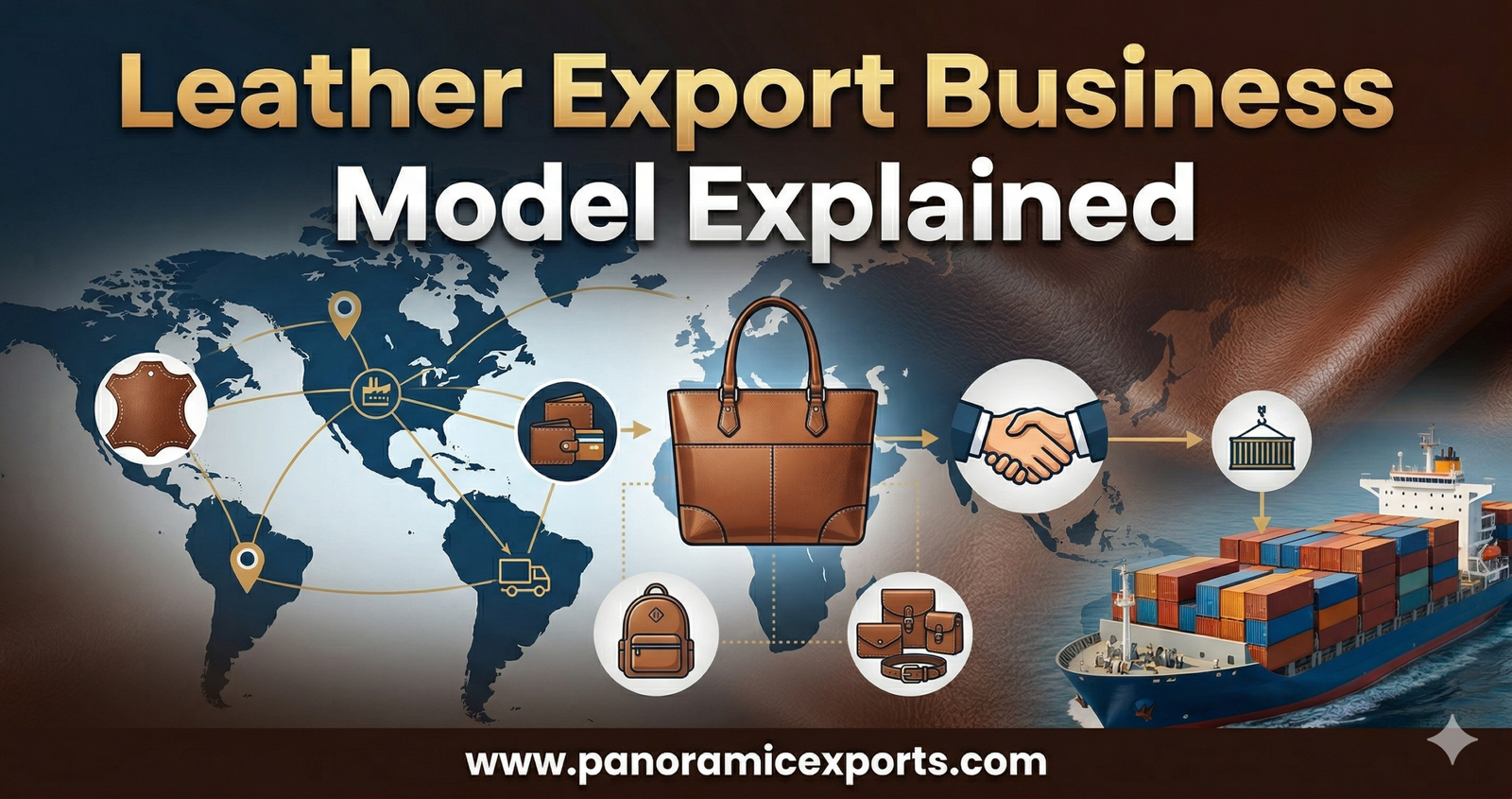
    The global leather trade is basically a high-stakes poker game where old-school craftsmanship is constantly clashing with the brutal reality of international logistics. If you’re actually planning to survive, a Leather Export Business Model has to be built on way more than just “looking the part” on a store shelf. It takes a deep, often exhausting integration of supply chain transparency, chemical safety and production that can scale up without losing its gut-level quality. Moving premium hides from a dusty Indian tannery to a high-end boutique in Milan or New York means navigating a total nightmare of trade tariffs and the weird, ever-changing whims of global shoppers.

    This model is the ultimate blueprint. It’s what connects our local artisans here in India with global luxury buyers who won’t accept anything less than absolute perfection in every single stitch, fold and grain of their leather goods.


    The Technical Grit: Leather Manufacturing Business Model

    The real engine of any Leather Export Business Model is the factory floor. High-quality export starts at the “Wet Blue” or “Crust” stage—this is where you actually decide the durability and character of the leather. Unlike stuff made for the local market, a leather manufacturing business model designed for global trade is strictly policed by international safety watchdogs.

    Take chemical stabilization, for example. This is the raw science of turning hides into stable leather through tanning so the material doesn’t literally rot while it’s on a ship for six weeks. Then you’ve got grain correction, where you’re buffing the surface to hide natural imperfections like scars or bug bites and precision splitting to keep the thickness dead-on across the whole hide. Modern workshops are leaning on semi-automated stitching and laser cutting now, mostly to make sure a batch of five hundred bags stays identical. That precision is the only way an exporter keeps that “zero-defect” reputation that big-money buyers demand.


    Sourcing and Material Decisions

    A solid Leather Export Business Model usually starts months before a knife ever touches a hide. It’s about the unglamorous, gritty work of picking the right raw materials. In India, we’re usually choosing between buffalo, goat and sheep leather based entirely on the “vibe” and function of the final piece. Buffalo is the tank—rugged and tough for travel gear—while sheep leather is buttery soft for high-end gloves.

    You also can’t ignore the paper trail. You have to personally vet tanneries to make sure they aren’t just “greenwashing” their operations. This traceability is what satisfies those picky transparency demands from Western brands. By locking down a transparent supply chain, a business can justify its premium pricing and build real trust with fashion houses that live and die by their ethical mandates.


    Quality Control: The Safety Net of the Model

    Quality control (QC) is the ultimate backup for the Leather Export Business Model. It’s not a final “check-the-box” step; it’s a constant, sometimes annoying process at every single station.

    • In-Line Checks: Someone is literally watching the zippers and pockets while the stitching is still fresh.

    • Stress Testing: We’re talking about brutally yanking on hardware and straps to make sure they won’t snap when a customer stuffs a heavy laptop inside.

    • The Packing Game: Putting enough silica gel in the boxes to stop mold from growing during a humid trek across the ocean.

    For a leather manufacturing business model to actually make money, it has to follow AQL (Acceptable Quality Level) standards. Most global retailers are dead-set on AQL 2.5, which puts a very tight cap on how many minor flaws can exist in a big shipment.


    Compliance and the Paper War

    Navigating the legal side is a massive, often invisible part of the leather export business model. International trade is ruled by stamps and certificates that prove your leather won’t give someone a rash or poison a river. The REACH regulation in Europe is the big hurdle—it’s all about proving you aren’t using banned chemicals like Azo dyes. Then there’s the LWG (Leather Working Group) rating, along with broader sustainability frameworks supported by the Sustainable Leather Foundation, which tell the world you aren’t wasting water or power like it’s 1950.

    Social compliance matters just as much. You need hard proof that the people in the factory are paid fairly and working in a safe spot. Fitting these certified partners into your Leather Export Business Model is often the only thing standing between winning a huge contract or getting ghosted by a buyer who wants their paperwork perfect.


    The Export Side: Logistics and Tight Deadlines

    This part of the Leather Export Business Model is all about the art of the move. Leather is heavy and shipping costs will eat your margins for breakfast if you aren’t smart. You’re constantly playing the game of sea freight versus air freight. Sea is cheap for bulk, but air is the only way to hit those “must-have” fashion launch dates.

    A typical leather manufacturing business model runs on a 60-to-90-day cycle. That covers everything from the raw hide purchase to final QC and delivery. In the fast-fashion world, being even three days late can lead to massive “late fees” or having the whole order cancelled. It’s high-pressure and timing is every bit as vital as the leather quality itself.


    How Panoramic Exports Does It Differently

    At Panoramic Exports, we’ve spent years tweaking the Leather Export Business Model to fix the specific headaches that international wholesalers and private labels deal with. We cut out the middleman and go straight to the tanneries so our clients get exactly what they asked for.

    We specialize in tailored production, meaning we can do small batches for boutique brands that need something exclusive. Our rapid prototyping can turn a napkin sketch into a real, holdable sample faster than most factories can even reply to an email. We also handle the whole shipping mess so our partners can just focus on selling. Our leather manufacturing business model focuses on that “Made in India” pride, using layers of inspection that most factories just find too exhausting to deal with.


    Conclusion

    The leather game is a marathon, not some quick sprint. A tough Leather Export Business Model has to be ready to change—using digital tracking and new sustainable materials whenever they pop up. The barriers to entry feel like a mountain, but the view from the top is a multi-billion dollar market. As people move toward goods that actually last, the exporters who put quality over quick wins are going to be the ones left standing. If you really want to thrive, you need a partner who truly gets the leather manufacturing business model inside and out.


    FAQs

    1. What makes a Leather Export Business Model click?

    It’s a mix of great factory work and being totally obsessed with trade laws.

    2. Does a leather manufacturing business model save money?

    If you tan and cut smart, you cut out the waste and give your buyers a much better price.

    3. What’s the must-have paper for a leather export business model?

    You’re going to need REACH for the EU and, ideally, an LWG-certified tannery to back you up.

    4. Is “going green” required for a leather export business model?

    Pretty much. If you aren’t sustainable, you’re locked out of the best Western markets.

    5. Why should I choose an Indian partner for my leather manufacturing business model?

    India offers a unique mix of heritage hand-finishing and modern, large-scale production capacity that’s hard to beat globally.

  • Leather Goods Production Capacity Planning Guide

    Leather Goods Production Capacity Planning Guide

    Leather Goods Production Capacity Planning Guide

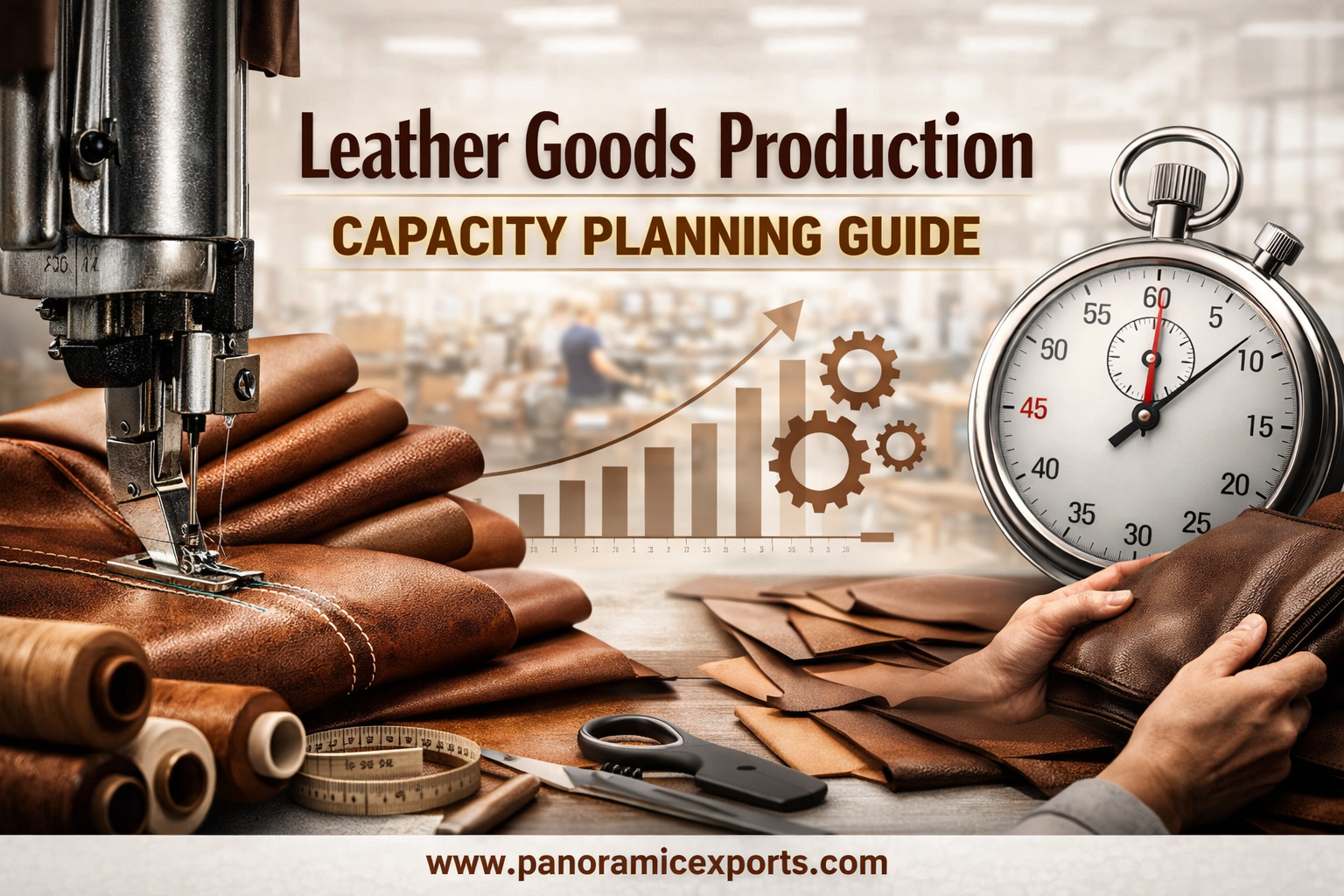
    In the world of premium leather, there’s a massive gulf between crafting a flawless sample and moving a 10,000-unit shipment out the door. That gap is bridged by one thing: Leather Goods Production Capacity. Cracking the code on how to calculate, manage and scale your output is exactly what separates a small neighborhood workshop from a global export powerhouse.

    This guide digs into the real-world grit of leather factory production planning, showing you how to keep your floor agile, your margins healthy and your team ready for the brutal pace of the international market. We aren’t just talking about shiny machinery here; we’re getting into the real-world grit of managing unpredictable hide quality and the razor-thin logistical windows you need to hit for overseas shipping. It’s all about making that hard shift from a slow-moving hobby shop to a high-speed, precision-driven operation that knocks out every single delivery deadline without breaking a sweat.


    The Fundamentals of Leather Factory Production Planning

    Think of Leather Goods Production Capacity as the true “red line” for your shop—the absolute maximum you can pump out before your crew burns out or your quality starts to slip. It’s a completely different beast than working with synthetic fabrics that arrive in tidy, predictable rolls. Leather is temperamental and organic. You’re constantly fighting “yield variance,” which is just a fancy way of saying no two hides are shaped the same and the grain quality is never a sure thing. It takes a human eye to navigate those inconsistencies and that’s exactly what dictates your real-world output.

    To keep your floor moving, you’ve got to master three non-negotiable pillars:

    • Machine Uptime: This is the heartbeat of the shop. If your hydraulic clicking presses or heavy-duty stitchers go down, the whole line stops.

    • Labor Efficiency: Leatherwork is a skill, not just a task. You have to account for the actual minutes it takes a real person to hand-paint an edge or navigate a complex assembly.

    • Throughput Time: This is the clock. It’s the total journey from a raw hide arriving at the door to a finished, boxed-up handbag or wallet leaving the loading dock.

    Effective leather goods production capacity management is what keeps these pillars from buckling when a massive bulk order hits your desk. It forces you to look at the actual ergonomics of your floor and the true skill level of every person on your stitching line.


    Steps to Optimize Your Leather Goods Production Capacity

    Scaling a factory requires a methodical approach to floor management. Here is a step-by-step framework to ensure your Leather Goods Production Capacity meets international standards.

    1. Conduct a Detailed Time and Motion Study

    Before you can increase output, you must accurately measure it. Analyze every micro-task—from the moment the leather is toggled to the final hardware attachment. By identifying the “bottleneck operation” (usually the most time-consuming stitch or the drying time for edge dye), you can calculate your True Capacity. This data is the bedrock of leather factory production planning scaling.

    2. Implement Modular Production Lines

    Traditional “make-through” systems, where one artisan makes a whole bag, are romantic but inefficient for bulk orders. Moving to a modular line—where specialized stations handle cutting, skiving, prep and closing—significantly boosts your Leather Goods Production Capacity by reducing tool-switching time and mental fatigue for the workers.

    3. Raw Material Buffer Management

    In the leather export business model, delays in tannery deliveries are the primary “capacity killers.” Maintaining a “safety stock” of core leathers (like black or tan bovine) ensures that your sewing lines never sit idle while waiting for a shipment. A steady flow of hides is essential to maintaining a high leather factory production planning.

    4. Quality Control at the Source

    Capacity isn’t just about how much you make; it’s about how much you keep. Implementing “In-Line QC” means defects are caught at the cutting table rather than the final inspection. This prevents wasted labor hours on items that will eventually be rejected, effectively protecting your net leather factory production planning.

    To ensure your Leather Goods Production Capacity translates into high-grade exports, you can reference the technical testing standards maintained by the American Leather Chemists Association (ALCA).


    Panoramic Exports: The Leather Export Business Model Explained

    Success in the global market requires more than just a high Leather Goods Production Capacity; it requires a sophisticated export strategy. For a factory to thrive internationally, it must adopt a “panoramic” view of the entire supply chain, from the wet blue stage to the retail shelf.

    Understanding the Bulk Export Cycle

    When dealing with international buyers, the production cycle changes. You aren’t just making products; you are managing a timeline that includes:

    • Prototyping & Sampling: Converting designs into “Golden Samples” that meet buyer specs.

    • Lead Time Synergy: Aligning your factory’s output with shipping vessel schedules and port deadlines.

    • Regulatory Compliance: Ensuring your leather factory production planning accounts for the time needed for REACH or LWG (Leather Working Group) certifications.

    Managing Seasonal Fluctuations

    Then you’ve got to handle the seasonal roller coaster. The leather world is famously seasonal, with massive, frantic peaks for Autumn/Winter collections. A smart Leather Goods Production Capacity strategy relies on “flexible labor.” This means having a cross-trained crew that can jump from the stitching line over to the packaging department when the export windows get tight. That kind of versatility is the only way to make sure your own factory doesn’t become its own worst bottleneck when the pressure is on.


    Conclusion

    Figuring out the true limits of your Leather Goods Production Capacity isn’t a “one and done” task—it’s a constant process of tweaking and refining your floor. By leaning into modular workflows, staying disciplined with time studies and using smart planning software, you can finally say “yes” to those massive export contracts without that nagging fear of missing a shipping date. In today’s market, being fast is just as vital as being skilled. Your ability to map out a plan and actually execute it is what makes you a heavy hitter. Mastering your leather factory production planning is the ultimate move that takes you from being a local shop to a dominant global leader.


    FAQs

    1. How do you actually calculate Leather Goods Production Capacity for a big order?

    You take your total available work minutes and divide that by the “Standard Minute Value” (SMV) it takes to make one item.

    2. Where does the flow usually get stuck in a leather factory?

    The biggest bottleneck is almost always the assembly and stitching line because it requires the most hands-on, high-level skill.

    3. Does the quality of the raw hide really change how much I can produce?

    Absolutely—low-grade hides with lots of scars or holes force your cutters to slow down for manual nesting, which drags down your total output.

    4. What’s the fastest way to scale up my Leather Goods Production Capacity?

    Getting an automated cutting machine on the floor and moving to a multi-shift schedule are the quickest ways to see a jump in numbers.

    5. Why is planning for leather so much harder than working with rolls of fabric?

    Unlike consistent rolls of cloth, every leather hide is a different shape and size, so you have to custom-fit every single cut.

  • Leather Bag Sample Development & Prototyping Guide

    Leather Bag Sample Development & Prototyping Guide

    Leather Bag Sample Development & Prototyping Guide

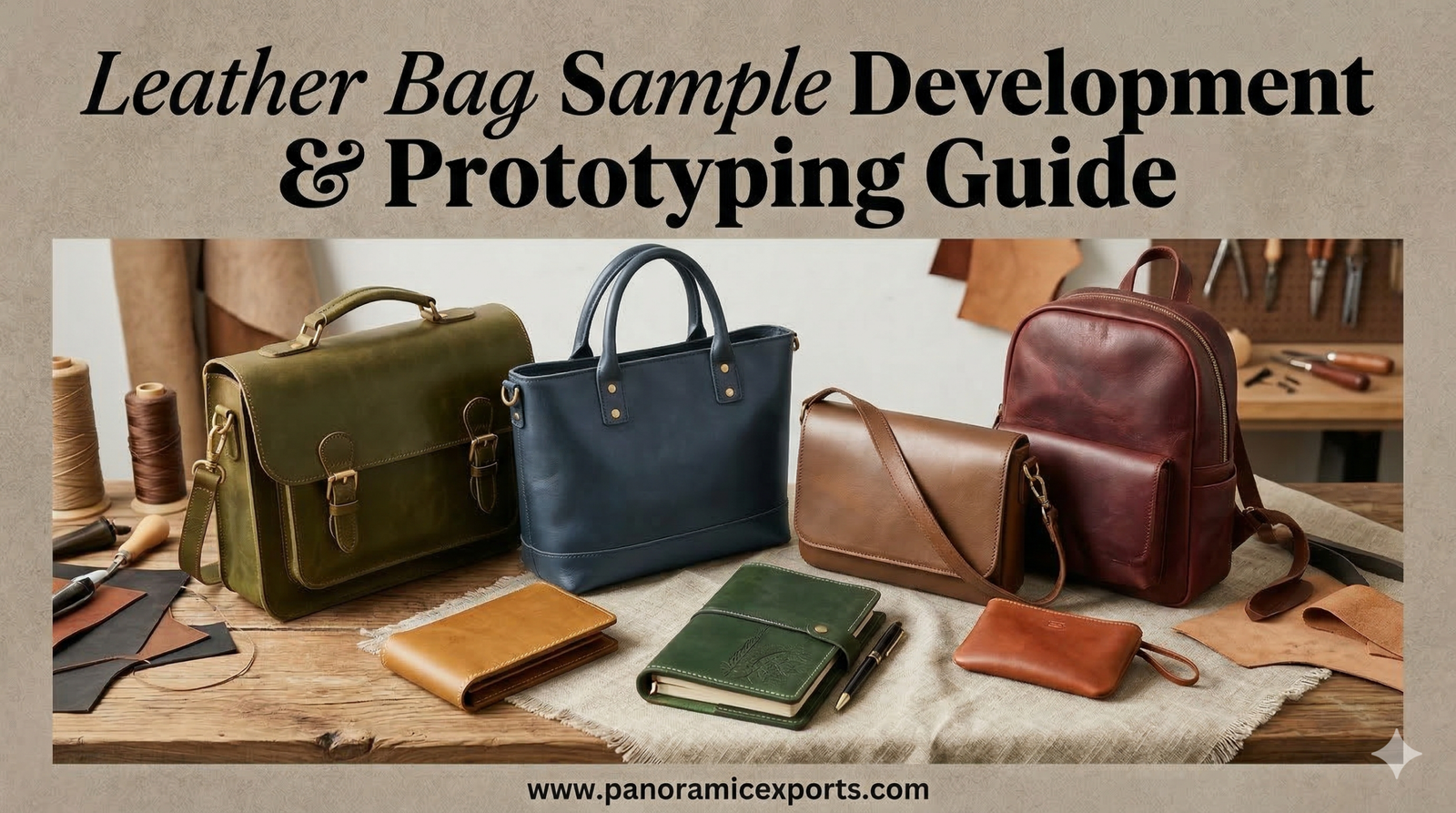
    There is a specific kind of silence in a sample room just before the first cut is made. It’s the moment where a designer’s vision—maybe it’s a rough sketch from a London studio or a detailed tech pack from New York—meets a physical hide of premium leather here in India. At Panoramic Exports, we know that Leather Bag Sample Development is the bridge between a dream and a retail success story. It is a process of trial, error and eventual perfection that ensures the bag doesn’t just look good in a photo, but performs perfectly in the hands of your customer.

    If you get the sample wrong, you’re dead in the water. It doesn’t matter how good your marketing is. If the strap snaps or the leather “bleeds” on a customer’s white shirt, your brand is done. That’s why our prototyping unit isn’t just a room with some sewing machines. It’s a lab where we break things so they don’t break on your customers.


    Phase 1: Leather Bag Sample Development – Material Deep-Dive

    The very first step of Leather Bag Sample Development isn’t actually cutting; it’s feeling. We start by selecting the “skin.” Every leather has a different “temper”—some are stiff and snappy, others are buttery and slouchy. If you’re designing a structured tote, we might suggest a vegetable-tanned shoulder. If it’s a high-fashion crossbody, we might look at a drum-dyed nappa.

    In this early stage, we talk about the “pull-up” effect, the grain consistency and how the leather will age. We aren’t just picking a color; we are picking the lifespan of the bag. This conversation is the foundation of the entire sample development cycle, ensuring the raw material matches the intended price point and retail “vibe” of your brand.


    Phase 2: The Architecture of the Pattern

    Once the leather is chosen, our master pattern makers move to their benches. This is the “structural engineering” of Leather Bag Sample Development. We translate 2D drawings into 3D paper models. We use heavy cardstock to build the bag’s skeleton, checking the drop of the handle, the depth of the gusset and the placement of the internal pockets.

    This is where we calculate the “skiving.” Skiving is the art of thinning the edges of the leather so that when they are folded over for stitching, the seams remain sleek and elegant rather than bulky and amateur. A millimeter of difference here determines whether a bag looks like a luxury item or a budget knock-off. At Panoramic Exports, we obsess over these paper blueprints because they are the DNA of your future production run.


    Phase 3: Sourcing the “Invisible” Quality

    A leather bag is only as strong as its weakest component. During Leather Bag Sample Development, we spend an incredible amount of time on the “guts” of the bag. This includes the internal stays, the bonded nylon threads and the reinforcements like “salpa” that prevent the leather from stretching out of shape over time.

    We also source the hardware—the jewelry of the bag. Whether it’s solid brass zippers, magnetic snaps with a specific “pull force,” or custom-branded rivets, we ensure every piece of metal matches the weight and finish of the leather. We also prioritize sustainability by working with LWG-certified tanneries, ensuring that the sample development process meets the high ethical standards of 2026 global markets.


    Phase 4: The Moment of Truth (The Counter Sample)

    The “Counter Sample” is the first time the bag exists in its final materials. It’s the most honest part of the Leather Bag Sample Development journey. This is where we “road test” the design.

    We put the bag on a shoulder to see how it hangs. We fill it with a laptop and a wallet to see where the stress points are. Does the zipper glide smoothly around the curves? Does the lining rustle or does it feel premium? This is the stage for “micro-adjustments”—moving a strap attachment or adding a reinforced base. It’s about the tactile experience of the product.


    Why Prototyping at Panoramic Exports is a Specialized Craft

    At Panoramic Exports, our sampling unit is a dedicated space, away from the hum of mass production. It is staffed by artisans who have spent decades learning the “memory” of different hides.

    • Technical Problem Solving: We don’t just follow a sketch blindly. If we see a design flaw—like a handle that will eventually tear the leather—we’ll flag it during Leather Bag Sample Development and suggest a structural fix.

    • Rapid Response Prototyping: We know that fashion seasons don’t wait. We aim to move from a final concept to a physicalbag sample development prototype within 12 to 18 working days.

    • The Golden Sample: Once you approve the final version, we create the “Golden Sample.” This becomes the immutable standard for your bulk order. If the final production doesn’t match this sample exactly, it doesn’t leave our doors.

    Precision in the Finishing Touches

    In high-end Leather Bag Sample Development, the edges tell the whole story. We don’t believe in raw, unfinished edges. We use a multi-stage “edge painting” process, where each layer is hand-applied, dried and sanded back before the next coat goes on. This results in a smooth, lacquer-like finish that won’t crack or peel, even with years of use. It’s a slow process, but it’s what gives our bags their signature “Bond Street” look.


    Conclusion

    At the end of the day, Leather Bag Sample Development is an investment in your brand’s longevity. It is the phase where you find the small errors before they become expensive mistakes in a bulk order. Whether you are an established global retailer or a growing boutique label, the care and precision put into this development phase will define your quality in the eyes of your customers.

    At Panoramic Exports, we take pride in being the hands that bring your vision to life. We don’t just build bags; we build the prototypes that give you the confidence to lead your market.


    FAQs

    1. How long does Leather Bag Sample Development take?

    Generally, it takes between 12 and 18 days, depending on how custom your hardware and leather requirements are.

    2. Can you build a prototype from a photo?

    Yes, our pattern makers are experts at “reversing” a design from photos and dimensions into a full technical sample.

    3. What exactly is a “Golden Sample”?

    It’s the final, approved version of the bag that serves as the quality benchmark for every single unit in your bulk production.

    4. Is there a separate fee for leather bag sample development?

    Yes, as it involves specialized artisanal labor, though we often credit these costs back once a bulk order is placed.

    5. Can I customize my zippers and rivets?

    Absolutely. During the sample development phase, we can source or even create custom-branded hardware to fit your brand identity.

  • Export Packaging Standards for Leather Goods

    Export Packaging Standards for Leather Goods

    Export Packaging Standards for Leather Goods

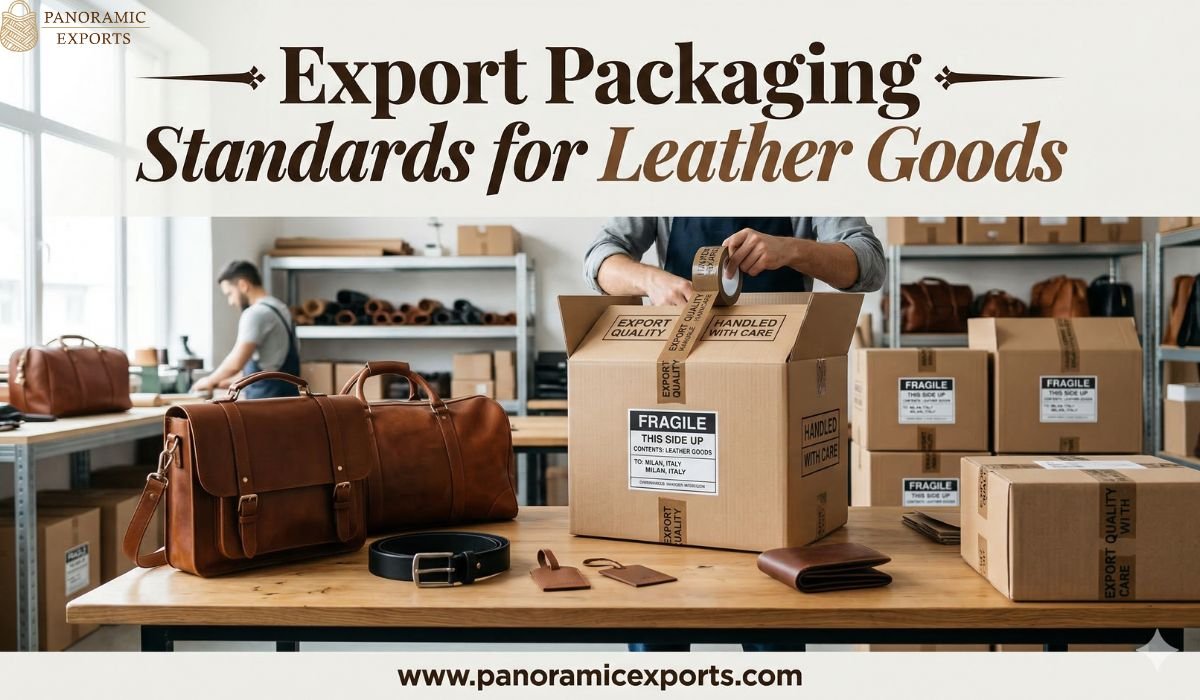
    In global manufacturing, your product is only as good as the state it’s in when the container seal breaks. For an Export Ready Leather Packaging strategy, “decent” is just a disaster waiting to happen. Between Aspergillus mold and the August 2026 EU PPWR regulations, your packing list is now as critical as your stitching; you aren’t just selling leather, you’re selling the security of the journey.

    At Panoramic Exports, we’ve seen $100,000 shipments turn into biohazards due to cheap, acidic tissue or the wrong silica grade. As we hit mid-2026, global markets demand traceable, plastic-free and chemically compliant solutions that survive a 45-day sea voyage and a strict customs audit. This is why export ready packaging has shifted from a warehouse afterthought to a boardroom priority.


    2026 Mandates: Recyclability and Chemical Limits

    Every piece of your packing—from the hangtag string to the master carton—must be designed for recycling under the new 2026 mandates. Mixed-material packaging, like those glossy plastic-coated paper boxes, is being phased out in favor of mono-materials that a machine can actually sort. If your Export Ready Leather Packaging uses plastic laminates on paper, expect a “Red” recyclability rating and a massive hike in your EPR (Extended Producer Responsibility) fees. The goal is a circular economy where the box is just as valuable as the scrap leather inside the factory.

    Articles 5 and 6 of the PPWR now enforce a strict 100 mg/kg limit for the sum of lead, cadmium, mercury and hexavalent chromium in packaging. This means your printing inks and the adhesives in your corrugated boxes are now under the same microscopic scrutiny as the leather itself. We test our boxes because we know a single “hot” batch of ink can get an entire container seized at the port. We’ve also moved to high-strength, single-wall reinforced corrugated board to reduce weight and carbon taxes without sacrificing protection. This shift in Export Ready Leather Packaging is what keeps your margins healthy in an era of rising logistics costs.


    ISPM 15 Wood Standards and Structural Integrity

    Biosecurity rejections are a lead-time killer. For any export ready leather packaging setup using wooden pallets, crates or dunnage, ISPM-15 remains the globally accepted standard for wood packaging treatment in international trade (as explained by USDA APHIS).; if your wood isn’t treated, your shipment is dead on arrival. In 2026, Heat Treatment (HT) is the only “future-proof” choice for the EU and Australia, as it leaves zero toxic residue on your leather. At Panoramic Exports, we recommend manufactured wood (plywood) for smaller crates, which are ISPM 15 exempt and significantly lower your air-freight weight.

    A snapped pallet is a product killer. We utilize reinforced, heat-treated Euro pallets to survive the rough “last mile” in global warehouses. By calculating precise load-bearing limits, we ensure that even in a five-high stack, your export ready leather packaging provides a structural foundation that keeps bottom-layer goods in showroom condition.


    Moisture Management: The “Wet-Blue” Defense

    Leather is organic and needs to breathe. In a sea container crossing the equator, this “breathing” leads to “Container Rain” and fiber fatigue. Without a technical moisture plan, the humidity of the Suez Canal can turn a premium shipment into a total insurance claim. At Panoramic Exports, we avoid the “greenhouse effect” of airtight plastic by using breathable, non-woven dust bags and acid-free tissue. This Export Ready Leather Packaging philosophy protects the grain from scuffs while allowing the hide to acclimate safely to temperature shifts.

    We don’t just toss in random silica; we use high-absorption, DMF-free gel that meets strict EU safety standards. Unlike cheap vendors using toxic Dimethyl Fumarate, our data-driven export ready leather packaging includes humidity indicator cards so you can see the exact “weather” your goods endured. This prevents the “blooming” of fats and oils on the surface, ensuring your bags arrive in showroom condition despite the relentless moisture of the Bay of Bengal.


    The “Invisible” Details: pH Migration and Tarnish

    A bag is only as good as its hardware. In Export Ready Leather Packaging, acidic paper often reacts with tanning chemicals during a 30-day voyage, causing permanent staining. At Panoramic Exports, we use strictly pH-neutral tissue to ensure white leather stays white and prevent “color migration” in vibrating containers.

    Metal buckles are magnets for salt-air corrosion. We wrap all hardware in specialized VCI paper to create a protective layer against oxidation without leaving oily residues. It is a small detail in leather packaging, but it keeps a luxury bag from arriving looking like it sat in a damp basement.


    Why Panoramic Exports is Your On-Ground Muscle

    We don’t just manufacture leather; we engineer the journey. Our Export Ready Leather Packaging protocols are built on 25 years of trial, error and hard-won success. We understand that your brand’s reputation is inside that box. From ensuring your shipping marks are REACH compliant to verifying the moisture content of the master cartons themselves (which shouldn’t exceed 12%), we handle the “gritty” details. We are the extension of your team on the factory floor in India.


    The Future of Logistics: Carbon Neutrality

    By the end of 2026, the focus will shift even further toward the carbon footprint of the box itself. We are already experimenting with mycelium-based buffers and algae-based inks to stay ahead of the curve. Choosing the right export ready leather packaging today means you are future-proofing your brand for the regulations of tomorrow. We believe that sustainability isn’t a cost; it’s an investment in the longevity of the leather craft.


    Conclusion

    The gap between a “good” manufacturer and a “great” exporter is the attention paid to the box. When you invest in Export Ready Leather Packaging with Panoramic Exports, you are buying 25 years of heritage and a commitment to excellence. We ensure that the soul we put into the leather isn’t ruined by 30 days of bad weather. As we move into the second half of 2026, the companies that survive will be the ones that master the “Packaging-as-Data” and “Packaging-as-Sustainability” shift. Let’s get your next shipment ready for the world stage. Our export ready leather packaging isn’t just about protection; it’s about a professional arrival.


    FAQs

    1. Does ISPM 15 apply to plywood boxes in 2026?

    No. Plywood and other “processed” woods remain exempt because the heat and pressure used in their manufacturing process kill any potential pests naturally.

    2. How do I meet the new EU PPWR labeling requirements?

    By August 12, 2026, you must feature specific pictograms on your Export Ready Leather Packaging that indicate material composition (e.g., PAP 20 for corrugated fiberboard).

    3. What is “Container Rain” and how do I stop it?

    It’s condensation that forms on the ceiling of a container due to temperature shifts. We stop it by using industrial desiccant poles and ensuring master cartons aren’t damp when loaded.

    4. Is plastic bubble wrap banned for exports in 2026?

    It’s not banned, but it’s heavily taxed in the UK and EU under plastic waste levies. We recommend switching to “honeycomb” paper wrap for a more “compliance-friendly” alternative.

    5. Why is DMF-free silica gel so important?

    Dimethyl Fumarate (DMF) is a powerful anti-molding agent but is highly toxic and banned in the EU. Using it in your export ready packaging can lead to total shipment seizures and legal fines.

  • Genuine Leather Bags Manufacturer: Quality & Materials Guide

    Genuine Leather Bags Manufacturer: Quality & Materials Guide

    Genuine Leather Bags Manufacturer: Quality & Materials Guide

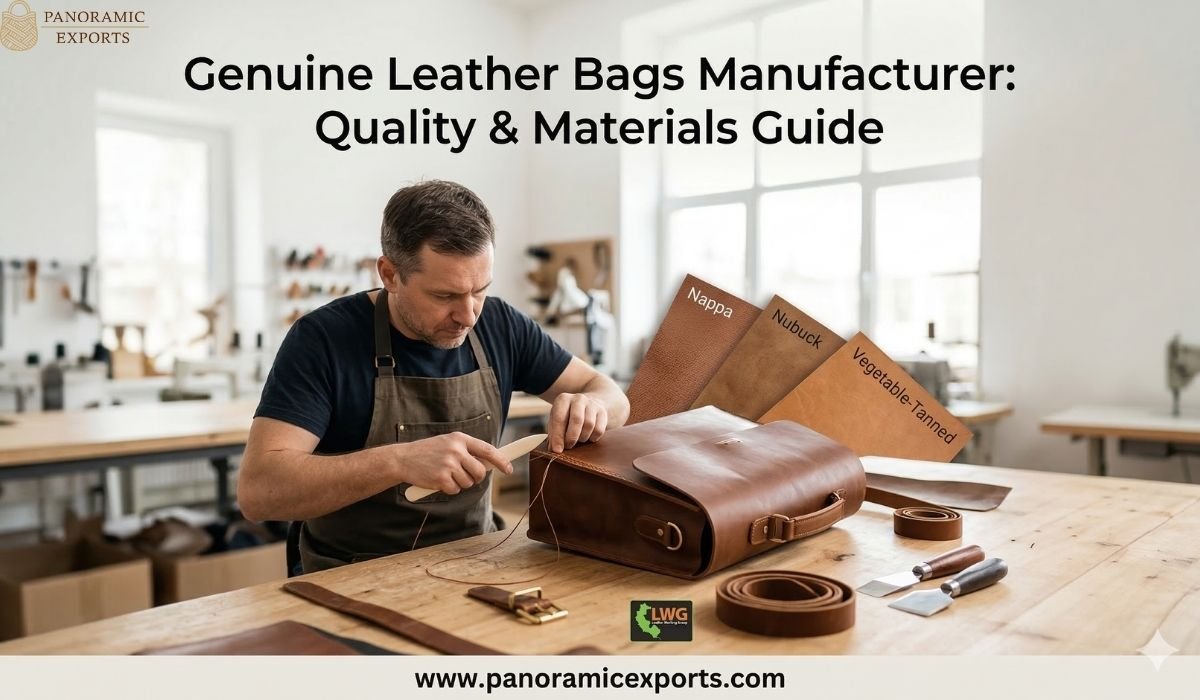
    “Genuine Leather” has become a total joke in the fashion industry. Most of the time, it’s just a fancy name for low-grade scraps glued together and coated in plastic. If you’re a brand owner or a buyer, finding a Genuine Leather Bags Manufacturer who actually respects the hide is a massive headache. You need someone who knows the difference between a high-yield industrial split and a luxury hide that actually breathes.

    At Panoramic Exports as a Genuine Leather Bags Manufacturer, we’ve lived this trade for twenty-five years. We aren’t just sitting in an office; we’re in the tannery in Kolkata picking hides and in the Noida factory checking the stitch tension. In 2026, the market is over the cheap, disposable “fast fashion” garbage. People want “Quiet Luxury” now. They want a bag where the leather tells the story before you even see the logo.


    The Full-Grain Standard and Why Your Brand Needs It

    Why We Are a Dedicated Full Grain Leather Bag Supplier

    As a Genuine Leather Bags Manufacturer, we have the same argument with every new client: the grain is everything. If you sand it down to hide a few mosquito bites or scars, you’re killing the character of the hide. Full-grain is the top layer of leather material properties, left exactly as it came off the animal. It’s the only stuff that develops a real patina—that deep, oily sheen that fake PU or cheap “corrected” leathers can’t pull off.

    Why Durability Starts at the Fiber Level

    Full-grain has the tightest fiber density. It’s basically indestructible. It doesn’t crack and it doesn’t peel like that cheap stuff you see at the mall. When we manufacture these as a genuine leather bags manufacturer, we’re building heirlooms, not just accessories. That’s the quality that lets you charge a premium and keeps your customers from complaining six months later.


    Technical Execution from Drum-Dyeing to Final AQL

    The Drum-Dyeing Advantage for Premium Products

    Being a top-tier Genuine Leather Bags Manufacturer in 2026 isn’t just about a sewing machine; it’s about the chemistry in the drum. We use drum-dyeing because it’s the only way to get the color to actually soak into the fibers. It’s not just a surface “paint job.” If a customer scratches their bag, the color underneath is the exact same. It stays looking rich through the mess of real life.

    Strict AQL 2.5 Quality Standards

    We don’t just “check” the bags. We run a strict AQL 2.5 protocol. That means we’re stress-testing. We load the handles with weight and leave them for hours. If the stitching moves even a fraction of a millimeter, that bag is out. If it’s not perfect, it doesn’t get boxed. Simple as that.


    The 2026 Sustainability Mandate: Beyond the Greenwash

    Why Traceability is the New Gold Standard

    By 2026, just saying you’re “eco-friendly” is a lie if you don’t have the data. As a Genuine Leather Bags Manufacturer, we’ve moved to a “tannery-to-table” model. We track every single hide back to the source. Buyers are now asking about the water treatment plants and the carbon footprint of the trucking. We don’t just follow the rules; we stay ahead of them so your brand is safe during an audit.

    The Move to Chrome-Free and Vegetable Tanning

    We’re seeing a huge jump in requests for vegetable-tanned leathers. It takes way longer to make, but the result is this hypoallergenic, chemical-free product that smells like real earth and bark. It’s the future of the luxury market, especially for brands targeting people who are tired of industrial chemicals.


    The Hidden Cost of Cheap Tannage: What Vendors Won’t Tell You

    Why Surface Finish is Often a Red Flag

    Watch out for the shine. Cheap factories use heavy finishes to hide bad “wet-blue” hides. If the leather feels like plastic or the grain looks too perfect, it’s probably corrected grain. It’ll look great on the shelf but will start cracking within a year. We use natural oils and slow-drumming to give it that “hand-feel” that feels like skin, not plastic.

    Avoiding the “Chemical Smell” in Export Shipments

    Nothing kills a brand faster than a customer opening a box and getting hit with a toxic chemical smell. That’s usually from rushed tanning or cheap oils. We focus on a slow fat-liquoring process. It gives the bag that unmistakable, rich “new leather” scent that people actually pay for. If it smells like a lab, it’s not premium.


    The Precision of Construction: Beyond the Hide

    Why the Finishing Touches Define a Genuine Leather Bags Manufacturer

    You can have the best full-grain hide in the world, but if the construction is sloppy, the bag is junk. As a veteran Genuine Leather Bags Manufacturer, we know that luxury is found in the details that most people don’t see until the bag starts to age. It’s about how the leather is skived (thinned) at the joints to prevent bulk and how the edge-paint is applied to ensure it doesn’t crack after three months of use.

    Our Benchmarks for High-End Construction:

    • The “Hand-Feel” Test: We don’t just stitch; we ensure the internal reinforcement (interlining) matches the leather’s temper so the bag doesn’t feel stiff or “cardboardy.”

    • Hardware Resilience: We use die-cast zinc alloy or solid brass that’s been salt-spray tested for 24 hours to prevent tarnishing in humid retail environments.

    • Thread Integrity: We use bonded nylon thread that is UV-resistant, meaning your seams won’t rot or bleach if the bag is sitting in a sunny shop window.

    • Functional Balance: Every genuine leather bags manufacturer should check the center of gravity; we ensure that even when empty, the bag stands upright without collapsing.


    Why Partnering with Panoramic Exports is Different

    Your Private Label and Design Partner

    We aren’t just a vendor; we’re your production team. We take a rough sketch and turn it into a masterpiece. Whether you want the buttery soft Nappa or the rugged Nubuck, we’ve got the stock and the skill to do it.

    The Benefit of an Integrated Supply Chain

    We as a Genuine Leather Bags Manufacturer help brands scale. By controlling everything from the tannery to the final shipping box, we cut out the middlemen who water down the quality. You’re getting 25 years of Indian craftsmanship mixed with the best 2026 tech.


    Conclusion

    The leather market is crowded, but the space for genuine excellence is surprisingly empty. Choosing the right Genuine Leather Bags Manufacturer like Panoramic Exports means you stop worrying about production “surprises” and start focusing on your brand’s growth. Let’s build something that lasts.


    FAQs

    1. What makes a real genuine leather bags manufacturer?

    They don’t sand the hide. Period. They keep the top layer intact so the natural strength and “grain” stay put.

    2. Can you do custom hardware?

    Yeah, we handle it all—rust-resistant YKK zips to custom-branded buckles that are salt-spray tested so they don’t tarnish in the sea air.

    3. What are the lead times?

    Usually 60 to 90 days. Tanning takes time and you can’t rush it if you want the leather to last.

    4. Can I visit the factory?

    We’d love it. Come to Noida and see the floor, or do a virtual walkthrough. We’re 100% transparent.

    5. How is the leather eco-friendly?

    We use LWG-certified tanneries and offer vegetable-tanned options that use tree bark instead of heavy chemicals.