Category: Fashion Bags

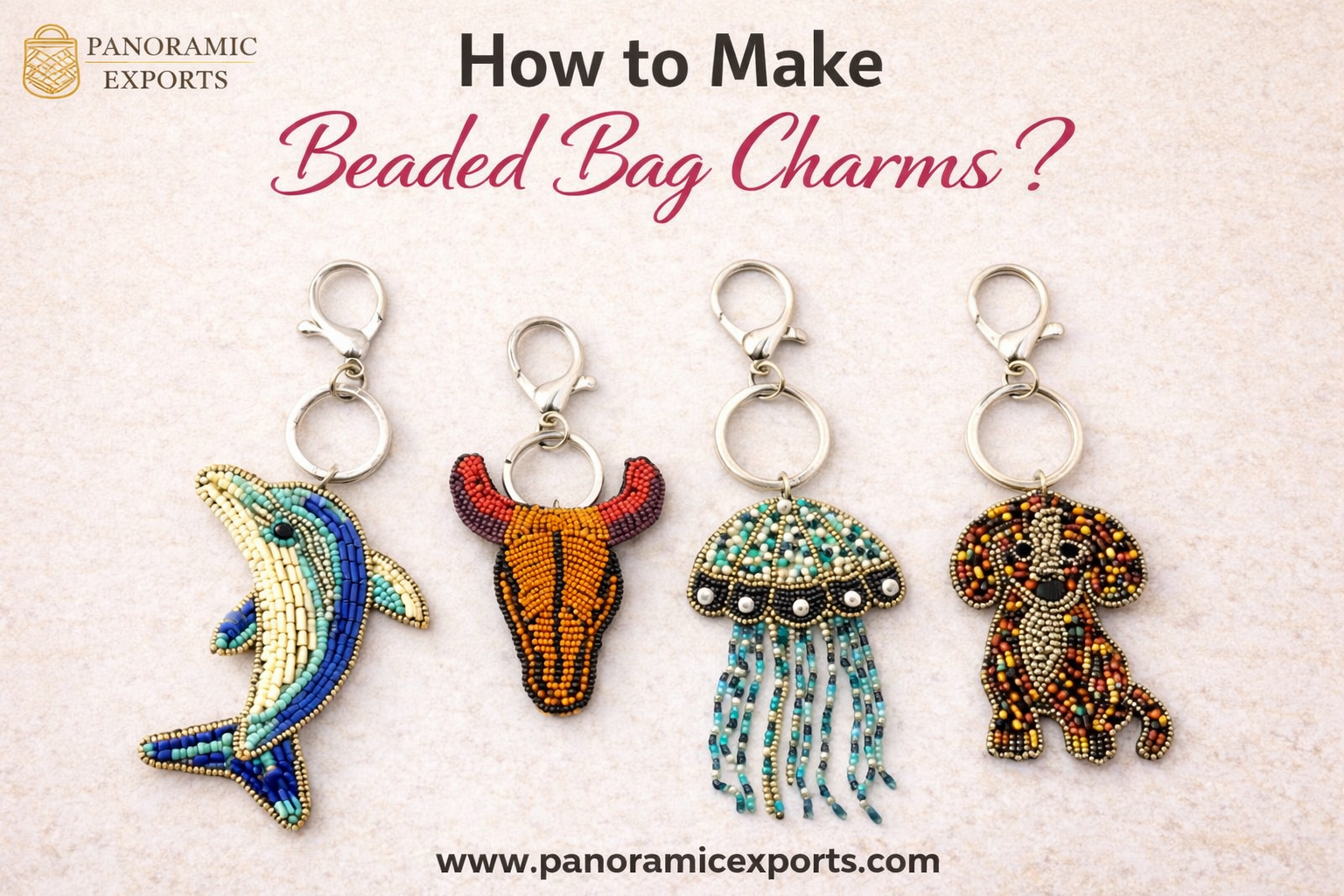
  • How to Make Beaded Bag Charms?

    How to Make Beaded Bag Charms?

    How to Make Beaded Bag Charms?

    In the high-stakes world of global fashion exports, a “trinket” is a liability. For a retail buyer in New York or Berlin, Beaded Bag Charms aren’t just accessories—they’re high-margin add-ons that have to survive rough handling, humidity and the legal minefield of international safety laws. If you want to know how to make these at a professional level, you have to look past the “craft” and focus on the engineering.

    At Panoramic Exports, we don’t do “hobby projects”. We do industrial-grade accessory manufacturing. Moving Beaded Bag Charms from an Indian workshop to a global storefront means solving the physics of the stringing material and the chemistry of the hardware plating. Here is the professional breakdown of how we build value into the “small stuff”.


    Step 1: The Foundation and Material Selection

    The most common failure point in beaded bag charms is the core string. If you want to know how to make a product that lasts, you start by throwing away the elastic. Hobbyist suppliers often use cheap monofilament that degrades under UV light and snaps under the slightest pressure.

    For professional global export, we use 49-strand stainless steel wire with a heavy nylon coating. It has the “drape” of silk but the break-strength of an industrial cable. In our workshop, we perform random “Pull Tests”. Every Beaded Bag Charms batch must withstand a 10lb pull without the crimps failing. This isn’t just a quality check; it’s an insurance policy against the “Choking Hazard” recalls that keep US and EU compliance officers awake at night. Exporters often reference accessory durability and small-parts safety guidance issued by the U.S. Consumer Product Safety Commission.

    Step 2: Professional Layout and Design Mix

    A cute bag charms design only works if it feels like a discovery, not a commodity. Plastic-heavy charms feel like toys. A multi-textured piece feels like jewelry. We leverage India’s massive artisanal network to find components that machines can’t replicate.

    When planning how to make the charm, we mix high-shine metallic spacers with “matte” finished Indian hardwoods and handmade glass. This “maximalist” approach to Beaded Bag charms is why our clients can command a premium price. We don’t just “find beads”; we curate a material story that makes a handbag charm feel like a bespoke find, not an afterthought.

    Step 3: The Assembly and Tensioning Process

    How you actually string the beads determines the “drape” of the final product. If the wire is too tight, the charm is stiff and looks cheap. If it’s too loose, the wire shows.

    1. Crimp Placement: We start by securing a high-grade copper crimp bead to the lobster clasp. We don’t just crush it; we use a “forming” tool that rounds the metal so it doesn’t snag the bag’s leather.

    2. The Stringing Sequence: We alternate bead weights. Putting a heavy glass bead next to a light wooden one creates a “rhythm” in the swing.

    3. The Double-Back: At the finish point, we thread the wire back through the last three beads. This “locking” mechanism is essential for Beaded Bag Charms that will be tugged on by customers daily.

    Step 4: Chemical Compliance and Plating

    If your custom bag charm shipment is seized at the border because the “gold” plating has high lead content, your whole season is dead. Many factories cut costs by using leaded alloys. We don’t.

    Every single part of our beaded bag charms is 100% lead and nickel-free.

    • Vacuum Plating: We use PVD (Physical Vapor Deposition) for all hardware. Unlike the “dipped” charms you see in discount bins, this won’t tarnish or flake off on a customer’s $2,000 leather tote.

    • Non-Toxic Hues: Whether it’s artisan glass or carved Indian wood, we verify that all dyes are non-bleeding and REACH compliant. This matters for purse charms that might touch skin or moisture.

    Step 5: Weight and Balance Engineering

    Most people think you just string beads and call it a day. But a professional manufacturer looks at the “Center of Gravity”. If a charm is too bottom-heavy, it swings violently and can scratch the bag’s hardware.

    We engineer the weight distribution so that the charm has a satisfying “clink” without becoming a wrecking ball. This involves calculating the density of each Bead—using heavier glass at the core and lighter wood or resin at the extremities. It’s this level of detail that separates a custom bag charm produced for a luxury brand from something bought at a flea market.

    Step 6: Industrial Sealing and Finishing

    In India’s humid climates, wooden beads can be a nightmare. At Panoramic Exports, we use a multi-step sealing process. Every wooden element in our Beaded Bag Charms is tumbled in a specialized sealant that prevents the wood from absorbing moisture and expanding.

    Similarly, for any leather elements integrated into the handbag charm, we use the same high-end edge paint used in luxury handbags. This ensures that the color doesn’t rub off on the customer’s clothes or the bag itself. We’re not just making purse charms; we’re making durable goods.

    Step 7: Packaging for Retail

    A beaded bag charms order can be ruined in the last mile by bad packaging. We provide “Retail-Ready” solutions so you don’t have to touch the product at your distribution center.

    • Anti-Tangle Mounting: We mount every bag charm on a rigid 350gsm backer card. This prevents the “bead-nesting” that happens in sea containers.

    • Anti-Tarnish Environment: Every master carton includes charcoal-based desiccant strips. This keeps the hardware on your purse charms bright even after 30 days in a humid shipping container.

    • SKU Precision: We handle all barcoding and price-tagging in-house. When the shipment hits your dock, the custom bag charm is ready for the floor immediately.


    Scaling Your Production with Panoramic Exports

    The “India Advantage” isn’t just about labor—it’s about a specialized ecosystem. At Panoramic Exports, we sit at the intersection of traditional Indian beadwork and 2026 global QC standards.

    Our Industrial Edge:

    • Prototyping Speed: We can take a mood board and turn it into a physical Beaded Bag Charms sample in 7 days.

    • Scalable Precision: We manage the MOQs that make sense for your brand, from a 500-unit boutique “drop” to a 20,000-unit national rollout.

    • Ethical Supply Chain: Every handbag charm is made in an audited, fair-wage environment. Transparency is our baseline.


    Conclusion

    In 2026, small accessories carry huge brand weight. Learning how to make professional Beaded Bag Charms is about realizing that every detail—from the wire to the packaging—is a chance to delight a customer. By focusing on durability engineering, chemical safety and retail-ready logistics, we make sure your custom bag charm is a profit driver, not a recall risk.

    At Panoramic Exports, we protect your reputation on the retail floor.


    FAQs

    1. How do you handle color-fastness in these charms?

    We use industrial-grade sealants on all wooden beads to ensure they don’t bleed onto expensive leather, a common fear for handbag charm buyers.

    2. Are the springs in the clasps tested for fatigue?

    Yes. Every batch of lobster clasps for our purse charms is cycle-tested. If the gate tension is mushy, we reject the lot.

    3. Can you provide third-party lab reports?

    Absolutely. We work with certified labs to provide lead and nickel-free documentation for all Beaded Bag Charms bound for the USA or Europe.

    4. What is the maximum weight you recommend?

    We engineer our designs to stay under 100 grams. Anything heavier can cause “handle sag” or put too much stress on a delicate bag’s stitching.

    5. Can we get custom metal branding?

    Yes, we can laser-etch or die-cast your logo onto a metal “signature” tag for every custom bag charm in your collection.
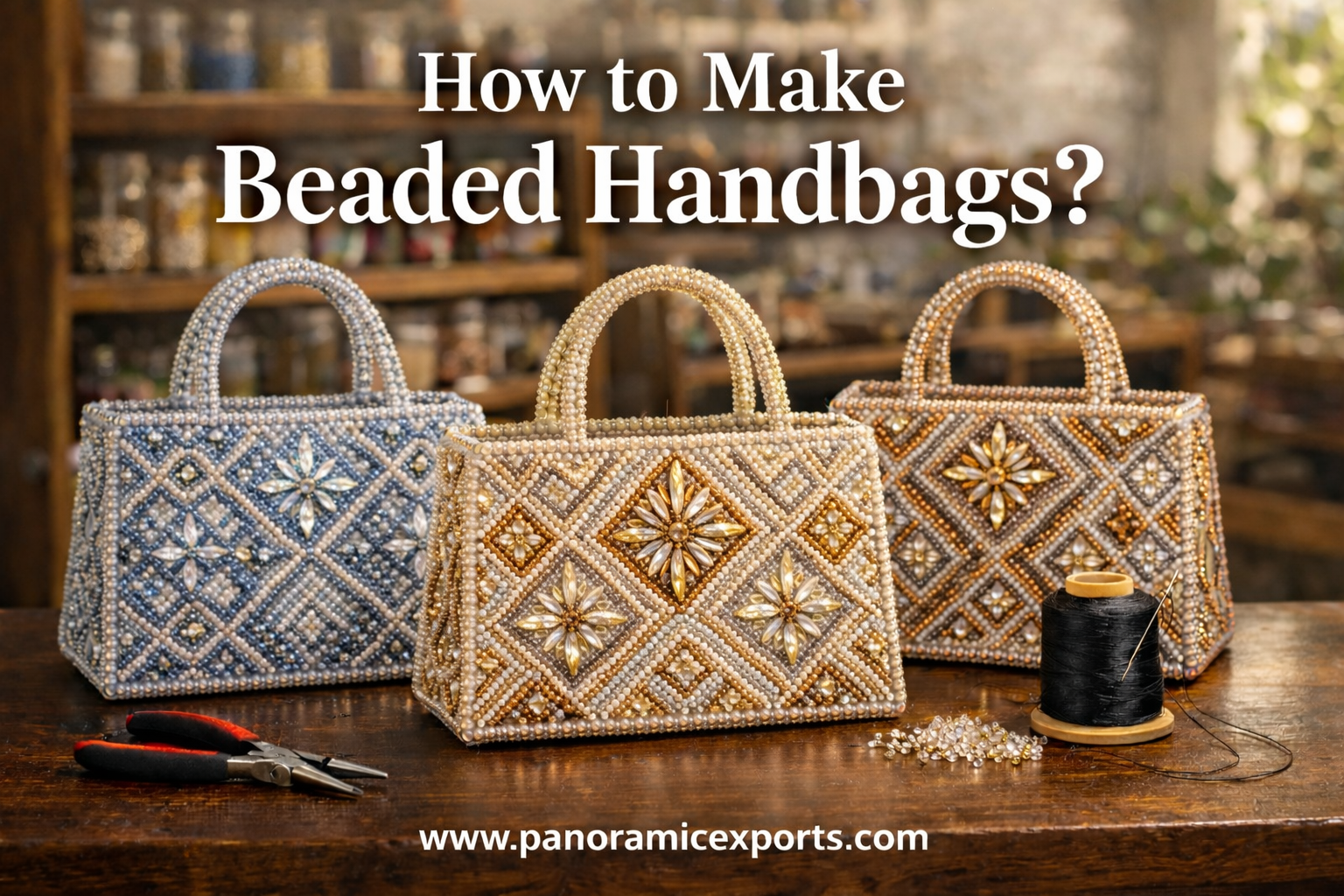
  • How to Make Beaded Handbags?

    How to Make Beaded Handbags?

    How to Make Beaded Handbags?

    Look, most people think making Beaded Handbags is just a relaxing afternoon of stringing glass on a line. If that’s your plan, you aren’t making a product; you’re making a mess. In the world of high-end export, a beaded bag isn’t jewelry—it’s a load-bearing structure. You’ve got thousands of glass beads trying to pull themselves to the floor and if your engineering is weak, the bag will look like a sad, saggy sack before it even hits the retail shelf.

    At Panoramic Exports, we treat Beaded Handbags like a construction project. It’s about managing gravity and friction. If you want to build something that actually survives a night out or a global shipping container, you have to stop thinking about “pretty” and start thinking about “structural integrity”.


    The Math Before the Needle

    Before anyone picks up a bead, we’re doing math. Beaded Handbags are deceptively heavy. A standard-sized clutch can easily weigh as much as a small laptop. The material density and durability of the beads themselves also matter, especially when understanding the glass bead manufacturing process that influences overall bag strength. If you just start weaving without a plan, the weight will stretch your thread and by day three, the bag will be two inches longer than you intended.

    We map out the weight distribution on a technical grid. We don’t use standard fishing line because it’s rubbish—it stretches and eventually snaps under UV light. We use a bonded nylon thread or a polymer-coated steel wire. You need something that has zero “creep.” If you want your Beaded Handbags to keep their shape, the foundation has to be as stiff as a bridge cable.


    The Lattice: More Than Just a Pattern

    When we weave a bag at Panoramic Exports, we aren’t just sewing. We are building a lattice. This is the “skin” of the bag and it’s under constant tension. The secret to a bag that feels “solid” rather than “mushy” is the double-pass. Every single bead has the thread running through it at least twice, often three times in the corners.

    This creates a redundant system. If a customer snags a bead on a car door and one thread snaps, the bag stays together. Most cheap Beaded Handbags use a single-pass method. One break and the whole thing unspools like a nightmare. We also hide “anchor knots” every few inches. It’s a pain to do and it slows down production, but it’s the only way to guarantee the bag won’t fall apart.


    The Bone Structure: Frames and Mesh

    If you put a bag on a table and it collapses into a puddle of beads, you failed. To get that high-end, sculptural look, you need a skeleton. For professional Beaded Handbags, that usually means a hidden acrylic box or a reinforced wire mesh frame.

    This skeleton takes the weight so the beads don’t have to. It gives the bag that satisfying “clink” when you set it down. It’s the difference between a cheap souvenir and a luxury accessory. Without a frame, the gussets (the sides) will always buckle inward. You can’t fix that with more Beads; you fix it with better bones.


    The Lining: Don’t Glue It

    This is where the amateurs give themselves away. They build a beautiful Bead exterior and then try to glue a lining inside. It never works. Within a week, the glue fails and the lining is a tangled mess.

    For professional Beaded Handbags, the lining has to “float.” We hand-stitch the interior fabric to the frame, not the beads. This way, when the customer drops their heavy keys or a phone into the bag, the weight pulls on the internal frame, not the delicate beadwork. It’s a “bag within a bag” philosophy. At Panoramic Exports, we use high-denier satin that can handle the friction of the beads without fraying.


    Hardware: Anchors, Not Just Zippers

    The handles and clasps are the highest stress points on any bag. If you just sew a handle onto the top layer of beads, it will rip off. Period. For our Beaded Handbags, we use “D-ring” anchors that are woven directly into the structural wire. The handle becomes part of the bag’s DNA.

    We also run “stress tests” in the workshop. We hang the bags with double the intended weight for 24 hours. If there’s even a millimeter of stretch, the design goes back to the drawing board. This is why Panoramic Exports is the go-to for brands that can’t afford quality complaints. We handle the grit so you get the glitter.


    The Sustainability of Craft: Why Construction Matters

    In 2026, you can’t talk about Beaded Handbags without talking about the lifespan of the product. The world is finally waking up to the fact that “cheap” is actually expensive when the item ends up in a landfill after three uses. When we build a bag at Panoramic Exports, we’re thinking about the ten-year mark, not just the ten-minute mark on a retail shelf.

    A bag built with a floating lining and a reinforced skeleton is, by definition, a sustainable choice. Why? Because it doesn’t break. If a thread is bonded nylon and the beads are high-grade glass, the bag doesn’t degrade. It becomes a vintage piece rather than trash. We see a lot of “greenwashing” in the industry, but true sustainability starts with a needle that doesn’t fail and a frame that doesn’t snap.

    This level of detail is also what protects the artisans. Hand-weaving a structural lattice is an elite skill. By refusing to cut corners with single-pass sewing or cheap glue, we ensure that the craft remains a respected profession. At Panoramic Exports, we aren’t just selling a bag; we’re selling the hours of focus and the technical mastery it took to keep those beads in perfect, rigid alignment. If you want a brand that stands for more than just aesthetics, you have to invest in the engineering.


    Conclusion

    Building Beaded Handbags is a brutal, hand-cramping process. It’s slow, it’s expensive and there are no shortcuts. But when you hold a bag that’s been built with proper tension and a solid skeleton, you feel the difference immediately. It feels like an object of value, not a fragile toy.

    At Panoramic Exports, we aren’t interested in making “fast fashion” junk. We make pieces that are intended to be kept. If you want to know how to make a bag that actually lasts, you start with the structure and end with the sparkle.


    FAQs

    1. Why does my beaded bag look “warped”?

    It’s a tension issue. You’re likely pulling too hard in some spots and not enough in others. You need a consistent “drag” on the thread.

    2. Can I use regular thread for Beaded Handbags?

    No. Cotton will rot and polyester will stretch. Use bonded nylon or coated steel wire if you want it to survive a season.

    3. How do I stop the bottom from sagging?

    You need an internal base plate—usually acrylic or a heavy-duty mesh. Beads cannot support their own weight over a wide area.

    4. Is hand-weaving better than machine-made?

    For intricate 3D shapes, machines can’t touch the precision of a human hand. Machines are for “flat” work; artisans are for “structure.”

    5. How do you clean these Beaded Handbags?

    Gently. Use a soft damp cloth. Never soak them—the internal wire might be rust-resistant, but you don’t want to test the lining’s limits.

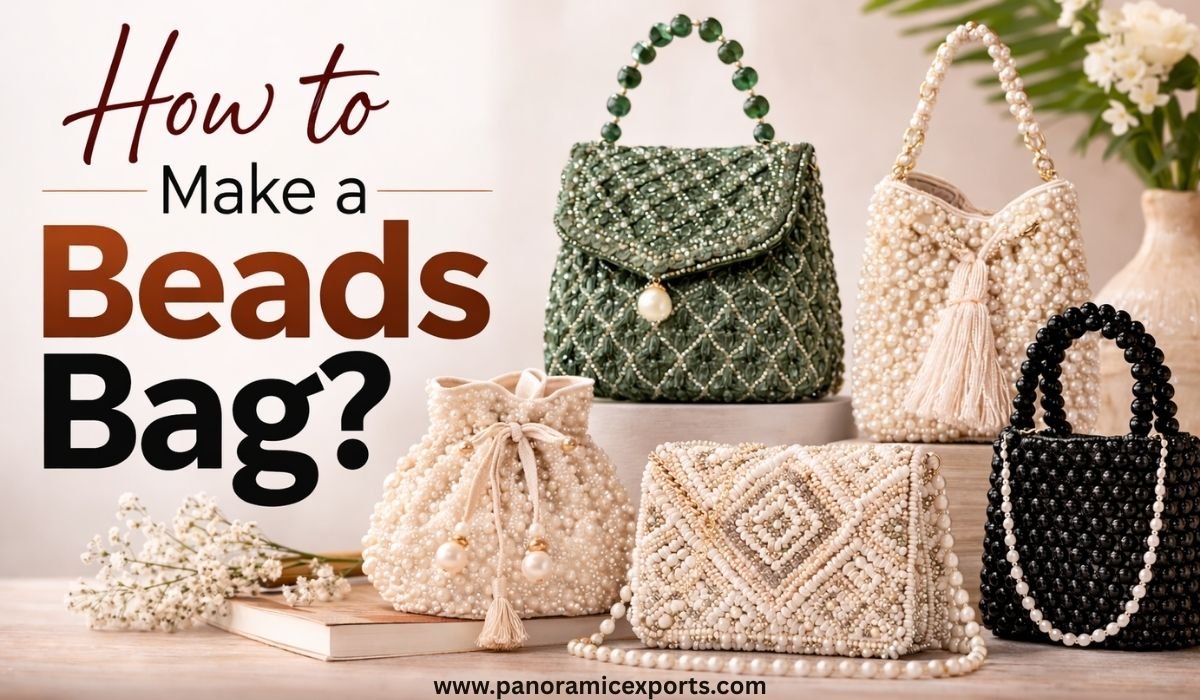
  • How to Make a Beads Bag?

    How to Make a Beads Bag?

    How to Make a Beads Bag?

    Look, making a Beads Bag is basically a marathon for your fingers. It’s the trend that won’t quit because these bags have a tactile, heavy soul that plastic-molded fast fashion can’t touch. But don’t let the pretty colors fool you—this is structural work. If you don’t get the physics right, you’re just making a expensive pile of loose beads. A real bag is all about one thing: tension.

    It’s about that raw, sore-thumb feeling after four hours of pulling nylon tight. You’re fighting the material the whole time. If you go soft on the line for even a second, the whole bag loses its “bones” and starts to sag like an old sweater. You want a Beads Bag that feels like a solid brick in your hand—something that clacks with authority when you set it down on a glass table. That only happens when you commit to the grind.


    Understanding the Anatomy of a Beads Bag

    You have to stop thinking like a jeweler and start thinking like a mason. You’re laying bricks, not stringing a necklace.

    The Beads (Choose Wisely)

    Your choice of bead dictates the weight of your life for the next ten hours. Acrylics are the go-to for that chunky, 90s-style Beads Bag vibe. They’re light enough that you won’t get a shoulder ache. Glass or crystal is the play if you want that high-end “clink” when the bag hits the table. I always suggest 8mm or 10mm rounds. If you go smaller for your first bag, you’ll probably throw the whole project out the window by hour three.

    The Gear You Actually Need

    Forget the stretchy cord from the craft aisle. It’s useless here.

    • The Line: You want 0.5mm clear nylon monofilament. It’s fishing line, basically. It doesn’t stretch and it’s tough as nails.

    • The Count: Grab 1,500 beads. You’ll lose ten under the couch, so overbuy.

    • The Nippers: Use a pair of flush-cut snips. You need to bury the knots inside the beads so they don’t scratch your hands.


    Step-by-Step Guide: How to Make a Beads Bag?

    The “Right Angle Weave” (RAW) is the industry secret. It creates a grid that’s stiff enough to stand up on its own.

    1. The Starting Square

    Cut a length of line about as long as your arm span. Put four beads on. Take the right end of the line, loop it back through the fourth bead on the left and yank it. You should see a tight little square. This is the “seed” for your Beads Bag.

    2. Building the Foundation

    Add two beads to the left string and one to the right. Cross the right string through the last bead on the left side. Repeat. Keep going until you have a flat strip that matches the width you want for your bead bag. If the strip feels floppy, you’re being too gentle. Pull that line until the beads lock together.

    3. Turning the Corner (The Walls)

    Now you have to go vertical. You stop adding to the end and start “hooking” your line into the side beads of the base. This is where the beads handbag starts to feel like a real object. Every time you cross a unit, give the line a sharp tug. Consistency is everything. If one row is loose, the whole bag will sag.

    4. Toughening the Handles

    The handle is the failure point for most DIY projects. Don’t just string beads on a wire. Weave a flat, narrow strap of beads and then “zip” it onto the main body of the beads bag. Once it’s attached, run your thread through the entire handle loop three times. This reinforces the beads bag so it can actually hold a heavy phone without the line snapping.


    What Makes it “Professional”?

    There’s a massive gap between a bag made on a kitchen table and one that sits in a luxury window. Professional-grade work means zero visible knots and zero gaps. In the global trade, this kind of manual labor is respected because it can’t be automated. For those tracking how these artisanal skills contribute to the economy, The World Bank’s trade reports often highlight the value of hand-manufactured exports.

    A pro Beads Bag often uses reinforced internal lines and custom-dyed acrylics that a typical hobbyist just won’t have access to.


    Panoramic Exports: The Industrial Standard

    This is exactly where Panoramic Exports dominates. We’ve taken the soul of the handmade Beads Bag and applied industrial-level quality control to it. Based out of India, we don’t just “make” bags; we produce export-quality accessories that hit the international market with perfect symmetry and durability. We handle the massive orders that individual crafters can’t touch.

    At Panoramic Exports, we focus on the technical side of the craft. We use high-tensile strength lines and premium-grade beads that won’t fade or crack. Our artisans are masters of the “pull,” ensuring every bag has that signature rigidity. Whether it’s a sleek evening clutch or a massive beaded tote, our manufacturing process ensures that the quality stays consistent across a thousand pieces. For us, a bead bag is a piece of precision engineering.


    Conclusion

    Making a Beads Bag is a grind. It’s one bead, one cross-stitch and one pull at a time. There’s no machine that can replicate the specific tension a human hand gives to a bead bag. Whether you’re trying to DIY your own signature piece or you’re a brand looking for the massive scale that Panoramic Exports provides, you have to respect the hours that go into every single weave. It’s slow fashion at its best.

    This isn’t just about throwing together a quick purse; you’re actually building something with enough grit and personality that it refuses to be ignored. When you finally tuck in that last knot and cut the line, you’re holding a solid piece of work that isn’t going to fall apart or look dated by next season. It’s that raw, hand-cramping effort—the kind you can’t fake—that gives a bead bag its real soul in a world that’s already overflowing with hollow, mass-produced junk.


    FAQs

    1. Why does my Bead Bag look crooked?

    It’s almost always a tension issue. You’re pulling harder on one row than the other. You need to “snap” each unit into place with the same force.

    2. What’s the best way to hide the knots?

    Tie a surgeon’s knot, then use your pliers to pull the knot into the center of a bead hole. It should “pop” in and disappear.

    3. Is the bead bag trend over?

    Not even close. The bead bag is a classic because it’s 3D texture. It doesn’t go out of style any more than a pearl necklace does.

    4. Can I use silk thread?

    No. Silk will fray and rot over time. For a bead bag, you need clear nylon. It’s waterproof and won’t stretch.

    5. Does Panoramic Exports do custom colors?

    Yes. Panoramic Exports specializes in matching bead colors to specific brand palettes for wholesale orders.

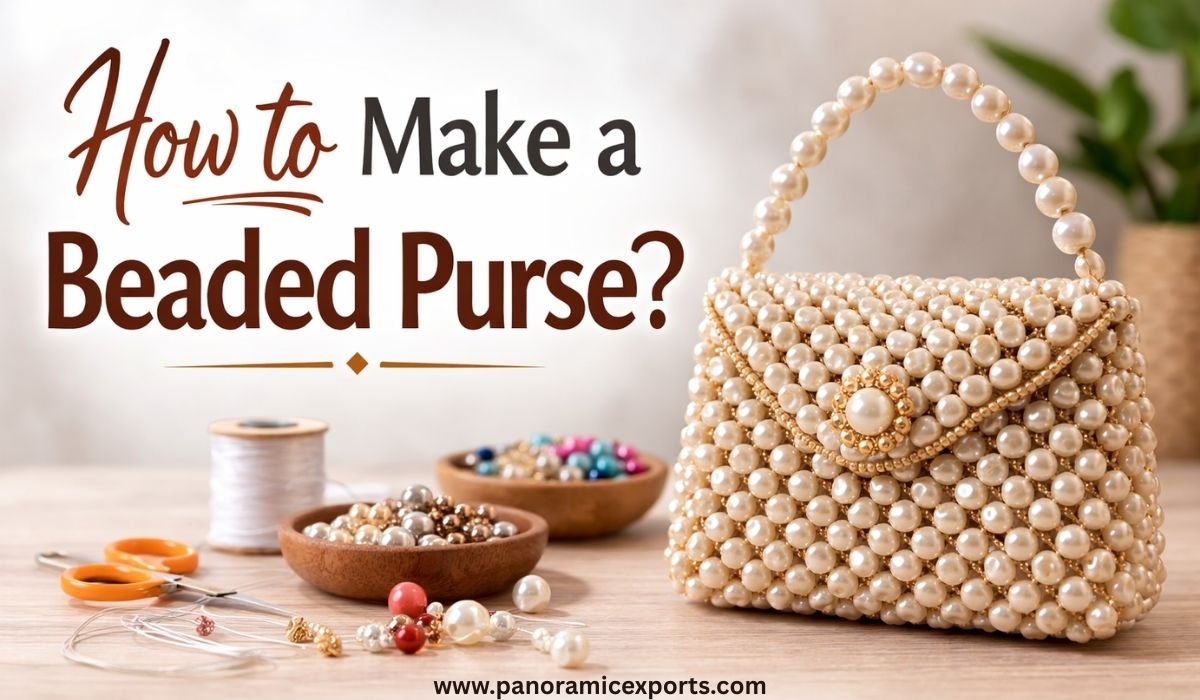
  • How to Make a Beaded Purse?

    How to Make a Beaded Purse?

    How to Make a Beaded Purse?

    Look, making a Beaded Purse is basically a marathon for your fingers. It’s the trend that won’t quit because these items have a tactile, heavy soul that plastic-molded fast fashion can’t touch. But don’t let the pretty colors fool you—this is structural work. If you don’t get the physics right, you’re just making an expensive pile of loose beads. A real Beaded Handbag is all about one thing: tension.

    It’s about that raw, sore-thumb feeling after four hours of pulling nylon tight. You’re fighting the material the whole time. If you go soft on the line for even a second, the whole bag loses its “bones” and starts to sag like an old sweater. You want a Beaded Purse that feels like a solid brick in your hand—something that clacks with authority when you set it down on a glass table. That only happens when you commit to the grind and respect the friction between the spheres.


    The Physics of the Build

    Stop thinking like a jeweler. Start thinking like a mason. You’re laying bricks, not stringing a necklace. If the foundation is weak, the whole Beaded Handbag folds the second you put a heavy wallet in it. The entire structure relies on a geometric system called the Right Angle Weave, a cross-locking beadwork method that creates strong, structured surfaces in purse construction. You can understand the technical weaving process in detail by reading this guide on Right Angle Weave technique.

    Picking Your “Main Character”

    The character of your Beaded Purse starts with the material. Acrylics are the go-to for that chunky, 90s-style vibe. They’re light enough that you won’t get a shoulder ache. Glass or crystal is the play if you want that high-end “clink” when the bag hits the table. I always suggest 10mm rounds for a standard purse. If you go smaller for your first project, you’ll probably throw the whole thing out the window by hour three. The weight of the bead matters because it provides the gravity needed to keep the weave seated properly.

    Essential Tools and Materials for Making a Beaded Purse

    Forget the stretchy cord from the craft aisle. It’s useless for a Bead Purse. You need 0.5mm to 0.6mm clear nylon monofilament. It’s fishing line, basically. It doesn’t stretch and it’s tough as nails. You’ll also need about 1,200 beads—overbuy, because you’ll lose ten under the couch. And get a pair of flush-cut snips. You need to bury the knots inside the beads so they don’t scratch your hands or snag on a silk dress.


    The Construction Reality: How to Make a Beaded Purse?

    We aren’t following a “tutorial” here; we’re following a blueprint. The construction of a beaded purse is a non-linear process that happens in three specific structural planes.

    Constructing the Floor

    The base of your beaded purse dictates the entire silhouette. You start by threading four units onto your line and crossing the ends to create a “cell.” By repeating this horizontally, you create the floor. This section must be exceptionally tight, as it bears the brunt of the interior weight. If the floor of your beaded handbag is soft, the walls will collapse inward the moment you pick it up.

    Rising Vertically

    To move from a flat mat to a three-dimensional beaded purse, you have to pivot. You “link” into the side units of your floor and begin building the walls. This is where the bag starts to gain its characteristic rigidity. If your tension is uneven here, the bead handbag will lean. It’s a slow-motion battle against the tangling of lines and the limits of human finger strength. You’re fighting the material the whole time.

    The Kinetic Stress Points

    The handle and closure are where most DIY efforts fail. To prevent a snap, you have to weave the handle directly into the grid of the beaded purse, distributing the weight across the entire frame. This “deep-root” weaving is what makes a professional beaded handbag last for decades rather than weeks.


    Industrial Excellence: The Panoramic Exports Standard

    While individual crafting is a slow, meditative process, the global market demands a level of consistency that is difficult to achieve in a home setting. This is the niche occupied by Panoramic Exports. As a specialist in the manufacturing and distribution of artisanal goods, our company bridges the gap between traditional Indian hand-weaving and the rigorous demands of international fashion houses.

    At Panoramic Exports, we don’t just “make” things; we manufacture them to withstand the real world. Every Beaded Purse produced by our team undergoes a specific tension-test to ensure the weave is uniform across every square inch. We focus on “Invisible Finishing,” a technique where knots are buried deep within the sphere cores to prevent skin irritation. For boutiques and wholesalers, partnering with our company means access to a level of craftsmanship where every single bead is accounted for. We handle the heavy lifting of production so that the final Beaded Handbag hits the retail shelf with perfect symmetry.


    Conclusion

    The journey of creating a Beaded Purse is a grueling exercise in focus. It is a slow, methodical grind where one missed loop can compromise the entire structure. From the initial layout of the base to the final reinforcement of the straps, making a Bead Purse is about honoring the material and the clock. It’s one Bead, one cross-stitch and one pull at a time.  Whether you’re trying to DIY your own signature piece or you’re a brand looking for the massive scale that Panoramic Exports provides, you have to respect the hours that go into every single weave. It’s slow fashion at its best.

    This isn’t just about throwing together a quick purse; you’re actually building something with enough grit and personality that it refuses to be ignored. When you finally tuck in that last knot and cut the line, you’re holding a solid piece of work that isn’t going to fall apart or look dated by next season. It’s that raw, hand-cramping effort—the kind you can’t fake—that gives a Beaded Purse its real soul in a world that’s already overflowing with hollow, mass-produced junk.


    FAQs

    1. Which thread is strongest for a Bead Purse?

    A clear, non-stretch nylon fishing line (0.6mm) provides the best mix of strength and invisibility for a Beaded Purse.

    2. How many beads does it take to finish a Bead Purse?

    Depending on the size, you can expect to use anywhere from 1,200 to 1,500 beads for a standard beaded purse.

    3. How do I fix a loose row in my bead purse?

    You can’t just “tighten” it from the outside; you usually have to unweave and restart that section of the beaded purse to fix the tension.

    4. Is a beaded purse waterproof?

    The beads and nylon are waterproof, but you should dry a Beaded Handbag thoroughly to prevent moisture from weakening the internal line.

    5. Does Panoramic Exports handle custom purse designs?

    Yes, Panoramic Exports works closely with global designers to manufacture specific, high-quality purse patterns for international markets.

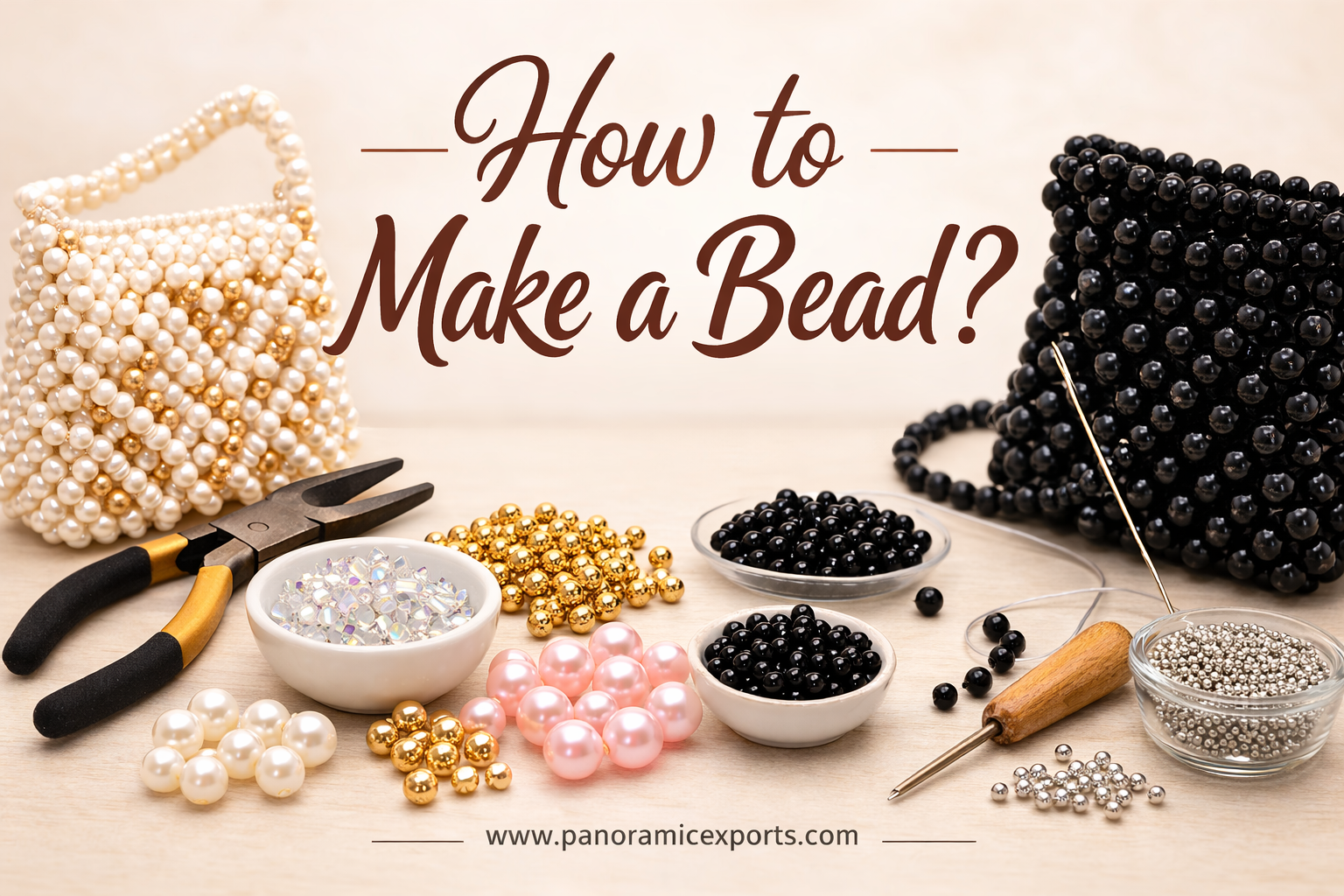
  • How to Make a Bead?

    How to Make a Bead?

    How to Make a Bead?

    There’s a real, almost hypnotic magic in the way a high-end bag rattles and catches the light. When you pick up a signature piece—whether it’s a delicate vintage clutch or a bold, oversized tote—you aren’t just holding a simple accessory; you’re carrying a mosaic made of thousands of tiny, individual stories.

    At Panoramic Exports, we’ve moved past seeing the Bead as just a shiny bit of glass or plastic for decoration. To us, it’s a structural “brick.” In the intense world of international fashion, every single unit has to be engineered with the same precision you’d expect from high-end machinery. It’s this technical obsession that separates a cheap, one-season trinket from a true fashion heirloom that you’ll want to keep forever.


    Picking the Right Materials for Your Bag

    To build a bag that actually sets a trend, you have to start with the right foundation. We pick our materials based on how they play with the light and how much weight they can actually carry once you throw in your phone, keys and wallet.

    • Glass Seed and Bugle Varieties: These are the workhorses of luxury embroidery. To make these, silica is melted down at crazy-high temperatures. They are perfect for those flat “Staud-style” patterns because their uniform shape keeps the bag surface feeling totally smooth.

    • 3D “Berry” and Chunky Baubles: One of the biggest vibes this year is the “Tactile Tote”. Many of these bold styles are influenced by the History and Evolution of Beaded Handbags, where designers first experimented with sculptural bead textures and statement silhouettes. We use huge, 14mm units that give the bag a bumpy, sensory feel. They offer a great grip and a bold, rebellious look that pops in flash photography.

    • Crystal Bicones: For evening wear, the crystal Bead is the undisputed king. These are cut with tiny, sharp facets to bounce light in every direction. When a bag “glows” across a dark restaurant, it’s usually because of these precision-cut angles.

    • Acrylic and High-Density Resins: For those massive totes that carry your whole life, glass can be too heavy. That’s where resin comes in. It can look exactly like marble or bone but stays light enough to carry all day without a backache.


    The Workshop Secret: Step-by-Step Production

    Making a professional component for the export market is a world away from a DIY craft kit you’d find in a hobby store. It’s a disciplined process that ensures every piece is a perfect clone of the last.

    1. Melting the Color In: Everything starts in the furnace. We heat the material until it’s liquid and fuse the dye directly into the molten core. This means the color is permanent. Unlike cheap versions that peel, a “fused-color” Bead stays bright for years.

    2. The Perfect Hole: The molten goop is drawn through a machine to create a long, hollow tube. This is where we form the “aperture.” In professional bag making, that hole has to be perfectly centered. If it’s even slightly lopsided, the whole bag will pucker.

    3. Precise Slicing: Those long tubes are cooled and fed into high-speed cutters. Every unit is sliced to the exact same millimeter. This consistency is what allows an artisan to weave a bag that feels as fluid as silk.

    4. The Smooth-Down: Freshly cut pieces have sharp, nasty edges. To make the bead “thread-safe,” we put them in a centrifugal tumbler. This rounds off the edges and polishes the inside of the hole so it doesn’t “saw” your thread in half during daily use.


    Why a Smooth “Friction-Free” Interior Is Everything

    If you’ve ever had a bag suddenly fall apart while you were out, you’ve likely experienced “thread snap.” It’s the most common reason cheap beadwork fails and it usually happens because the manufacturer took a shortcut on the parts you can’t see. When a bag has a rough, unpolished center, the hard material acts like a tiny saw. Every time you walk and the bag shifts against your hip, that jagged edge is slowly grinding away at the internal string.

    At Panoramic Exports, our “Secret Sauce” is a obsessed focus on that internal finish. We make sure every single Bead is fire-polished on the inside to create a slick, friction-free tunnel for our industrial-strength threads. By making sure the hardware actually “breathes” with the movement of the bag rather than biting into it, we can comfortably promise that our pieces will hold a heavy smartphone and a stuffed wallet without the disaster of a sudden mid-day snap.


    The 2026 Style Guide: Winning Looks

    Why is this craftsmanship the current “it” item? It’s all about a “Pop of Personality.” In a world of boring “Quiet Luxury,” an embellished bag is where you finally get to be a little loud.

    • High/Low Contrast: Try rocking a glitzy crystal Bead Bag with an oversized, distressed leather jacket.

    • The Retro Remix: Taking 1920s-style elements and putting them on a modern, geometric “bucket bag” shape.

    • Eco-Glam: Using a recycled glass unit to satisfy the massive demand for sustainable luxury.

    Feature Cheap Market Alternative Panoramic Exports Standard
    Coloring Surface Painted (Peels) Fused Core (Permanent)
    The Hole Sharp & Rough Polished & Smooth
    Consistency Wonky Sizes Digital Calibration
    Durability Cracks Under Pressure Load-Tested

    Panoramic Exports: Crafting the Future of Accessories

    At Panoramic Exports, we believe the journey of a thousand miles begins with a single, perfect Bead. Based in India’s most skilled artisan clusters, we’ve spent years balancing traditional handcraft with modern industrial standards. We don’t just assemble bags; we engineer them from the ground up.

    Our commitment to quality means we oversee every step. From the initial melting of the base material to the final hand-stitch, we ensure our products meet the “export-grade” benchmarks required by luxury boutiques in London, New York and Tokyo.


    Conclusion

    At the end of the day, a small component is only as good as the hands that crafted it. Whether it’s the shimmer of a seed Bead or the bold statement of a resin bauble, these materials are the heartbeat of modern fashion. We don’t just manufacture them; we make pieces that become part of your favorite memories. When you invest in a work of art, you aren’t just buying a bag—you’re buying a legacy.


    FAQs

    1. Which material is most durable for daily wear?

    A “fused-color” resin or fire-polished glass Bead is best because they resist scratches and oils.

    2. Why are “Berry” silhouettes trending right now?

    These 3D sculptural shapes provide a tactile, knobby texture that adds a layer of unique personality to any bag.

    3. Can I use standard craft store supplies for professional bags?

    No, because every export-grade bead must be digitally calibrated to ensure the weave tension remains perfectly even.

    4. Will a heavy weight eventually snap the bag handles?

    We prevent this by using load-tested handles and mixing heavy glass with lightweight acrylic to keep the structure secure.

    5. Are your manufacturing materials eco-friendly?

    Yes, we create “Green Luxury” by using recycled glass in our production to protect the planet.

  • What is a Clutch Purse

    What is a Clutch Purse

    What is a Clutch Purse

    One of the most familiar accessories in the fashion industry is the Clutch Purse. Small, graceful and sophisticated, it has kept its validity over the generations. This is unlike oversized totes or shoulder bags as this accessory is supposed to be held in the hand, which gives the impression of a sophisticated and deliberate usage. Whether it is a destination wedding in Europe or the high-profile red-carpet event in New York, it has continued to be synonymous with the elegant styling.

    What is a Clutch Purse though? It is a small hand bag, not with much prominent handles or straps and is usually carried in the hand or under the arm. It looks sleek and minimal because it does not have bulky structure. Since it is a small accessory, it fits perfectly with a formal outfit and it will not draw attention to an otherwise fitted outfit or evening dress.


    History and Evolution of the Clutch Purse

    The history of the clutch purse dates back to Victorian reticules–little decorative bags employed by the ladies to carry their personal belongings. Detailed fashion archives also explain the history and origin of clutch bags and how they evolved into modern luxury accessories. These primitive forms were fragile and were a sign of sophistication. Compact handheld bags became commercial in the 1920s and 1930s especially in the Art Deco movement.

    Golden Age of Hollywood cemented the Clutch Purse as a glamorous one. Actors and actresses could be seen regularly with handheld bags that were organized, accurate and a sign of affluence. When a new trend of cinema influenced the world fashion, this accessory was fixed in the image of sophistication and evening dress code.

    Gradually, luxury fashion brands like Dior and Chanel took the design to the next level, playing around with the materials, shapes and ornaments. Nowadays it can be found in contemporary versions; in minimalist leather, or fancy bead-work, as hard-case architectural versions.


    What is a Clutch Purse and Its Key Design Features

    A Clutch Purse can be defined as something simple. It places more emphasis on beauty and less on the capacity to hold and more emphasis on things which are important but not on large quantities. Craftsmanship and detailing are very important as it is carried out in front of people.

    Most designs feature:

    • A small, rectangular, or oval form.

    • Minimal hardware

    • No large external straps

    • Civilized fasteners like magnetic buttons or metal buttons.

    Other modern interpretations have a concealed chain strap to use in case of versatility, but the essence is hand-held glamour.


    Types of Clutch Purse Designs for Every Occasion

    Though this accessory was traditionally attributed to formal events, it has developed into different variations, which can be worn in different occasions.

    Classic Evening Style

    Regular and compact and often decorated with crystals, pearls or metallic accents. This difference normally carries necessities like a phone, lipstick and a cardholder.

    Envelope Design

    This is a triangular flapped large envelope like shaped version that is used during semi formal events and business meetings. Its size is a bit larger making it practical to use without loss of sophistication.

    Oversized Version

    A more relaxed and larger one fashioned in high-quality leather. It does not look messy but a sophisticated look and can store such objects as small tablets or documents.

    Box Style

    Architectural and inflexible, usually regarded as a statement piece. This style has hard shells with ornamental fasteners and looks like jewelry in the form of a handbag.

    All versions indicate a change in the lifestyle requirements without losing the name of the clutch purse.


    Craftsmanship Materials

    As this type of accessory is directly grasped in the hand, the perception is very much affected by the texture and the quality of materials.

    Leather

    Full-grain leather selections are appreciated to be long-lasting and full of personality. The material acquires an aged look over time which adds to its originality.

    Silk and Satin

    These fabrics are mostly used in evening designs and are smooth and luxurious in their finish which best suits formal occasions.

    Beadwork and Embroidery

    The complicated handwork may take dozens of hours. Handmade ornamentation adds visual merit as well as value.

    Due to its small size, all stitches and seams can be seen very well. The characteristics of high quality in this category are precision finishing, reinforced frames and polished edges.


    Value in the market and International Demand

    The retailers in the USA, the UK and EU markets have regarded the Clutch Purse as a high-margin product. It is often bought during weddings, on festival seasons, galas and celebrations. These emotional purchasing experience motivate clients to spend money on unique and luxurious products.

    During demand is usually high:

    • Spring wedding seasons

    • Holiday celebrations

    • Fashion event cycles

    • Corporate gala periods

    Since it is not a necessity item but a statement piece, the customers are ready to pay more money to receive exclusivity, craftsmanship and materials of high quality.


    The Reason why Buyers prefer Panoramic Exports

    Panoramic Exports has established itself as a reliable sourcing ally to the international customers who are interested in quality craftsmanship. Incorporating the artisan craftsmanship of Indians with the introduction of the latest production controls, the company provides the reliability and beauty.

    Artisanal Heritage

    Each design is enhanced by elaborate Zardosi embroidery, hand-finishing and decorative craftsmanship.

    Material Excellence

    The structural integrity is guaranteed by high-tensile metal frames, buffalo leather that is carefully chosen and high-end embellishments.

    Compliance Standards

    Goods that are exported to Canada, UK and USA are ethical and of high quality as demanded by the international markets.

    Customization Capabilities

    Retailers are able to create distinct collections that are brand-specific and demographic.

    Panoramic Exports also serves buyers via strategic sourcing and quality control to get competitive but high-end offerings in the clutch purse segment.


    Styling Versatility

    Although it was created formally, this accessory is easy to fit into various environments now:

    • Couple beaded with evening dresses.

    • select formal designs of leathers to business dinners.

    • Use simple designs when it comes to brunch.

    The contemporary consumer requires some versatility and the modern interpretation of it offers both beauty and functionality.


    Conclusion

    The Clutch Purse still remains an exclusive product in the world fashion. The key to its sustainability is its simplicity and weightiness. Small, but not too expressive, it will change a dress without dominating it.

    Being bought as a personal accessory or sourced to be distributed in the retail sector, this accessory is a symbol of craftsmanship, event-oriented demand and eternal elegance. Even the basic design can preserve cultural and business relevance over decades, which is evidenced by its development.


    FAQs

    1. Can you have a strapped clutch purse?
    A lot of modern designs incorporate a hidden chain or wristlet, which creates an option of using it on the shoulder without hurting the classic look of an object as a handheld.

    2. What necessities do one need to be packed in?
    Keep things to a minimum, phone, keys, small cardholder- to keep things organized and classy.

    3. What is the cleaning of embellished styles?
    Dust should be removed with a soft, dry microfiber cloth. Do not use water or chemical cleaners.

    4. Is it possible to use this accessory during the day?
    Yes. Both leather versions are effective in business lunches or any daytime-based activity, whereas embellished versions are applicable even during evenings.

    5. When is the Clutch Purse luxurious?
    The fact that it is related to any formal gathering, high-quality materials and high-brow craftsmanship makes it a fashion statement of a high cost.

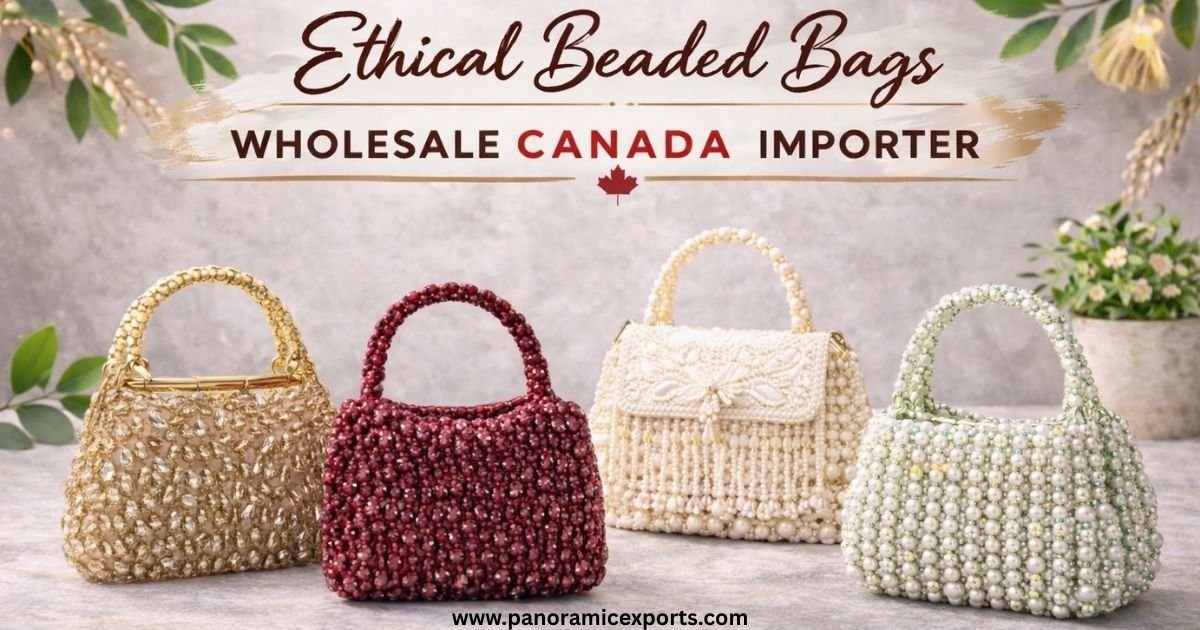
  • Ethical Beaded Bags Wholesale Canada Importer

    Ethical Beaded Bags Wholesale Canada Importer

    Ethical Beaded Bags Wholesale Canada Importer

    Canadian fashion market is experiencing structural change to conscious consumption. Toronto, Vancouver and Montreal consumers are becoming more willing to buy accessories that possess cultural significance, artistry and social responsibility. Retailers and distributors should find it important to deal with an ethical wholesaler of beads bags in Canada in order to reach the high conscious-luxury market.

    Beaded handbags are not only worn during evening and are increasingly recognized as collectible artisan pieces with a rich historical tradition. The Ethical Beaded Bags Wholesale Canada network of importing is important so that businesses can offer items that honor crafted manufacturers and are expected to conform to the requirements of sustainability in the contemporary world.

    Ethical Beaded Bags Wholesale Canada Market Growth

    The Canadian retail landscape is increasingly driven by conscious consumption, where ethical sourcing is expected rather than marketed as a trend. Buyers want transparency around materials, wages and production methods, making traceability essential in the ethical beaded bags wholesale Canada segment. Luxury boutiques now emphasize the story behind handcrafted beadwork, positioning each bag as a symbol of cultural artistry and responsible production, which strengthens brand loyalty.

    Canada remains a high-value destination for artisan imports due to its multicultural appreciation for handcrafted design. Retail districts known for eco-conscious shopping favor limited-batch collections that stand apart from mass-market accessories. This environment supports steady growth in the ethical beaded bags wholesale Canada market, where uniqueness, sustainability and craftsmanship directly influence purchasing decisions.


    The Suppliers of Ethical Beaded Bag Wholesale  Canada

    The choice of the appropriate production partner is a matter of success in the long run. The competitors who have ventured into the ethical beaded bags wholesale Canada market have to look past the price to identify suppliers.

    The suppliers are ethical and consider the whole product lifecycle as it relates to environmental and social responsibility.

    The choices of materials are essential. Sustainability is met by using high-quality glass seed beads, recycled embellishments and textiles that are ethically sourced. The small batch production eliminates wastage and exclusivity is preserved in the Ethical Beaded Bags Wholesale Canada market.

    Traceability brings credibility. Major suppliers are able to locate artisan groups and studios that produce each design maintaining tradition of craft regeneration.

    Closed Production, Openness and Ethics

    Quality producers offer records of decent salaries, healthy working surroundings and cordial artisan layouts. These are some of the standards that make the prices of all ethical beaded bags wholesale Canada import high.

    Retailers are demanding evidence on responsible sourcing. Wholesale negotiation criteria now include ethical transparency, as opposed to being an optional feature.


    Quality Assurance: Ethical Beaded Bags Wholesale Canada

    When ordering an ethical Beaded Bags wholesale Canada it is necessary to exercise quality control. Precision is required in the structure of handmade products to be durable.

    Premium imports are characterized by bead reinforcement means. Nylon or silk threading is reinforced to ensure that the beads are fixed by skilled artisans to curb bead slip. Organic linings, stiffened seams and tension of the beads add durability of wear.

    The shipment of ethical handmade beaded purses in bulk importation into Canada should be able to meet aesthetic and functional requirements. Every artwork should be structurally sound and at the same time not lose on the design complexity.

    Craftsmanship as a Competitive Advantage

    Beadwork is also done manually and this detail is visible to the human eye and is impossible to reproduce by machine, reflecting the precision involved in handcrafted beaded bag production. Accuracy in stitching, vintage designs and haptic value make ethical purses a collectible product. The advantage of craftsmanship is in the promotion of the luxury feature in importers.


    Beaded Handbags, Wholesale eco-friendly Toronto

    Toronto is a fashionable powerhouse where sustainability is combined with fashion. Beaded handbag wholesalers carry in Toronto drive the trend to be environmentally conscious glamour.

    The consumer preference of retailers is inclined towards the designs that incorporate the vintage inspiration and sustainable production. The buying trends are dominated with pearl accents, glass bead embroideries and recycled fabric backings.

    Collaborating with wholesale Toronto importers of handbags made of eco-friendly beads will enable retailers to stand out among the chains of the mass market. Ethical storytelling promotes perceived exclusivity.

    Design Direction in Sustainable Beadwork

    Canadian boutiques prefer multi-purpose outfits that can be worn during weddings, events and daily occasions. The color palettes are neutral with an accents of jewels that depict a balance of responsibility and luxury.

    Green materials give greater power to consumer confidence without restraining creativity.


    Beaded Bags Wholesale Importers Logistics Strategy

    To expand the ethical beaded bags wholesale Canada business, it is important to learn import logistics. Manufacturing would need specific planning in handmade goods.

    Categories of duty are different according to the material composition. Brand perception is also determined by packaging decisions. Plastic packaging will be in line with the ethical standards that should be observed in the ethical beaded bags wholesale Canada market.

    Artisanal production usually has lead times of between eight and fourteen weeks. Importers will be forced to take into consideration handcrafted production cycles with an inventory consistency.

    Shipping Predictability and Inventory Control

    Ethical production usually entails shared workshops as opposed to factory production. Effective communication and achievable timeframes save the well-being of the artisan and the anticipations of the buyer.

    The long term alliances enhance consistency in the beaded hand bags supply chain of the wholesale business.


    Panoramic Exports: A Reliable Ethical Production Company

    Panoramic Exports targets the global consumer who is interested in artisanal designed luxury accessories supported by ethical production processes, acting as a trusted fashion accessories manufacturer and exporter.

    The products are all checked to achieve the international wholesale standards. Strengthened sewing, high-quality linings and beads make sure of durability. Panoramic Exports is not opposed to customization, where the importers can create exclusive collections in the Ethical Beaded Bags Wholesale Canada segment.

    The export knowledge of the company eases the customization documents and compliance which minimize the risks to foreign purchasers.

    Why Global Buyers prefer Panoramic Exports

    Panoramic Exports unites preservation of craftsmanship and mass production. It is focused on high-quality beadwork that suits high standards of the market. The company is truly committed towards ethical sourcing and applying it to all manufacturing phases, which is why it makes an ideal partner of conscious retailers.


    Conclusion

    To ensure that it becomes a successful importer of ethical beaded bags wholesale Canada, it has to be dedicated to craftsmanship, sustainability and open collaborations. Moral beadcraft is a question of business and equates to cultural continuity.

    The importers who work with reputable artisans manufacturers are able to access an elite market that appreciates authenticity. Nowadays, responsible sourcing is not a choice; it is the cornerstone of fashion trade of the present day.


    FAQs

    1. What can importers do to ensure they have an ethical supplier?

    Demand social audit, wage disclosure and craftsmanship documentation. Accountable exporters are those who freely provide sourcing information.

    2. Which colors are trending in green bead work?

    Sustainable fashion color palettes are mostly dominated by earth-based tones, like sage green, burnt orange and ocean blue.

    3. Does it have custom wholesale designs?

    The majority of the ethical manufacturers assist with the idea of the private labeling and customized beads patterns with the minimum order quantities.

    4. What is the cut-off MOQ of handmade imports?

    Artisan collections with artisanal quality generally take 25 to 50 pieces each design to maintain the quality of handcrafted collections.

    5. How long do ethical handmade beaded bags last with regular use?

    High-quality handcrafted beadwork with reinforced stitching is designed for long-term durability and everyday wear.

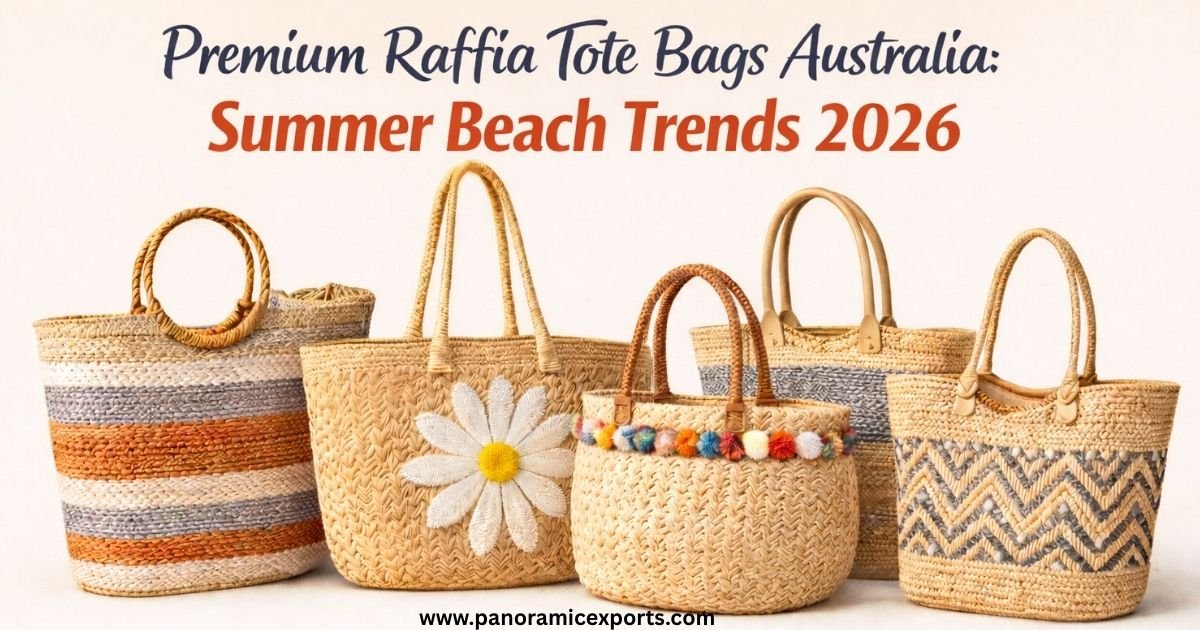
  • Premium Raffia Tote Bags Australia: Summer Beach Trends 2026

    Premium Raffia Tote Bags Australia: Summer Beach Trends 2026

    Premium Raffia Tote Bags Australia: Summer Beach Trends 2026

    The fashion of Australian summer in 2026 is characterized by natural materials, lightness and accessories that combine functionality with beauty. Raffia Tote Bags are at the forefront of this change. Raffia Tote Bags are no longer just beach bags; they symbolize a lifestyle that revolves around sustainability, artisanal craftsmanship and effortless elegance. In every beachside metropolis and resort, raffia accessories are influencing how Australians understand summer luxury.

    Buyers are opting for materials that exude authenticity. Raffia materials have a natural warmth that cannot be replicated by any other material. With consumers abandoning fast fashion, artisanal totes are becoming a badge of honor for responsible purchasing.


    The Growing Popularity of Raffia Tote Bags in Australia

    Australia’s fashion identity is deeply rooted in its coastal lifestyle. Natural fabrics are in sync with the climate and style sensibilities of the country. The popularity of Raffia Tote Bags is a part of the larger trend towards artisanal textures and subtle sophistication.

    Influence of Lifestyle on Raffia Tote Bags

    The lifestyle in Australia values comfort without compromising on sophistication. Raffia totes can seamlessly transition from beach to city. The light fabric is perfect for tropical weather and the neutral color palette goes well with resort as well as city wear. Consumers look for accessories that help them with mobility, travel and outdoor activities.

    Sustainability Driving Raffia Tote Bags Demand

    Environmental awareness plays an important role in purchasing decisions. Raffia, derived from palm fiber and traditionally used in woven textiles and crafts, is biodegradable and renewable. This positions raffia totes as responsible fashion choices. Consumers are increasingly looking for products that are consistent with ethical sourcing and ecological responsibility, driving strong long-term demand for natural fiber accessories.


    Raffia Bag Australia Market Evolution

    The raffia bag Australia segment has matured from a seasonal novelty to a year-round retail category. Boutique retailers and fashion houses are integrating raffia collections into permanent inventory. The adaptability of the material allows designers to experiment with shapes, sizes and finishing techniques.

    Retailer’s response to the rise of raffia tote bags

    Australian retailers understand that craftsmanship sets premium raffia products apart. Buyers are willing to invest in quality when the weave, structure and details reflect artisan skill. This has encouraged brands to prioritize durability and finishing standards along with visual appeal.

    Consumer Expectations for Raffia Tote Bags

    Modern buyers expect raffia accessories to provide both beauty and practicality. The interior lining, reinforced handles and structural stitching elevate the perception of raffia totes from casual items to fashion essentials. These enhancements support daily use while maintaining natural aesthetics.


    Raffia Tote Bags Australia Wholesale Expansion

    The raffia tote bag Australia wholesale market is expanding as retailers compete to offer handmade luxury. Wholesale buyers look for manufacturers capable of increasing production without compromising authenticity. Quality control is important because the appeal of raffia depends on the consistency of the weave and the integrity of the fiber.

    Wholesale Quality Standards

    Premium wholesale raffia totes must exhibit structural flexibility. Reinforced edges, balanced weave tension and durable handles ensure longevity. Retailers view these characteristics as indicators of trust and likelihood of repeat purchases.

    Branding Opportunities in Tote Bags Wholesale

    Private label raffia collections allow Australian retailers to develop signature aesthetics. Custom coloration, lining materials and size variations create the brand’s identity while preserving natural craftsmanship. Wholesale partnerships that support customization enable retailers to differentiate in a competitive marketplace.


    Raffia Beach Bag Australia and Coastal Functionality

    The Raffia beach bag Australia segment also highlights functionality alongside the visual appeal. The beach lifestyle necessitates the use of accessories that are able to survive being at the beach, e.g., being exposed to the sand, sun and moisture and at the same time are quite light in weight.

    Practical Design Features of Raffia Beach Bags

    Today’s raffia beach totes feature protective lining and strong straps that are double, stitched or riveted. The roomy interiors are large enough to hold towels, clothes and other personal items without altering the outer look of the bag. All of these characteristics make raffia bags great travel and leisure companions that one can always count on.

    Fashion Versatility of Raffia Beach Bags

    Raffia beach bags are highly functional, however, they do not lose their elegance. The texture of them is so good that it complements linen, swimwear and summer tailoring quite well. Hence, this multi, functionality provides a consumer with a great single accessory that can be used in various social situations.


    Panoramic Exports and Premium Raffia Tote Bags Manufacturing

    Panoramic Exports is one of the foremost producers of artisanal raffia accessories for international fashion markets. Their manufacturing method is a perfect blend of traditional weaving heritage with export, grade quality systems. An individual tote is the reflection of a skilled artisan’s work which is also structurally reinforced in a modern way.

    Craftsmanship Standards in Bags Production

    The accuracy in weaving is what guarantees the structural soundness of the bag. The chosen fibers are those that are both strong and bendable so that the bag can keep its form even when heavy. The sewing markings that are reinforced provide the stress points with protection while the texture’s softness is maintained. These ways of making have thus turned the raffia totes not only decorative but also fashionable items which are functional.

    Ethical Production Behind Raffia Tote Bags

    Artisan collaboration is still the heart of the production philosophy. By supporting the skilled weaving communities, the local culture craft traditions are preserved and at the same time sustainable livelihoods are provided. Ethical sourcing is the very foundation of the story of raffia accessories being considered as conscious luxury products.


    2026 Design Direction for Raffia Tote Bags

    Fashion forecasts for 2026 point to restraint and material honesty as the key themes. Designers are exploring silhouettes that showcase texture instead of embellishment. Large sized tote shapes, gentle neutral shades and scarcely any hardware characterize the new raffia look.

    Minimalist Styling in Raffia Tote Bags

    Simple contours make the organic texture of raffia stand out as the visual focus. Shades of beige and sand go perfectly with color palettes inspired by the coast. Leather details and discreet stitching bring a touch of sophistication without taking away from the natural weave.

    Long, Term Appeal of Raffia Tote Bags

    Referring to the accessories that are in the style only for a short period of time, raffia totes continue to be fashion pieces that remain in style for many seasons. Their traditional texture can be easily combined with changing wardrobes. Consumers are increasingly seeing raffia as a basic material rather than as a fleeting fashion statement.


    Conclusion

    Raffia Tote Bags reflect the main fashion values for Australia’s summer 2026: sustainability, craftsmanship and relaxed elegance. Their popularity is a sign of a cultural change that embraces natural materials and conscious consumption. High, end raffia accessories are not only practical but also artistic, thus, they become key elements of the resort outfits of today. The future of raffia fashion will be determined by those brands that, while the market is expanding, will continue to focus on ethical production and structural quality.


    FAQs

    1. Are Raffia Tote Bags suitable for everyday use?
    Yes, reinforced handcrafted designs support daily carrying needs.

    2. Is raffia considered sustainable?
    Raffia is plant-based and biodegradable, aligning with eco-conscious fashion.

    3. Can raffia totes be customized for retailers?
    Manufacturers offer private label options including size and color variation.

    4. Do raffia beach bags handle moisture well?
    Many premium designs include protective lining for durability.

    5. Are Raffia Tote Bags a seasonal trend?
    Their timeless texture supports year-round styling beyond summer.

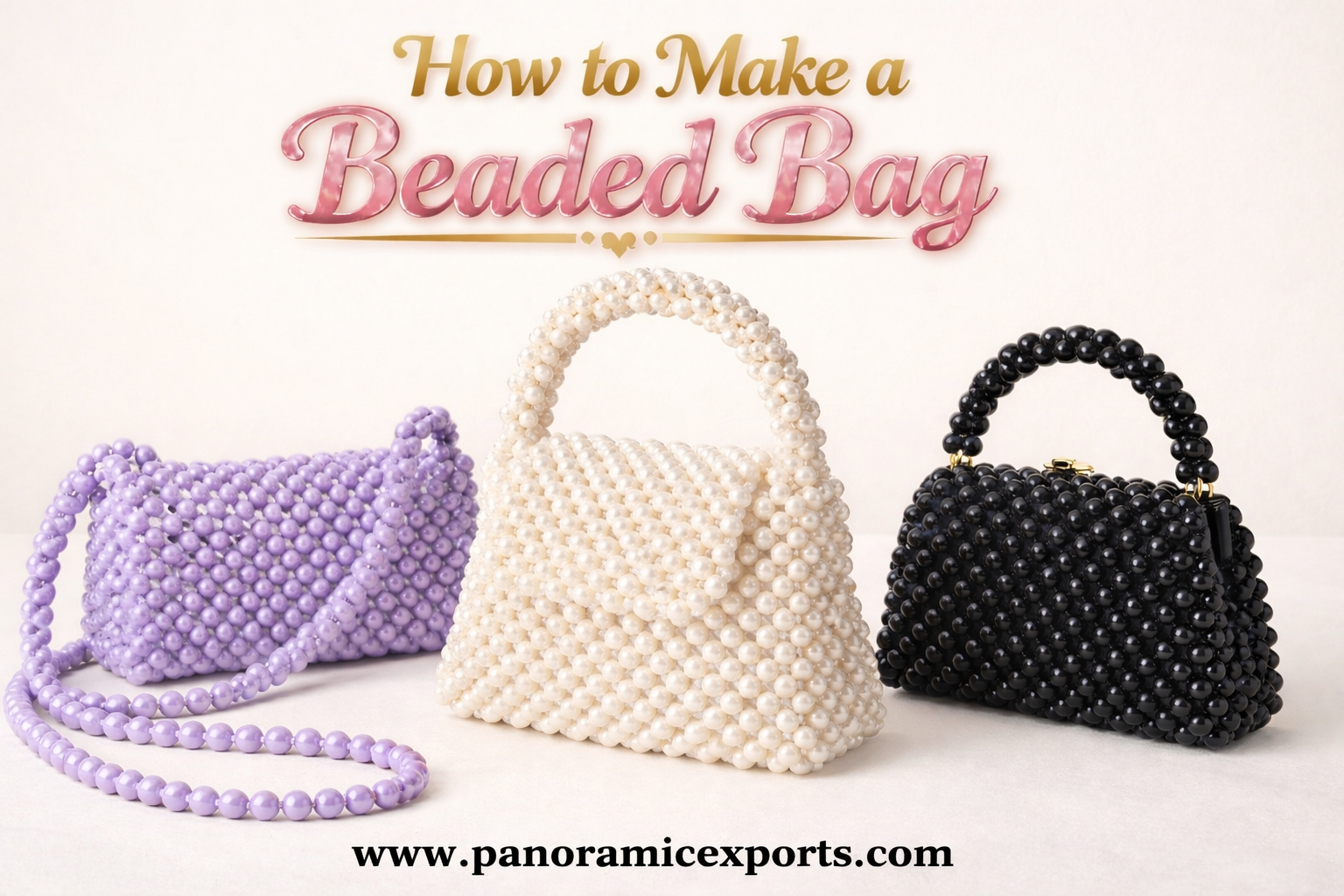
  • How to Make a Beaded Bag

    How to Make a Beaded Bag

    How to Make a Beaded Bag

    To learn how to make a handcrafted bag on a professional level one must do more than be a creative person, he or she must find structure, be able to reason and design and he or she needs to discipline materials. A Beaded Bag is an accessory and technical object at the same time. Each bead brings beauty and consequently weight, tension and structural stress. When done correctly, it can spell out a luxury item that will help merge craftsmanship and longevity. This guide describes the approach that professional makers use when undertaking production such that the end product is not only aesthetically perfect, but also commercially trustworthy.

    A bag that is professionally made should have both aesthetics and load bearing capability. The distinction between amateurish work and professional work is the precision, repeatability and discipline of finishing.


    The Basics of Making a Beaded Bag of high quality

    A luxury bag starts with preparation. Prior to the beginning of stitching, professional artisans determine structure, materials and workflow. Beadwork is treated in high-end production as architecture: each layer develops the next one.

    Core essentials include:

    • Accurate pattern drafting
    • Reinforced structural base
    • Uniform bead sizing
    • Industrial-strength thread
    • Stress-tested handles
    • Protected interior lining

    Failure to use the planning base results in hanging, torn threads, or irregular floors.

    1. Which Materials to Use in Your Beaded Bag Project? Premium Materials

    The quality of the material that you use on your Beaded Bag is what keeps your bag alive in your day to day life. There is no compromise on thread or bead consistency among the professionals. The low-priced materials undermine the whole construction.

    Recommended materials:

    • Precision-cut seed beads
    • Durability glass beads that are tempered.
    • Polyester or nylon thread bonded or heavy.
    • Industrial beading needles
    • Fabric backing (reinforced) or mesh.
    • Durable lining fabric

    Every part should be able to sustain tension in the long run without straining.

    2. The Knowledge of the Bead Varieties: Glass, Acrylic and Resin

    The different bead materials have an influence on the performance and weight. A business Beaded bag should be a compromise between glamour and safety.

    Glass beads are better in finish and scratch resistance. Acrylic beads weigh much less and can be used in bigger bags. Creative shapes with reduced overall load are made possible by resin beads. Maker professionals measure the edge of the beads in order to avoid the abrasion of the threads.

    Learning the behavior of beads will avoid premature wear.


    Step-by-Step Technical Process: The Beaded Bag-making

    The production process is carried out in a rigid order to have symmetry and structure balance. Accuracy means that one can recreate any bag.

    1. Pattern and Architectural Blueprint Design

    The engineering stage is pattern drafting. All Beaded Bags are grid-mapped by professionals to stay aligned. Patterns are coded into counts of stitches and thickness of beads.

    Key planning steps:

    • Draft front and back panels
    • Map bead placement
    • Calculate tension zones
    • Identify seam reinforcement areas.
    • Plan closure positioning

    A blue print does away with guess work in construction.

    2. Preparation of the Foundation: Selecting Auditory Thread and Needle

    Durability is determined by the choice of the thread. Professional Beaded bag uses thread that is rated at tension resistance. The needle has to go through beads and not making holes bigger.

    Preparation includes:

    • Double-thread reinforcement
    • Tension testing
    • Size of needles equal to bead diameter.
    • Knotting anchors within structural areas.

    The establishment of the foundation keeps off long-term wear.


    Developed Construction Systems of a long life Beaded Bag

    Commercial beadwork is based on developed techniques of stitching, which evenly distribute the weight. These processes isolate decorative craft and the level of production of an industry.

    1. The Matting Method: Base and Body Building

    The matting technique is a weaved bead surface, which acts as fabric. The beads have a hook-like shape that fits into their respective rows to create a sheet that is stable. A Beaded Bag that is made by using this method does not stretch and deform.

    Advantages include:

    • Even load distribution
    • Reduced thread exposure
    • Increased flexibility
    • Structural uniformity

    High-end bags are preferred to be matted.

    2. Learn to Work the Handles: Bead Strength to Your Bag

    The most prevalent structural problem is handle failure. Professional makers make the handle joints stronger by lining them with a stitch and using support cords that are not seen.

    Best practices:

    • Triple stitched anchor points.
    • Internal cord reinforcement.
    • Positioning of balanced weight.
    • Stress testing under load

    The bag structure is covered by strong handles.


    Luxury Beaded Bag Professional Finishing Touches

    Finishing defines luxury. A Beaded bag has to appear clean on all sides, both exterior and interior. Soon the loose thread or the uneven lining immediately lowers the perceived value.

    1. How to Line Your Beaded Bag to Let it Fall

    Bead stitching is covered with lining that prevents friction and wetness. Lining is an aspect handled by professionals as structural support and not decoration.

    Lining steps:

    • Precision cutting
    • Seam folding
    • Hidden stitch attachment
    • Corner reinforcement
    • Interior smoothing

    An effective lining will increase life by a long distance.

    2. To Find Closures: Magnets and Zippers

    Closures should be able to resist repetitive usage. The magnetic snaps are elegant and the zippers are the most secure. Additional reinforcement is applied to the closure area of a Beaded bag so that it cannot rip.

    Professional closure installation consists of:

    • Load-bearing fabric patches
    • Reinforced stitch rings
    • Alignment testing
    • Frequent check-ups of stress.

    The closures must not be crowded.


    Why Quality Control is Crucial in the Production of Beaded bags

    Quality control is what makes the handmade craft into commercial. All the bags with Beads are to be inspected before they reach the customers.

    1. Multidimensional Inspection of Symmetry and Bead Consistency

    Professional finish is seen through visual inspection. Makers check:

    • Pattern alignment
    • Bead spacing uniformity
    • Surface smoothness
    • Color consistency
    • Thread invisibility

    Pure trifles become chronic.

    2. Experimental Test of the Load Capacity of a Commercial Beaded Bag

    The structural safety is assured by the durability test and it should be able to support expected weight.

    Testing includes:

    • Load simulation
    • Handle pull testing
    • Seam tension checks
    • Closure stress trials

    Business dependability needs quantifiable measures.


    Global Demand of the Handcrafted Beaded Bag in the year 2026

    The luxury handmade is more appreciated by the world market. A Beaded bag is a symbol of slow fashion, craftsmanship and uniqueness. Consumers demand items that have a human touch and not factory-stamped. Handmade accessories are getting more and more prestigious in the international markets as the sustainable fashion is growing.

    To understand the history and cultural evolution of beadwork craftsmanship, this overview provides useful context.

    The authenticity and tactile artistry are what drives the demand.


    Panoramic Exports: Beaded bag manufacturers of quality

    Panoramic Exports is a professional manufacturer of beadwork bags serving global fashion markets. Each bag is created through a structured production process that blends traditional bead craftsmanship with export-grade quality control. The company works with skilled artisan clusters to deliver consistency, durability, and refined finishing that meets international buyer expectations.

    Manufacturing strengths include:

    • Precision bead placement for luxury finish
    • Reinforced stitching for durability
    • Premium glass and resin bead sourcing
    • Industrial-grade thread and lining
    • Load-tested handles and closures
    • Multi-stage quality inspection
    • Custom design and private label capability
    • Ethical artisan partnerships
    • Export-ready packaging standards

    Panoramic Exports combines aesthetics with structural reliability, producing bags that are stylish, durable, and commercially dependable while preserving their handmade character.


    Conclusion

    The bead bag is professionally designed, so it is a mixture of art and structural accuracy, making it beautiful and durable. Adherence to strict production practices ensures uniform quality that can be offered in the international markets.


    FAQs

    1. What is the duration of professional production?
    Hours per bag 8 to 40 depending on the complexity.

    2. Do you always prefer glass beads to acrylic?
    Glass is also durable; acrylic is lighter.

    3. Does a handmade bag work on a daily basis?
    Yes, were made of strengthened contrivance.

    4. What causes handle failure?
    Lack of sufficient reinforcement and inappropriate thread selection.

    5. Is lining mandatory?
    For commercial quality, yes.

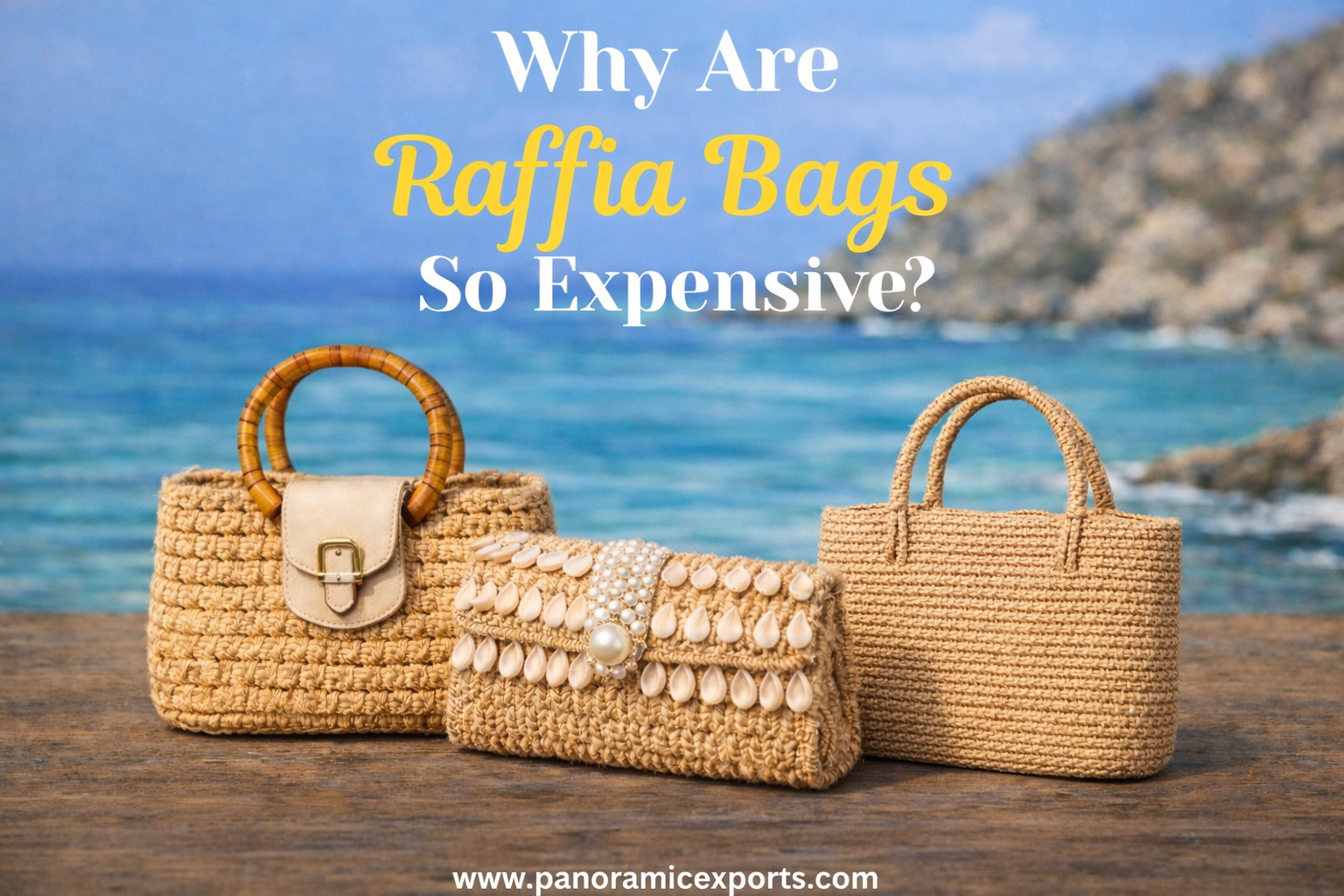
  • Why Are Raffia Bags So Expensive

    Why Are Raffia Bags So Expensive

    Why Are Raffia Bags So Expensive

    Raffia bags are always made to be positioned as high-end accessories to buyers in the USA and the international market. Retail customers tend to compare them with the synthetic bags and ask about the difference in price. The fact is that these Bags are not the products of mass production made of plastic material, they are natural and hand-crafted goods that are formed by the material constraint and craftsman techniques and moral manufacturing mechanisms. The pricing is their whole chain of values, which puts more emphasis on sustainability and craftsmanship rather than speed and automation.

    The wholesale purchasers who deal with Panoramic Exports enjoy the knowledge of these cost drivers. Explaining the pricing will make the raffia products easier to sell as high-end lifestyle products, and not as an overpriced substitute.


    The Price of the Natural Raw Materials Used

    Raffia Bag is made with the base of the fiber of the raffia palm leaf. Raffia has to be planted, harvested and processed manually as opposed to synthetic materials which are produced using petroleum. Farmers take the time to pick the fibers and dry them under controlled conditions and get ready to weave.

    This agrarian dependency brings about uncertainty. The pricing of raw materials is directly influenced by the weather system, crop production and the cost of transporting the raw materials. Sustainable harvesting also curbs over harvesting which maintains long term supply without going to the extent of mass extraction which is cheap. The sourcing of natural fibers is more cumbersome and slow than synthetic because it is more labor intensive, and the structural distinction adds to the baseline price.

    Raffia is a highly valued sustainable and biodegradable natural fiber used widely in eco-friendly fashion and handcrafted products such as bags, purses and accessories, making it a preferred choice for environmentally conscious buyers.


    Raffia Bag and Artisan Handcraftsmanship

    Human craftsmanship is the greatest price force behind a Raffia Bag. Majority of the bags are woven or crocheted or sewn in hand as opposed to being made using automated machine. Raised artsmen devote hours to the process of shaping, strengthening seams and cutting edges.

    Unless the durability and aesthetic quality is compromised, handcrafted production cannot be speeded up. Both the works represent the skill of artisans who have undergone years of training. Differences in weave and texture are marks of genuineness and not flaws. The buyers are satisfying themselves with the skilled labor, cultural craft traditions, and human time, which possess an intrinsic value.


    Ethical Production Economics and Raffia Bag

    Ethical manufacturing is a direct factor that impacts the price of these Bags. Responsible production means that the artisans work in good conditions and under fair wages. Ethical workshops are run in controlled settings opposed to in-formal labor system.

    Ethical sourcing is becoming more brand-identity related to USA and global buyers. The retailers have to be transparent in order to satisfy the consumer expectations. Production based on ethics balances supply chains, helps artisan communities and minimizes reputational risk. Although it makes production more expensive, it brings about the long-term commercial sustainability.


    Raffia Bag and Export Quality Control

    Ready to be exported Raffia Bags will have to bear the durability expectations in the foreign retail markets. Before deliveries, producers perform systematic quality inspections to avoid reimbursement and damage during transportation.

    Quality control includes:

    1. Inspections of stitch strengthening.
    2. Load-bearing stress tests
    3. Evaluation of fiber consistency.
    4. Color fastness checks
    5. Moisture-protected packaging

    The costs involved in these operations are manpower and assessment time. Export packaging is also expensive in the sense that goods have to endure the long distance transportation without being spoilt. Quality investment decreases the losses after sale and safeguards the brand name.


    Category Breakdown: Why Raffia Bags at varying prices

    Raffia Bags do not have the same level of production complexity. Pricing is a sensitive issue to design structure, finishing and material reinforcement.

    1. Handwoven Raffia Bags

    The most artisan-intensive are these. Dense weaving is an intensive manual work and thus they are high quality products that are placed in boutique retailing.

    2. Crochet Raffia Bags

    The styles of crochet require complicated looping. Fine detailing consumes time in labour even in cases where the bag structure is in the light form.

    3. Structured Raffia Tote Bags

    Totes can have lining, internal reinforcement and hardware. Further customization adds to the longevity and the cost of production.

    4. Fashion Raffia Clutches and Accessories

    Smaller ones require fine stitching and finishing. Small size does not decrease labor – detailing usually further prolongs production time.


    The Economics of small-batch production

    Raffia Bags are usually batch-produced unlike factory commodities. The artisan workshops are invested on quality rather than volume. Small-scale production discourages the economies of scale which lower pricing in the industrial manufacturing.

    Small-scale manufacturing guarantees uniformity of design and control of craftsmanship, but adds unit cost. The customers are provided with unique, small-scale merchandise instead of mass stock that is substitutable. This is exclusivity which adds to better perceived retail value.


    Raffia Bags within the Framework of Sustainable Fashion Markets

    The fashion markets across the globe are turning towards sustainability and permanence. Customers are moving towards rejection of disposable accessories towards natural materials. Raffia Bag is compatible with this trend since it is renewable, biodegradable and culturally based on slow craftsmanship.

    Companies that sell sustainable products are in another energy system. People are ready to pay more money on the ecologically friendly products. The success of these bags is not in spite of their price but rather in the fact that the price makes people think of the product as high-quality and eco-friendly.


    Logistics and export handling Mechanism

    Another layer of costs is brought about by international shipping. These bags should be packed to ensure that they maintain shape and do not destroy fibers. Packaging includes protective stuffing, moisture barriers and reinforced cartons, which increase the cost of packaging.

    Compliance documentation, inspection certification and customs preparation are also under export logistics. Such operational needs are a guarantee to the smooth delivery of the same to the USA and global consumers but raise the end wholesale price.


    Panoramic Exports, Raffia Bags to the World Buyers

    Panoramic Exports deals directly with the artisan networks and special-purpose production units to supply export quality Raffia Bag. The firm is in charge of quality management, ethical sourcing and inspection discipline.

    Panoramic Exports synchronizes supplier relationship and production standards by which buyers are given the same inventory according to the global retail standards. Pricing indicates transparent material sourcing, expertise labor and overseas compliance imperative.


    Conclusion

    The price of these Bags is based on actual costs of production, namely natural materials, craftsmanship, ethical production and export-quality finishing. These are not margins inflated but structural factors.

    To both the USA and global consumers, knowing this value chain enables the raffia products to be placed in the right positioning as high end accessories. Customers make investments in craftsmanship, sustainability and durability. The increased cost will represent a value of long term than a cost in the short term.


    FAQs

    1. Why are these bags costlier than plastic or polyester bags?
    They are made of natural fibers and are handmade rather than being automated with a synthetic production process.

    2. Are raffia bags durable to use on a daily basis?
    Yes. Well crafted raffia bags are strengthened to make them strong and intended to serve across seasons.

    3. Does ethical wages make these bags more expensive?
    Yes, but ethical production can guarantee stability of supply in the long term and credibility of the brand.

    4. Are these bags viewed as being sustainable fashion products?
    Yes. Raffia is regenerated, biodegradable and in tandem with environmentally friendly consumer demand.

    5. What causes handcrafted bags to be more expensive than factory-made bags?
    The process of hand crafting also involves skilled workers and timey production which adds inherent value.