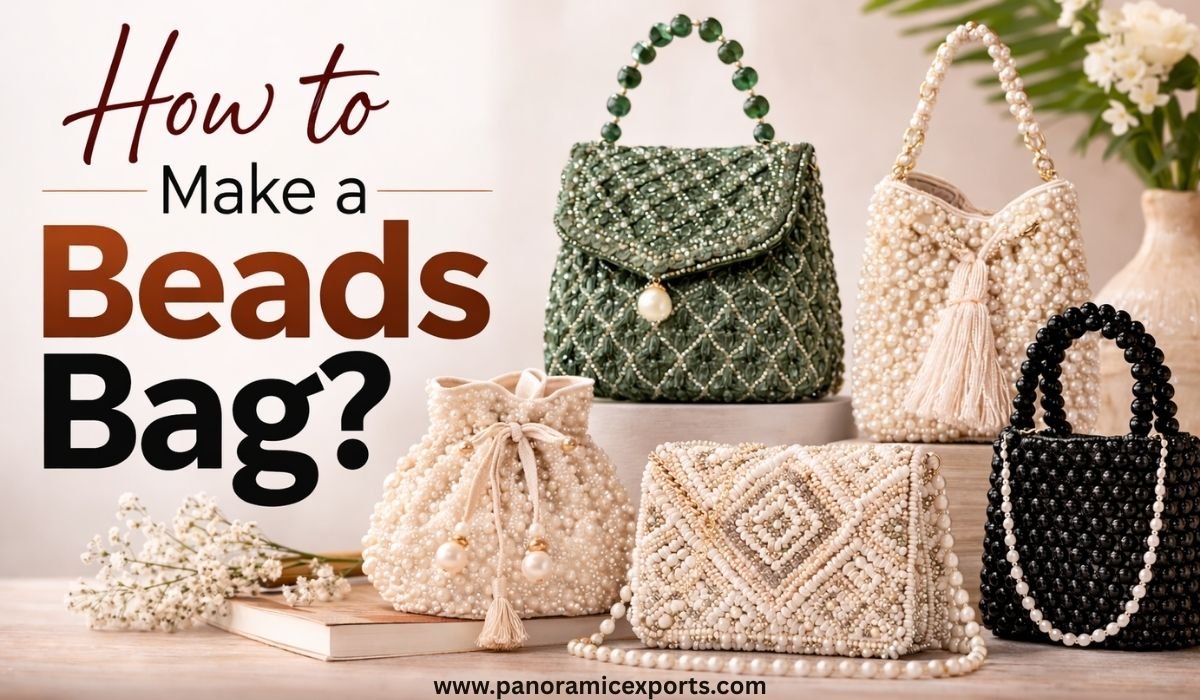
How to Make a Beads Bag?
Look, making a Beads Bag is basically a marathon for your fingers. It’s the trend that won’t quit because these bags have a tactile, heavy soul that plastic-molded fast fashion can’t touch. But don’t let the pretty colors fool you—this is structural work. If you don’t get the physics right, you’re just making a expensive pile of loose beads. A real bag is all about one thing: tension.
It’s about that raw, sore-thumb feeling after four hours of pulling nylon tight. You’re fighting the material the whole time. If you go soft on the line for even a second, the whole bag loses its “bones” and starts to sag like an old sweater. You want a Beads Bag that feels like a solid brick in your hand—something that clacks with authority when you set it down on a glass table. That only happens when you commit to the grind.
Understanding the Anatomy of a Beads Bag
You have to stop thinking like a jeweler and start thinking like a mason. You’re laying bricks, not stringing a necklace.
The Beads (Choose Wisely)
Your choice of bead dictates the weight of your life for the next ten hours. Acrylics are the go-to for that chunky, 90s-style Beads Bag vibe. They’re light enough that you won’t get a shoulder ache. Glass or crystal is the play if you want that high-end “clink” when the bag hits the table. I always suggest 8mm or 10mm rounds. If you go smaller for your first bag, you’ll probably throw the whole project out the window by hour three.
The Gear You Actually Need
Forget the stretchy cord from the craft aisle. It’s useless here.
-
The Line: You want 0.5mm clear nylon monofilament. It’s fishing line, basically. It doesn’t stretch and it’s tough as nails.
-
The Count: Grab 1,500 beads. You’ll lose ten under the couch, so overbuy.
-
The Nippers: Use a pair of flush-cut snips. You need to bury the knots inside the beads so they don’t scratch your hands.
Step-by-Step Guide: How to Make a Beads Bag?
The “Right Angle Weave” (RAW) is the industry secret. It creates a grid that’s stiff enough to stand up on its own.
1. The Starting Square
Cut a length of line about as long as your arm span. Put four beads on. Take the right end of the line, loop it back through the fourth bead on the left and yank it. You should see a tight little square. This is the “seed” for your Beads Bag.
2. Building the Foundation
Add two beads to the left string and one to the right. Cross the right string through the last bead on the left side. Repeat. Keep going until you have a flat strip that matches the width you want for your bead bag. If the strip feels floppy, you’re being too gentle. Pull that line until the beads lock together.
3. Turning the Corner (The Walls)
Now you have to go vertical. You stop adding to the end and start “hooking” your line into the side beads of the base. This is where the beads handbag starts to feel like a real object. Every time you cross a unit, give the line a sharp tug. Consistency is everything. If one row is loose, the whole bag will sag.
4. Toughening the Handles
The handle is the failure point for most DIY projects. Don’t just string beads on a wire. Weave a flat, narrow strap of beads and then “zip” it onto the main body of the beads bag. Once it’s attached, run your thread through the entire handle loop three times. This reinforces the beads bag so it can actually hold a heavy phone without the line snapping.
What Makes it “Professional”?
There’s a massive gap between a bag made on a kitchen table and one that sits in a luxury window. Professional-grade work means zero visible knots and zero gaps. In the global trade, this kind of manual labor is respected because it can’t be automated. For those tracking how these artisanal skills contribute to the economy, The World Bank’s trade reports often highlight the value of hand-manufactured exports.
A pro Beads Bag often uses reinforced internal lines and custom-dyed acrylics that a typical hobbyist just won’t have access to.
Panoramic Exports: The Industrial Standard
This is exactly where Panoramic Exports dominates. We’ve taken the soul of the handmade Beads Bag and applied industrial-level quality control to it. Based out of India, we don’t just “make” bags; we produce export-quality accessories that hit the international market with perfect symmetry and durability. We handle the massive orders that individual crafters can’t touch.
At Panoramic Exports, we focus on the technical side of the craft. We use high-tensile strength lines and premium-grade beads that won’t fade or crack. Our artisans are masters of the “pull,” ensuring every bag has that signature rigidity. Whether it’s a sleek evening clutch or a massive beaded tote, our manufacturing process ensures that the quality stays consistent across a thousand pieces. For us, a bead bag is a piece of precision engineering.
Conclusion
Making a Beads Bag is a grind. It’s one bead, one cross-stitch and one pull at a time. There’s no machine that can replicate the specific tension a human hand gives to a bead bag. Whether you’re trying to DIY your own signature piece or you’re a brand looking for the massive scale that Panoramic Exports provides, you have to respect the hours that go into every single weave. It’s slow fashion at its best.
This isn’t just about throwing together a quick purse; you’re actually building something with enough grit and personality that it refuses to be ignored. When you finally tuck in that last knot and cut the line, you’re holding a solid piece of work that isn’t going to fall apart or look dated by next season. It’s that raw, hand-cramping effort—the kind you can’t fake—that gives a bead bag its real soul in a world that’s already overflowing with hollow, mass-produced junk.
FAQs
1. Why does my Bead Bag look crooked?
It’s almost always a tension issue. You’re pulling harder on one row than the other. You need to “snap” each unit into place with the same force.
2. What’s the best way to hide the knots?
Tie a surgeon’s knot, then use your pliers to pull the knot into the center of a bead hole. It should “pop” in and disappear.
3. Is the bead bag trend over?
Not even close. The bead bag is a classic because it’s 3D texture. It doesn’t go out of style any more than a pearl necklace does.
4. Can I use silk thread?
No. Silk will fray and rot over time. For a bead bag, you need clear nylon. It’s waterproof and won’t stretch.
5. Does Panoramic Exports do custom colors?
Yes. Panoramic Exports specializes in matching bead colors to specific brand palettes for wholesale orders.